- Tabelog Bronze #459: 4.3pts · 2026
- Opinionated About Dining Top Restaurants in Japan Recommended · 2026
- Tabelog 100 #50: 4.2pts · 2025
- Tabelog Bronze · 2025
- The Best Chef One Knife · 2025
- Opinionated About Dining Top Restaurants in Japan Ranked #323 · 2025
- Opinionated About Dining Top Restaurants in Japan Ranked #289 · 2024
- Opinionated About Dining Top Restaurants in Japan Highly Recommended · 2023
A serious sushi counter in Kitakyushu carries a different charge from Ginza or Nihonbashi. The city is industrial, port-facing and less theatrical than Japan’s capital circuits, yet the sushi grammar is disciplined: counter seating, tight pacing, seasonal seafood, rice temperature and a room read course by course rather than dish by dish. Teruzushi belongs to a small Kyushu category where the calendar matters as much as the chef’s name: not just sushi in Tobata, but a regional counter pulling attention from the usual metropolitan axis.
For a wider Kitakyushu food itinerary, the contrast helps. Sushi sits at one end; local comfort cooking and casual specialties fill the rest. Tsubasa gives another Kitakyushu sushi reference point, while Gyoran Tei Honten, Hountei, Hyo Kashiya KOMARU and Imanami Udon show the city’s restaurant culture beyond trophy counters. For trip planning beyond restaurants, use our full Kitakyushu restaurants guide, hotels guide, bars guide, wineries guide and experiences guide.
Kyushu sushi judged by season, not by city size
Japan’s high-end sushi conversation often flattens regional difference into one idea of luxury: a small counter, high spend, scarce seats and a chef controlling rhythm. Kyushu complicates that shorthand. The region faces multiple fishing grounds, sits close to Korea and the Asian mainland, and has a food culture not built on Edomae orthodoxy alone. At this level, seasonality is the operating system. Spring, summer, autumn and winter change the counter because supply, fat content, texture and aging potential change with them.
That is where Teruzushi makes its strongest editorial sense. Its recognition profile is not a single-year flare: The Tabelog Award Bronze appears for 2019 through 2026, and the restaurant was selected for Tabelog Sushi WEST 100 in 2021, 2022 and 2025. Opinionated About Dining also placed it within its Japan restaurant coverage, including a 2026 Recommended listing. Those signals matter because regional sushi counters outside Tokyo need repeated validation to enter travel calculus. One award creates curiosity; a run suggests sustained relevance.
The comparison set is narrow. In Kitakyushu, Tsubasa provides the local sushi counter comparison. Beyond the city, Tenzushi Kyomachi, Gahoujin 我逢人, Morita, Sushi Gyoten and other Kyushu-focused counters frame a regional conversation where distance from Tokyo is part of the argument, not a weakness. The traveler’s question is not whether Kitakyushu imitates Ginza, but whether the city gives sushi a different sense of place without losing the precision that defines the form.
A counter built around performance, scrutiny and a short seasonal arc
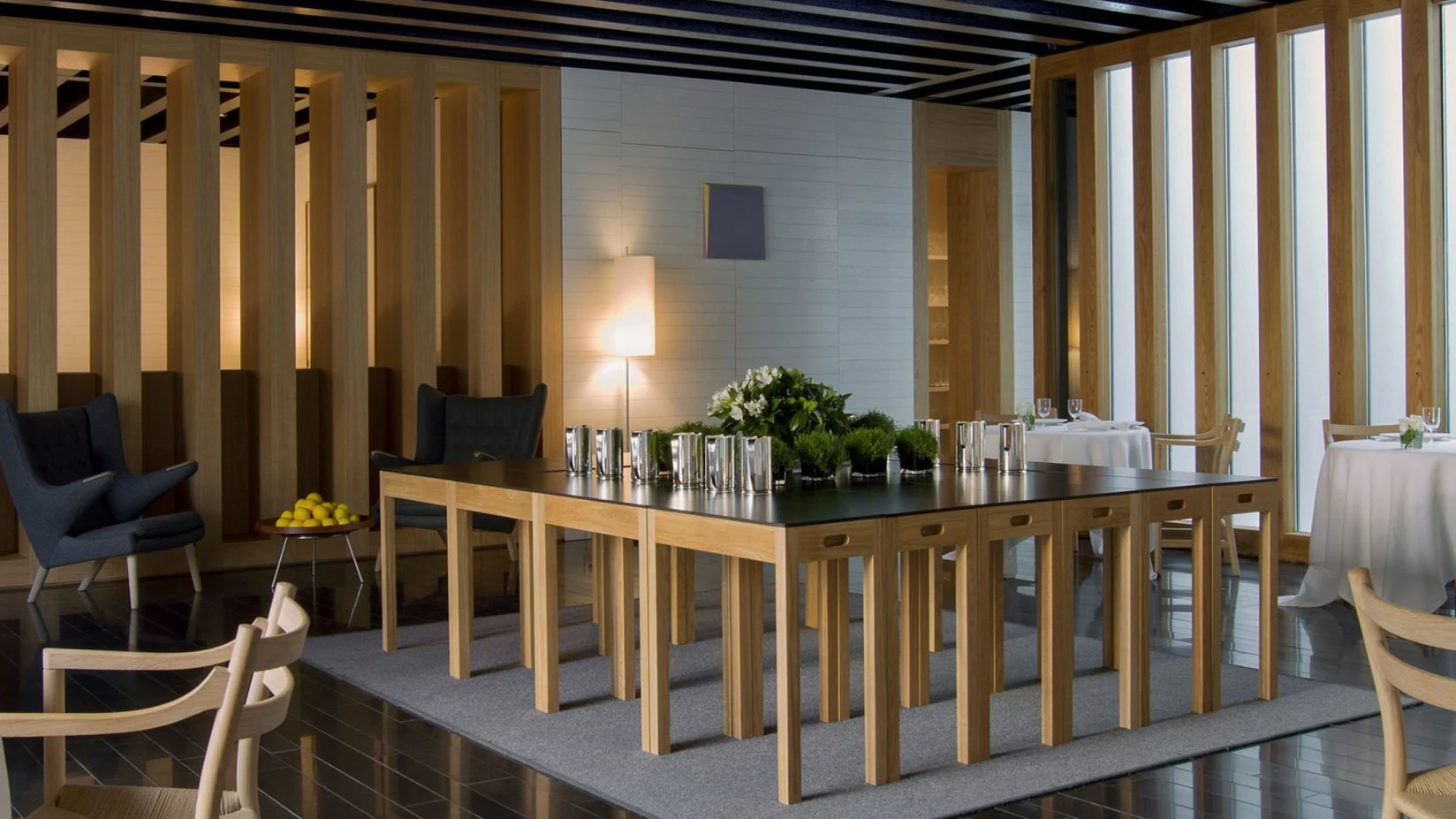
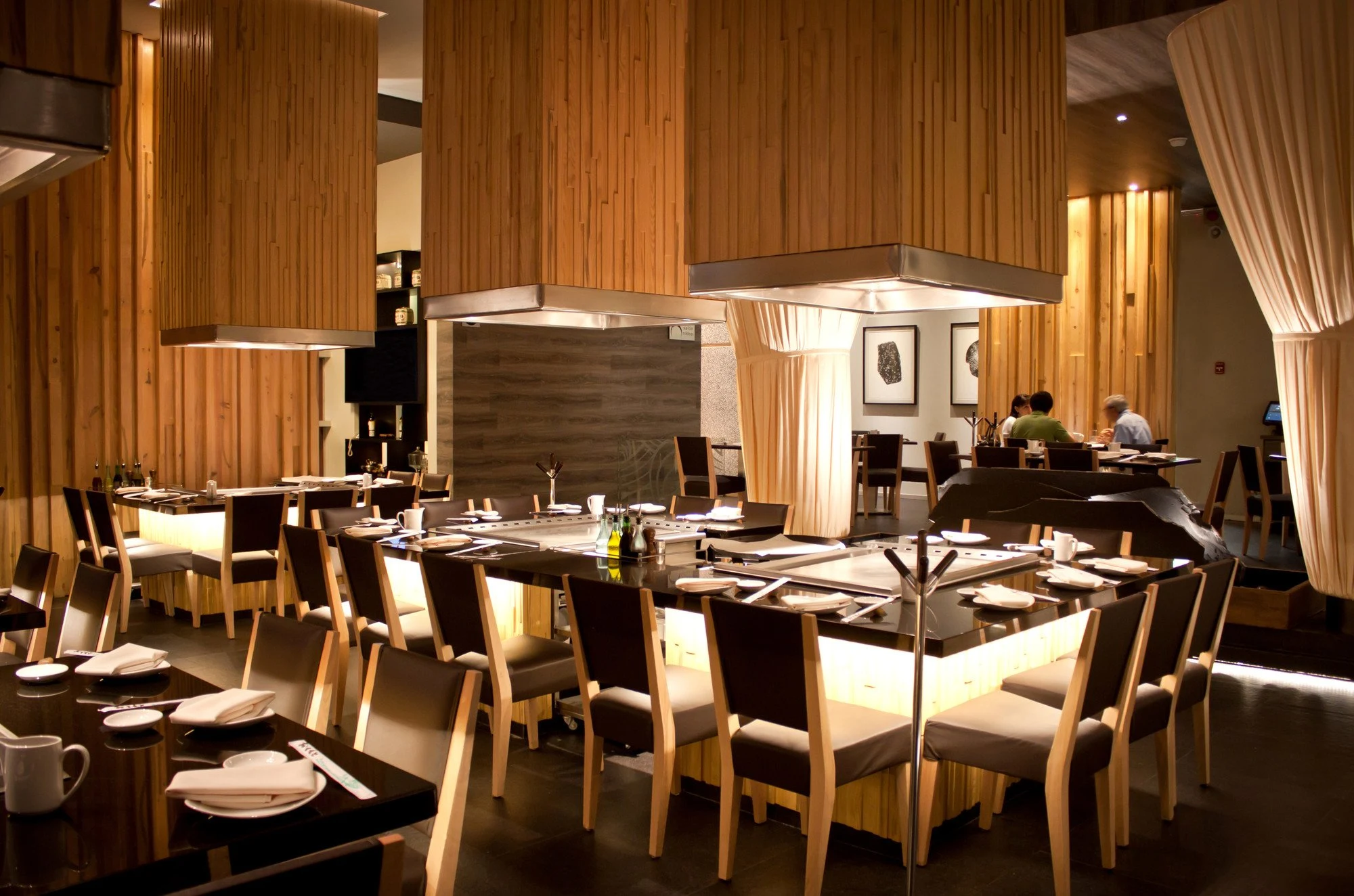
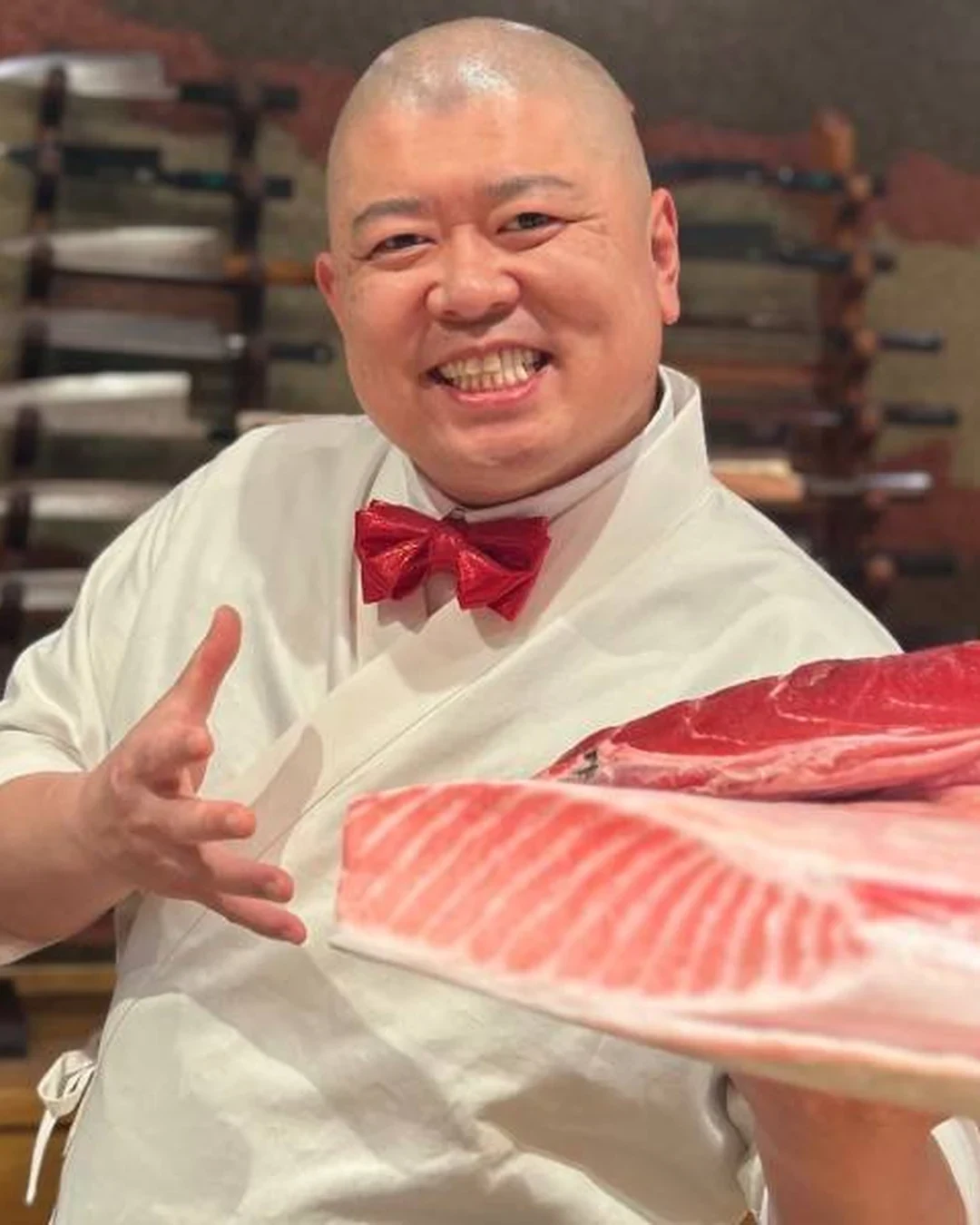
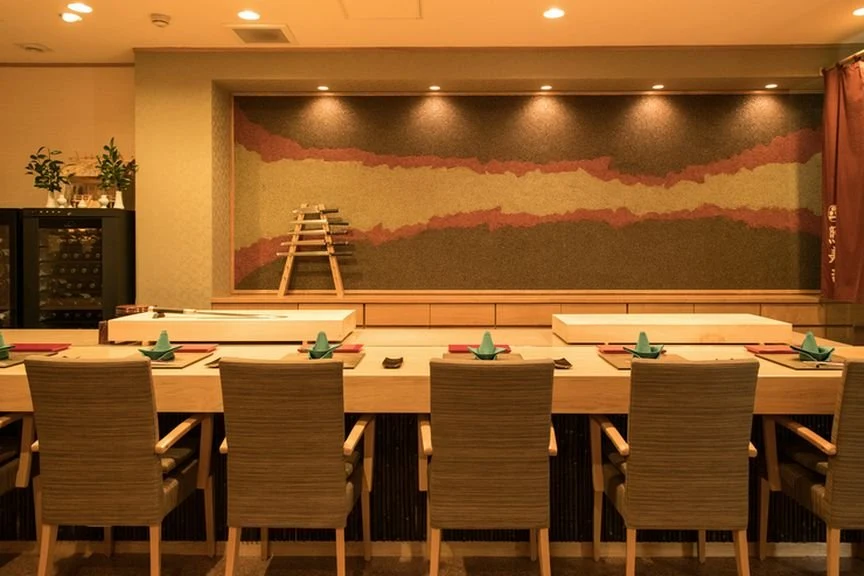
Chef Takayoshi Watanabe is a useful credential, but the counter format is the better subject. Ten seats change the social physics of a meal. There is little anonymity, and the exchange between chef, fish, rice and guest becomes the evening’s structure. The format rewards confidence and exposes weakness quickly. In a city where destination diners may arrive for one sitting, the counter must carry technical expectation and the theatre of arrival.
Teruzushi is associated with a more extroverted style than the hushed, near-monastic model many travelers expect from high-end sushi. That matters because Japan’s premium sushi scene has split into several moods: some counters pursue near-silent concentration; others bring visible host presence into the room. Neither guarantees better sushi. The relevant question is whether personality supports the seasonal product or distracts from it. Here, recurring awards and a high Tabelog score in the 4.2 range place the restaurant where performance has been judged alongside the plate, not instead of it.
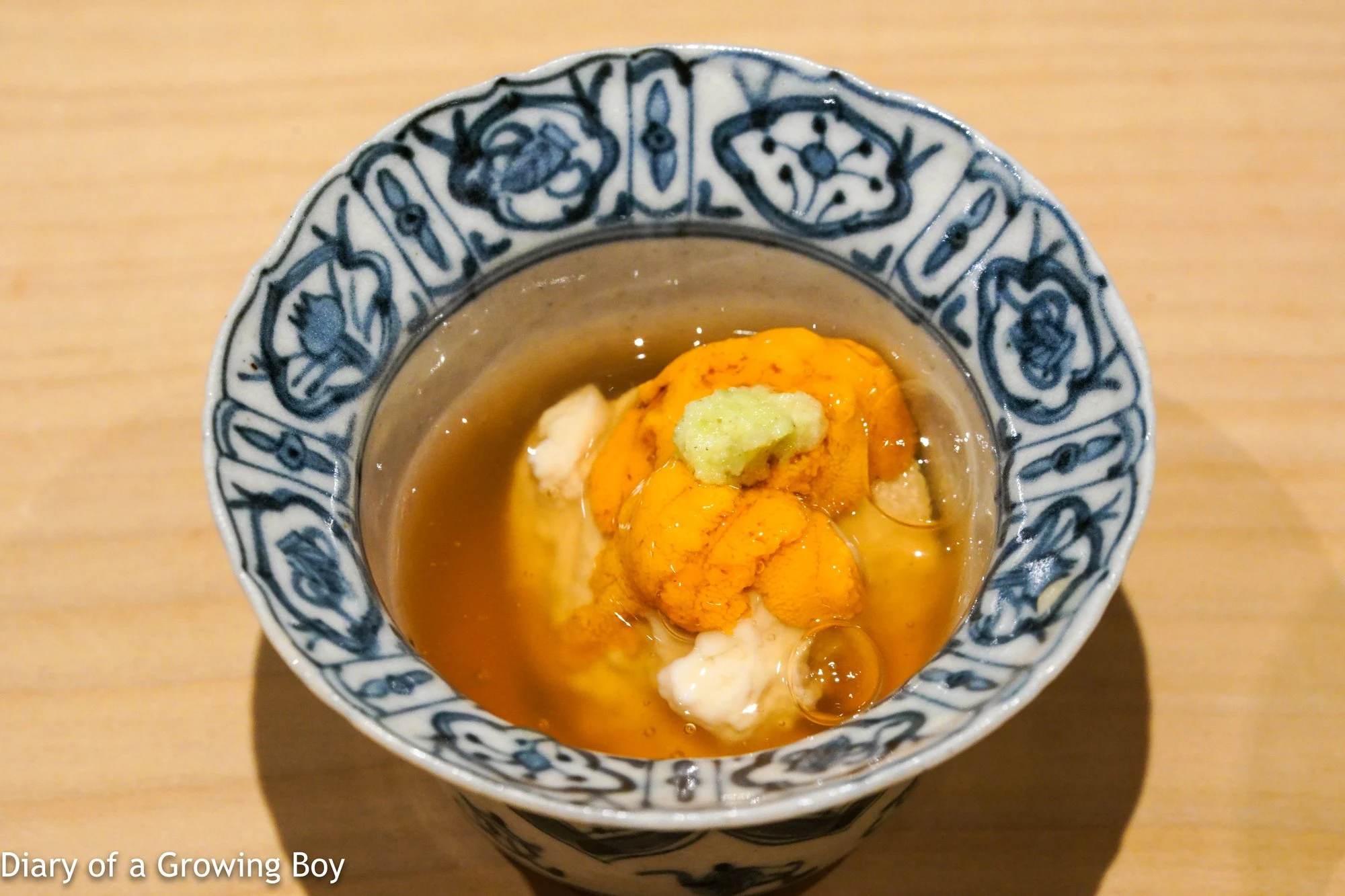
The seasonal frame also affects timing. A sushi counter is never the same restaurant every month, even when room, seats and chef stay constant. Winter favors richer textures and deeper fat; spring often turns lighter; summer tests precision because delicacy leaves little cover; autumn brings density and marine sweetness. Without inventing a dish-by-dish script, the takeaway is simple: repeat diners return for variation, while first-time visitors should choose timing knowing the meal is an interpretation of a moment, not a fixed menu.
That separates serious sushi travel from restaurant collecting. A nationally recognized counter in a regional city asks for a different itinerary rhythm. It should not be wedged between rushed transfers and heavy sightseeing. Kitakyushu rewards a deliberate schedule: one high-focus meal, then a day that explains the city through other registers, from ramen and udon to sweets and bars. Travelers comparing sushi across Japan can widen the frame with 3110, Sushi in Tokyo and AKA to SHIRO, Sushi in Osaka, then read Kitakyushu as a different proposition rather than a lesser version of the same one.
How to place it inside a Japan itinerary
Teruzushi works especially well for travelers already moving through northern Kyushu, Fukuoka and western Honshu. Kitakyushu is not background detail; it changes the meal’s meaning. The city’s position between sea, rail and industry gives the counter a sharper regional identity than a transplant-style luxury room would. This is sushi as a reason to stop in Kitakyushu, not just a detour from Fukuoka.
For a national dining itinerary, compare category rather than cuisine alone. A premium sukiyaki meal such as -Grilled beef Sukiyaki- KAMAKURA TANUKIAN 鎌倉 たぬき庵 in Kamakura expresses season through beef, broth and ritual; sushi expresses it through marine timing and rice. Tokyo casual drinking and charcoal formats, represented by. 鮪と炭火焼き うお炭 秋葉原店 in Tokyo, operate with a different register of appetite..cafe in Osaka,.know in Kumamoto, (Shoku) Vietnam in Kawasaki and [Curry Senmon Ten] Maruyama Kyoju. in Sapporo show how quickly Japan’s dining map changes when the itinerary moves from counter sushi to cafés, regional cooking, Vietnamese-Japanese neighborhood dining and curry specialization.
The editorial case is clear: Teruzushi is for travelers who want Kyushu sushi to be more than a supporting act to Fukuoka ramen or Tokyo omakase. Its scale, recognition history and chef-led counter format put it in the serious-destination tier, while the seasonal nature of sushi keeps the experience from becoming static. Expect not a universal luxury template, but a compact, closely watched counter in Kitakyushu where the calendar, region and chef’s presence shape the meal in real time.
Questions
Frequently asked
Who works at Teruzushi?
Made By profiles Takayoshi Watanabe (Chef) at Teruzushi.
How expensive is Teruzushi?
Teruzushi is listed at a price level of $$$$.
Where is Teruzushi and what does it serve?
Teruzushi is in Tobata-Ku, Kitakyushu, serving Entertainment Sushi.
The field
How it compares
| Place | Cuisine | Notes | Awards |
|---|---|---|---|
| Teruzushi | Entertainment Sushi | Tobata-Ku, $$$$ | · |
| Atrio | Modern Spanish Fine Dining with Iberian Pork Focus | Cáceres | Michelin 3 Stars |
| Elkano | Basque Grilled Fish | Getaria | Michelin 1 Star, World's 50 Best |
| HAJIME | Avant-Garde Japanese Fine Dining | Osaka | Michelin 3 Stars, World's 50 Best |
| Myojaku | Modern Minimalist Kaiseki | Tokyo | Michelin 3 Stars, World's 50 Best |
| Oryori Sato | Seasonal Japanese Omakase | Kitakyushu | · |
| Tsubasa | Kokura-Style Sushi | Kitakyushu | · |
In residence
Similar places
Modern Spanish Fine Dining with Iberian Pork Focus
Atrio
Cáceres, Spain
★★★
Basque Grilled Fish
Elkano
Getaria, Spain
★ · 50 Best
Avant-Garde Japanese Fine Dining
HAJIME
Osaka, Japan
★★★ · 50 Best
Modern Minimalist Kaiseki
Myojaku
Tokyo, Japan
★★★ · 50 Best
Seasonal Japanese Omakase
Oryori Sato
Kitakyushu, Japan
Kokura-Style Sushi
Tsubasa
Kitakyushu, Japan