Kokura's Kaiseki Counter in Context
Kitakyushu is not the first city most visitors name when planning a kaiseki itinerary through western Japan. Fukuoka draws the food-travel attention, Kyoto defines the category internationally, and Osaka has spent the last decade building a fine-dining scene that extends well beyond its ramen-and-okonomiyaki reputation. Yet Kokura, the commercial and administrative heart of Kitakyushu, has quietly produced one of the most consistently reviewed kaiseki counters in the entire Kyushu region. Sato, on Kyomachi in Kokurakita Ward, has received a Tabelog Bronze Award in every consecutive year from 2017 through 2026, a run of nine years that places it in rare company for a fourteen-seat room outside the major metropolitan centres. It has also been selected three times for the Tabelog Japanese Cuisine WEST Top 100 (2021, 2023, and 2025), a list that draws from the entire western half of the country. For context on how that benchmark compares to other award-tracked rooms, see our coverage of Gion Sasaki in Kyoto and Ifuki in Kyoto.
What Kaiseki Demands, and What Sato Delivers
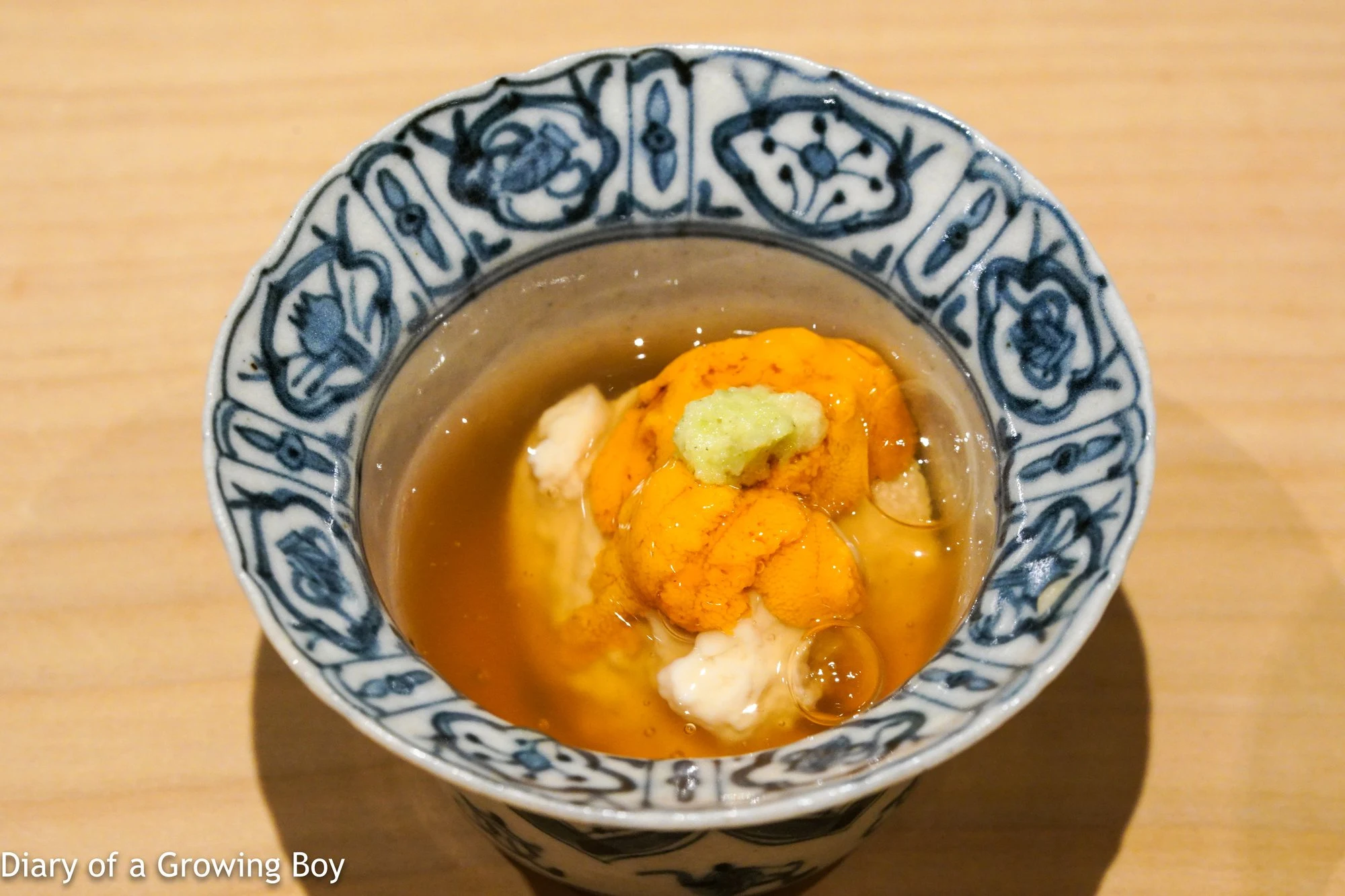
Kaiseki is the most formally structured of Japan's culinary traditions. It evolved from the spare rice-and-pickles meal served before a tea ceremony into a multi-course progression that treats seasonality, visual composition, and the harmony of vessel and ingredient as inseparable disciplines. The form imposes a discipline that rewards counters with strong supplier relationships and disciplined technique: courses are built around what the season yields, not what the kitchen prefers to cook. At Sato, the menu signals a particular focus on fish, which makes geographic sense, Kitakyushu sits at the northern tip of Kyushu, with access to the Kanmon Strait and the fishing grounds of the Genkai Sea. Seasonal fish from these waters has always been central to the region's food culture, and a kaiseki counter that prioritises it is working with, not against, its local ingredient base. For comparison with how kaiseki philosophy translates into different regional contexts, our coverage of Kikunoi Tokyo and Goh in Fukuoka offers a useful reference frame.
The Sunday email
Read about the people behind restaurants like Oryori Sato in the Sunday email.
Every Sunday we send a lead story and up to four more about the chefs, winemakers, sommeliers and hoteliers behind the restaurants, bars, wineries and hotels we cover.
Recent stories

Free. One email a week, and you can unsubscribe from any issue.
The Room: Fourteen Seats, Two Configurations
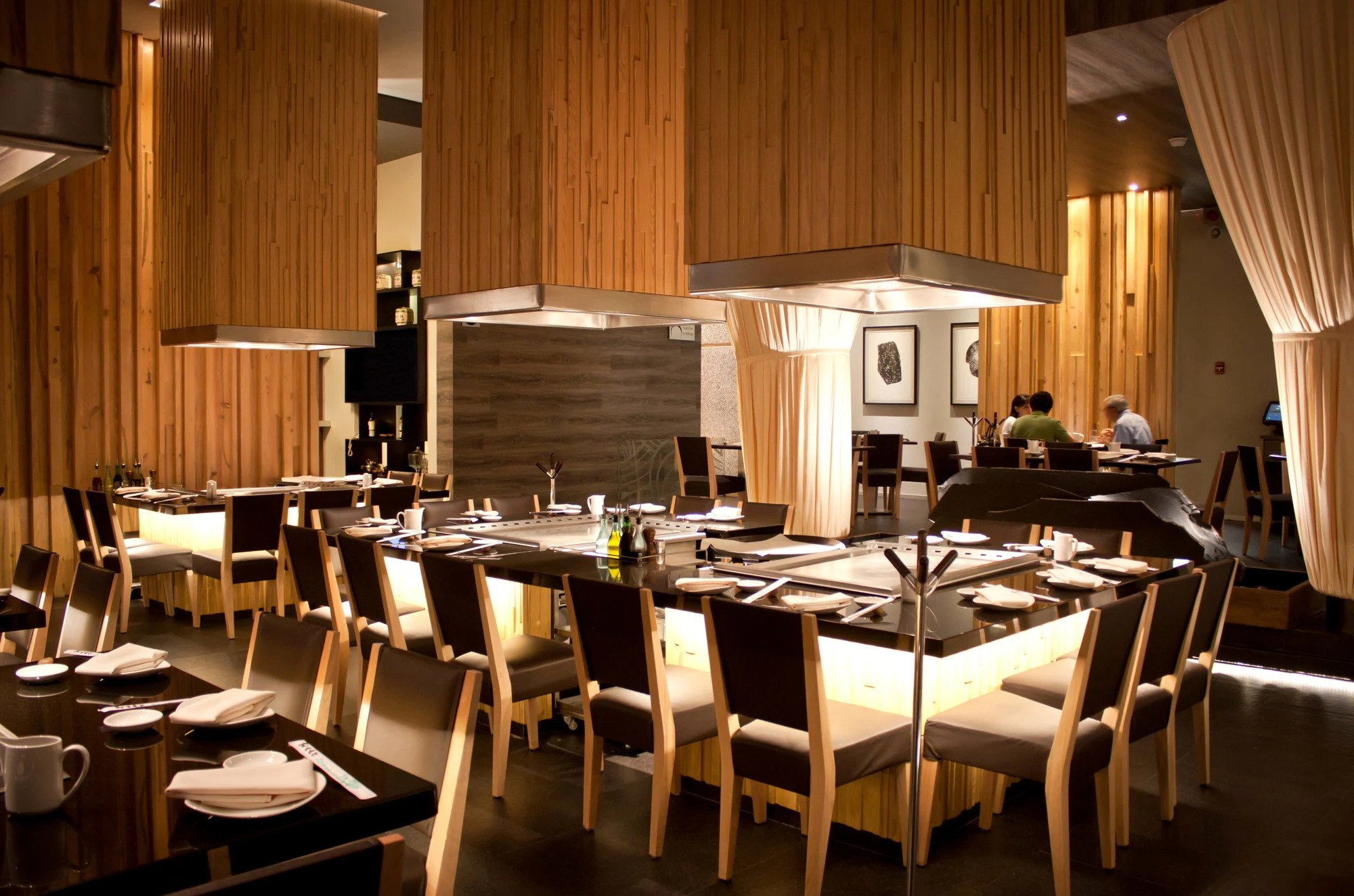
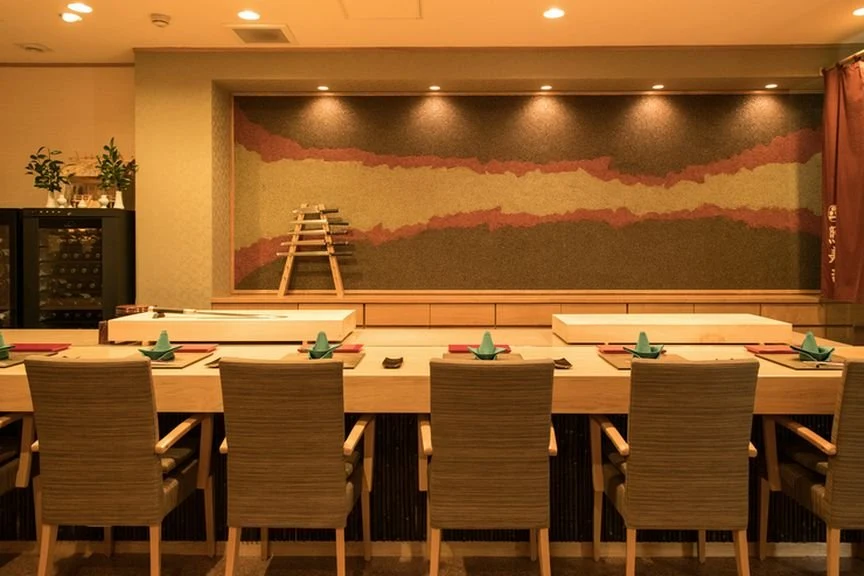
The physical environment at Sato follows the logic of its category. Kaiseki in Japan tends toward spatial restraint, low seat counts, natural materials, and a counter format that places the diner in direct view of preparation. Sato seats fourteen people across two configurations: an eight-seat main counter and a separate private counter that accommodates four to six guests. The private room requires a direct phone reservation and is subject to prior bookings, so groups should confirm early. Single diners at lunch are also directed to contact the restaurant by phone rather than booking online, a policy that signals a degree of curation over the lunch seating, where the room's dynamics matter more in a fourteen-seat space than they might elsewhere. The Tabelog listing categorises the space as a stylish and relaxing room with counter seating, a spare description that fits the aesthetic principles kaiseki interiors generally follow. No parking is available on site, but the address puts Sato approximately two minutes on foot from JR Kokura Station, which is both a Shinkansen stop and a major junction for local rail and bus connections across Kitakyushu. For those planning a broader Kokura stay, our full Kokura hotels guide covers the accommodation options within range.
Price, Positioning, and the Kyushu Fine-Dining Tier
Kaiseki pricing in Japan covers an enormous range, from accessible lunch sets at regional counters to multi-hour dinner progressions at leading Kyoto and Tokyo rooms that can reach JPY 60,000 or more per head. Sato's listed price band of JPY 20,000 to 29,999 for both lunch and dinner places it in the serious mid-tier of the format, demanding enough to signal genuine commitment from the kitchen and the diner, but not in the rarefied bracket occupied by rooms like HAJIME in Osaka or Harutaka in Tokyo. Review-based spending data from Tabelog suggests some diners land in the JPY 30,000 to 39,999 range at dinner, which tracks with the beverage programme: sake, shochu, and wine are all available, and a serious sake pairing across a full kaiseki progression will move the final bill upward. Credit cards (VISA, Mastercard, JCB) and PayPay are accepted; electronic money is not. Given the counter's nine-year award streak and three Top 100 selections, the value positioning relative to its recognition record is worth noting, rooms with comparable Tabelog trajectories in Osaka or Tokyo tend to carry higher price floors. The Kokura address is part of what holds the pricing where it is, and that is a genuine consideration for visitors pricing out a Kyushu fine-dining itinerary. See also our listings for Aji Arai in Oita and Abon in Ashiya for comparable regional fine-dining reference points.
Tracking the Award Record
Tabelog's award structure is worth understanding for anyone using it as a planning tool. The platform scores restaurants on a scale where anything above 3.5 represents genuine distinction, and the annual Bronze, Silver, and Gold tiers are drawn from the leading performers in each cuisine category and region. Sato received a Silver in 2017, a higher-tier recognition than the Bronze awards that followed, though the Bronze designation from 2018 onward still places it consistently in the top tier of Tabelog-ranked Japanese cuisine counters in western Japan. The current 2026 score of 3.86 and the Opinionated About Dining (OAD) ranking of #210 in Japan for 2025 (it placed #182 in 2024 and #149 in 2023) indicate a restaurant that remains in the conversation at the national level, even as its relative OAD position has shifted across years. The OAD list draws on votes from a global peer network of food-focused travellers and critics, so a sustained presence in its top 250 for Japan is a meaningful signal, particularly for a counter in a city that does not feature prominently in international fine-dining coverage. For other consistently ranked Japanese restaurants in the Kyushu and western Japan region, our full Kokura restaurants guide maps the wider scene. Broader Kyushu coverage includes 6 in Okinawa and affetto akita in Akita for those building out a Japan itinerary beyond the main corridors. For further context on the kaiseki form across Japan, see our coverage of akordu in Nara and 1000 in Yokohama.
Questions
Frequently asked
Who works at Oryori Sato?
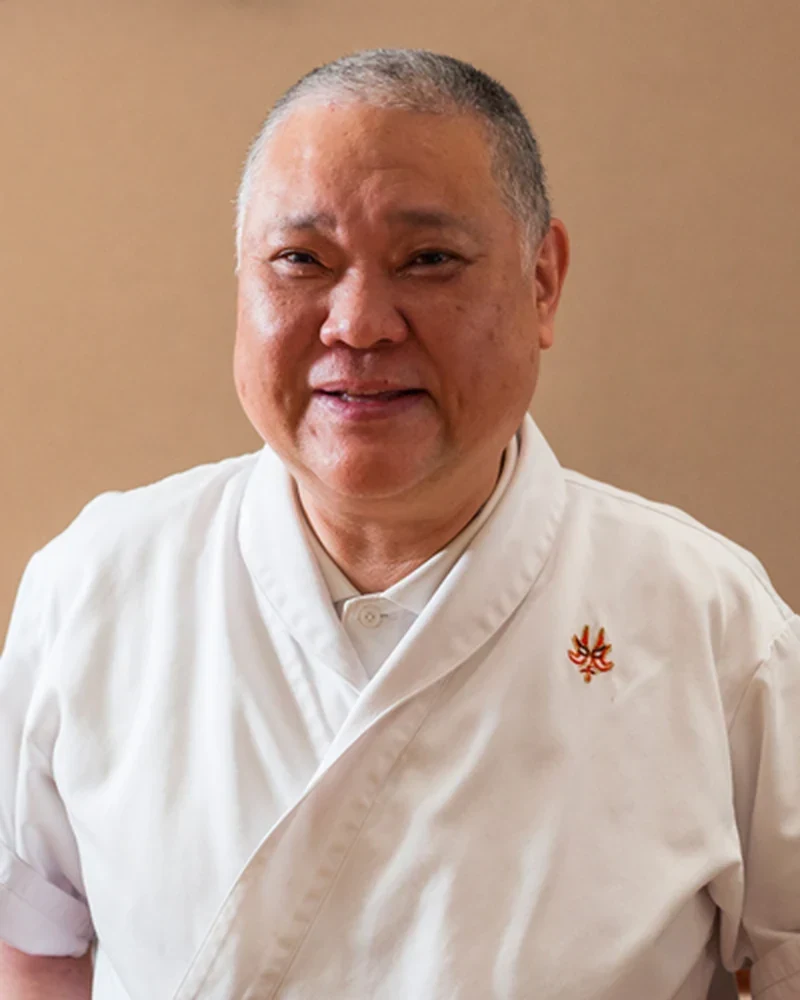
Made By profiles Yoshimi Sato (Chef) at Oryori Sato.
How expensive is Oryori Sato?
Oryori Sato is listed at a price level of $$$$.
Where is Oryori Sato and what does it serve?
Oryori Sato is in Kokura Kita Ward, Kitakyushu, serving Seasonal Japanese Omakase.
The field
How it compares
| Place | Cuisine | Notes | Awards |
|---|---|---|---|
| Oryori Sato | Seasonal Japanese Omakase | Kokura Kita Ward, $$$$ | · |
| Botanist | Modern Canadian Fine Dining | Vancouver | · |
| Eleven Madison Park | Contemporary Plant-Based Fine Dining | New York City | Michelin 3 Stars, 50 Best |
| Jungsik New York | Modern Korean Fine Dining | New York City | Michelin 3 Stars, 50 Best |
| Tenzushi Kyomachi | Modern Kyushu-style Omakase Sushi | Kitakyushu | · |
| Teruzushi | Entertainment Sushi | Kitakyushu | · |
| Tsubasa | Kokura-Style Sushi | Kitakyushu | · |
Similar places
Modern Canadian Fine Dining
Botanist
Vancouver, Canada
Contemporary Plant-Based Fine Dining
Eleven Madison Park
New York City, United States
★★★ · 50 Best
Modern Korean Fine Dining
Jungsik New York
New York City, United States
★★★ · 50 Best
Modern Kyushu-style Omakase Sushi
Tenzushi Kyomachi
Kitakyushu, Japan
Entertainment Sushi
Teruzushi
Kitakyushu, Japan
Kokura-Style Sushi
Tsubasa
Kitakyushu, Japan
The Sunday email
Read about the people behind restaurants like Oryori Sato in the Sunday email.
Every Sunday we send a lead story and up to four more about the chefs, winemakers, sommeliers and hoteliers behind the restaurants, bars, wineries and hotels we cover.
Recent stories
Free. One email a week, and you can unsubscribe from any issue.