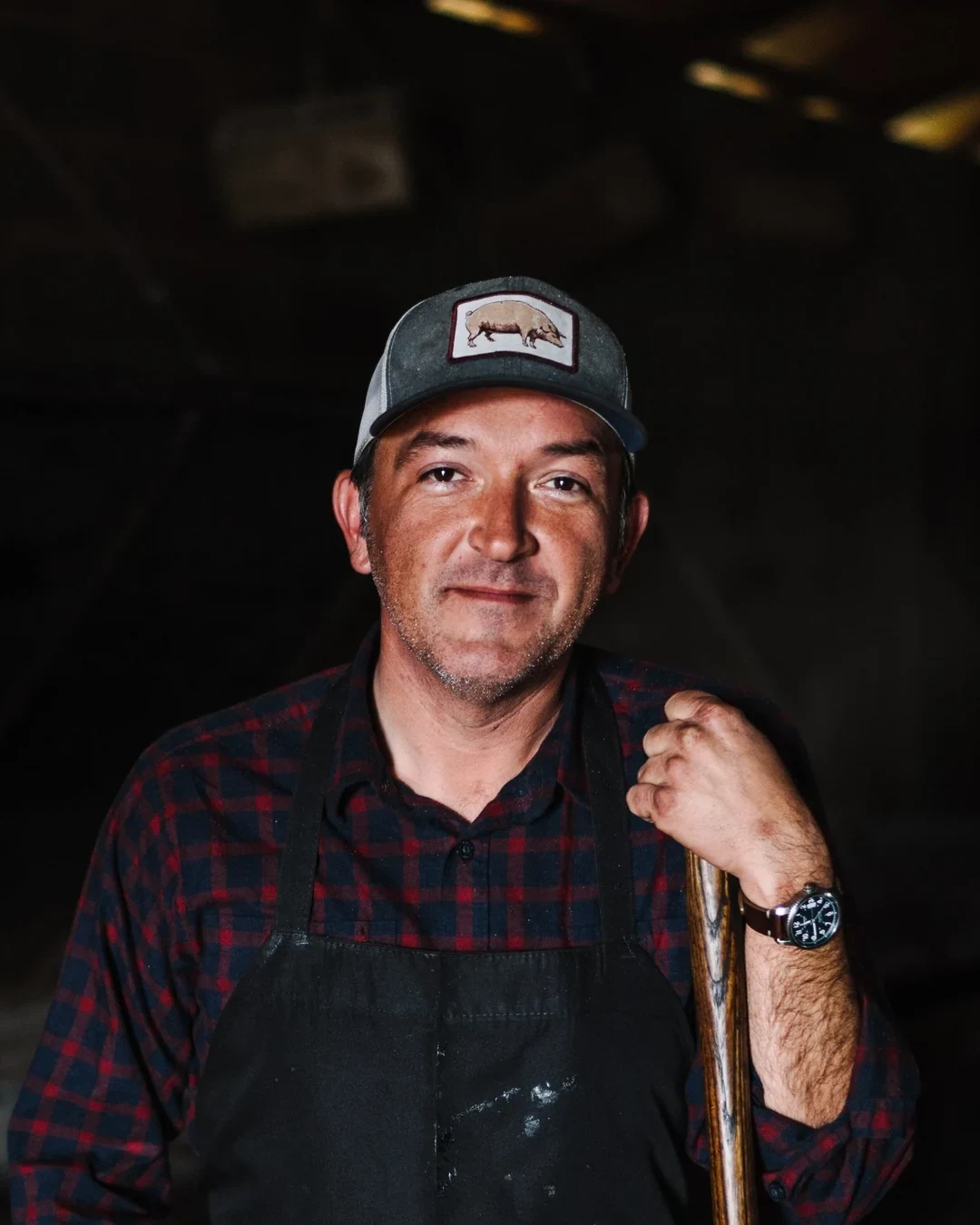
Sam Jones cooks as chef and pitmaster at The Skylight Inn in Ayden, keeping whole hog barbecue over wood.
- Opinionated About Dining Cheap Eats in North America Highly Recommended · 2026
Smoke, skin, and the same obligation
The cleaver lands on pork and crisp skin at the chopping block, the sound carrying through The Skylight Inn in Ayden, where Sam Jones works as chef and pitmaster. His station is not built around novelty. It is built around the control of fire, the patience of smoke, and a standard that has survived because each hand at the pit accepts the discipline of repetition. Pete Jones founded the restaurant in 1947, but the family barbecue heritage around Ayden is traced to 1830, a span that gives the room its weight without needing to announce it. Sam Jones has spoken plainly about that inheritance. “When I was young, I was a little bit embarrassed of Skylight.” Later, the work changed shape for him: “I saw it no longer as a job, but as a way of life.” That line matters at the bench because whole hog barbecue does not flatter impatience. The pitmaster reads heat by consequence, not by flourish. The meat has to cook long enough to take smoke, hold moisture, and still carry the texture that comes when the skin is folded back into the chop.
Whole hog over oak and hickory
The program here is Eastern North Carolina whole hog barbecue, cooked over oak and hickory wood, then chopped fine with crisp bits of skin kept in the mix. The seasoning stays direct: vinegar-based sauce, salt, pepper, and Texas Pete hot sauce. Nothing in that sequence asks to be dressed up. Its difficulty sits in timing, proportion, and the restraint to stop before the meat loses itself under sauce. The pork can leave the counter as a sandwich with coleslaw on a bun or as a tray with cornbread and coleslaw, but the method begins before any plate is built. Fire sets the tempo. Smoke does the slower work. The cornbread belongs to the same logic: dense, made with stone-ground cornmeal, water, and pork drippings, cut to sit beside the chop rather than soften it. Barbecue chicken is part of the offering, too, but the house language is the hog, the skin, the vinegar, the board.
The counter and the roofline
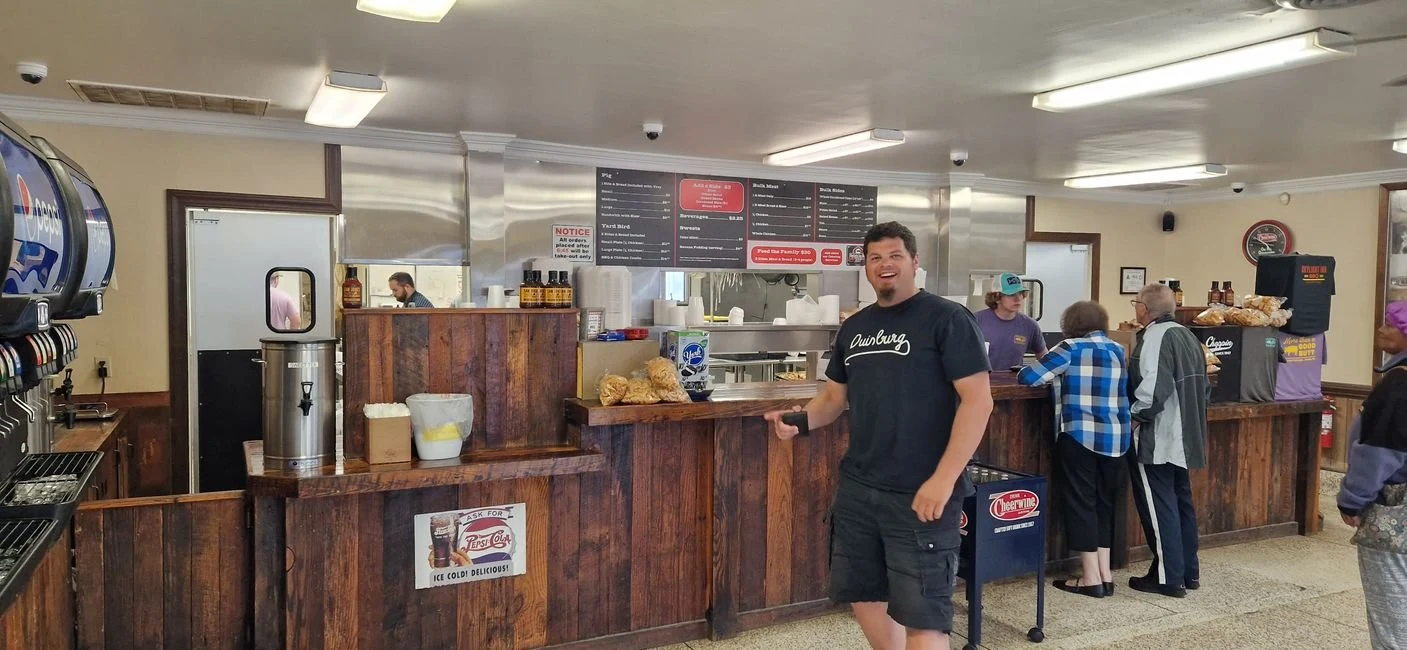
The room does not distract from the work. Orders happen at the counter, food moves to bare tables, and the most present sound is pork being chopped on a wood board. Conversation has space because the place has not been arranged to perform rusticity; it simply keeps to its function. Outside, a wood and aluminum replica of the United States Capitol sits on the roof, a physical echo of the 1979 National Geographic line that called this address the barbecue capital of the world. Inside, that kind of recognition has less force than the next tray coming across the pass. In 2003, The Skylight Inn received the James Beard America’s Classics Award, recognition given to the house itself, not as decoration but as a marker of continuity.
What remains in the chop
The house does not need a new language to stay current. Its authority rests in the repeated act: hog over wood, skin into meat, vinegar through fat, cornbread cut dense enough to hold its place. Jones’s task is to keep that grammar alive without sanding off its edges. The clearest close is still the one at the block, where chopped whole hog pork carries crisp skin, vinegar, salt, pepper, and Texas Pete at The Skylight Inn.
Questions
Frequently asked
Who cooks at The Skylight Inn?
Sam Jones works there as chef and pitmaster, carrying on the family barbecue tradition in Ayden.
What is The Skylight Inn known for?
It is known for Eastern North Carolina whole hog barbecue cooked over oak and hickory wood, then chopped fine with crisp bits of skin kept in the mix.
How is the barbecue seasoned and served?
The pork is finished with vinegar-based sauce, salt, pepper, and Texas Pete hot sauce, and it can be served as a sandwich with coleslaw on a bun or as a tray with cornbread and coleslaw.
What recognition has the restaurant received?
The Skylight Inn received the James Beard America’s Classics Award in 2003, and a 1979 National Geographic line called the address the barbecue capital of the world.
The field
How it compares
| Place | Cuisine | Awards | Notes |
|---|---|---|---|
| The Skylight Inn | Barbecue | · | · |
| Gaggan Anand | Progressive Indian | Michelin 1 Star, World's 50 Best | Bangkok |
| Jungsik New York | Modern Korean Fine Dining | Michelin 3 Stars, World's 50 Best | New York City |
| Odette | Modern French Fine Dining | Michelin 3 Stars, World's 50 Best | Singapore |
| Paco Roncero | Avant-Garde Spanish Fine Dining | Michelin 2 Stars | Madrid |
| Quince | Modern French Fine Dining | Michelin 3 Stars, World's 50 Best | San Francisco |
| The Ledbury | Modern British Fine Dining | Michelin 3 Stars, World's 50 Best | London |
In residence
Similar places
Progressive Indian
Gaggan Anand
Bangkok, Thailand
★ · 50 Best
Modern Korean Fine Dining
Jungsik New York
New York City, United States
★★★ · 50 Best
Modern French Fine Dining
Odette
Singapore, Singapore
★★★ · 50 Best
Avant-Garde Spanish Fine Dining
Paco Roncero
Madrid, Spain
★★
Modern French Fine Dining
Quince
San Francisco, United States
★★★ · 50 Best
Modern British Fine Dining
The Ledbury
London, United Kingdom
★★★ · 50 Best