Yamaji Yosuke
- 01CuisineInnovative French Fusion
- 02CityKyoto, Japan
- Michelin Plate · 2026
- Opinionated About Dining Top Restaurants in Japan Recommended · 2026
- Tabelog 100 #32: 3.7pts · 2025
- Michelin Plate · 2025
- Michelin Plate · 2024
Where Gion's Counter Tradition Meets a French Detour
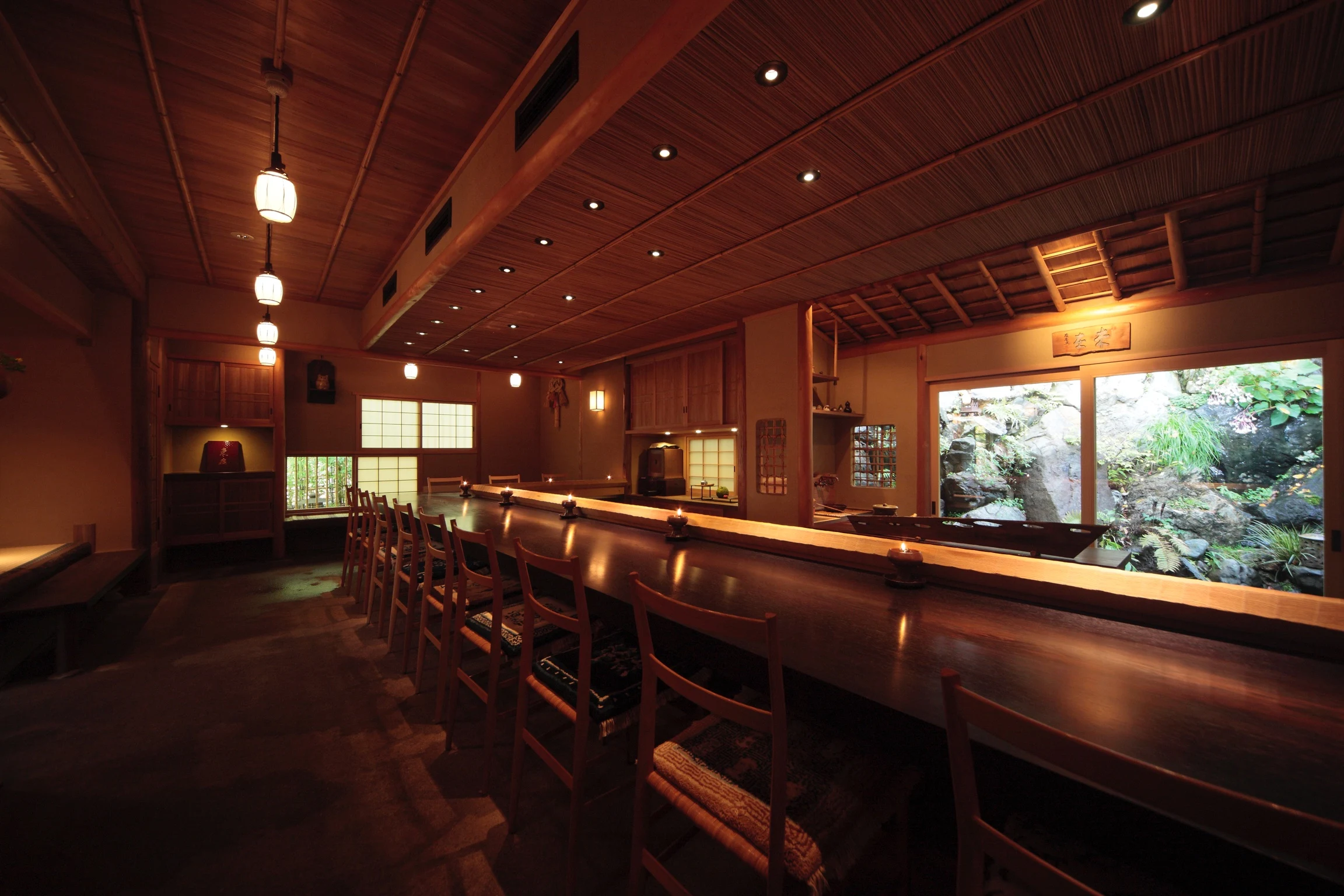
Yamaji Yosuke is a kappo restaurant in Kyoto's Gion district, at 570-151 Gionmachi Minamigawa, Higashiyama Ward. Machiya facades, stone-paved lanes, and the low amber of lantern light set expectations before you've touched a door handle. The neighbourhood hosts kaiseki at every price tier, from the ¥¥¥¥ formality of Gion Sasaki to the deeply codified seasonal sequences at Kikunoi Honten and Hyotei. Yamaji Yosuke occupies a different register within that neighbourhood density: a kappo counter at the ¥¥¥ tier, shaped not by kaiseki orthodoxy but by an explicit cross-cultural dialogue between Japanese technique and French culinary thinking.
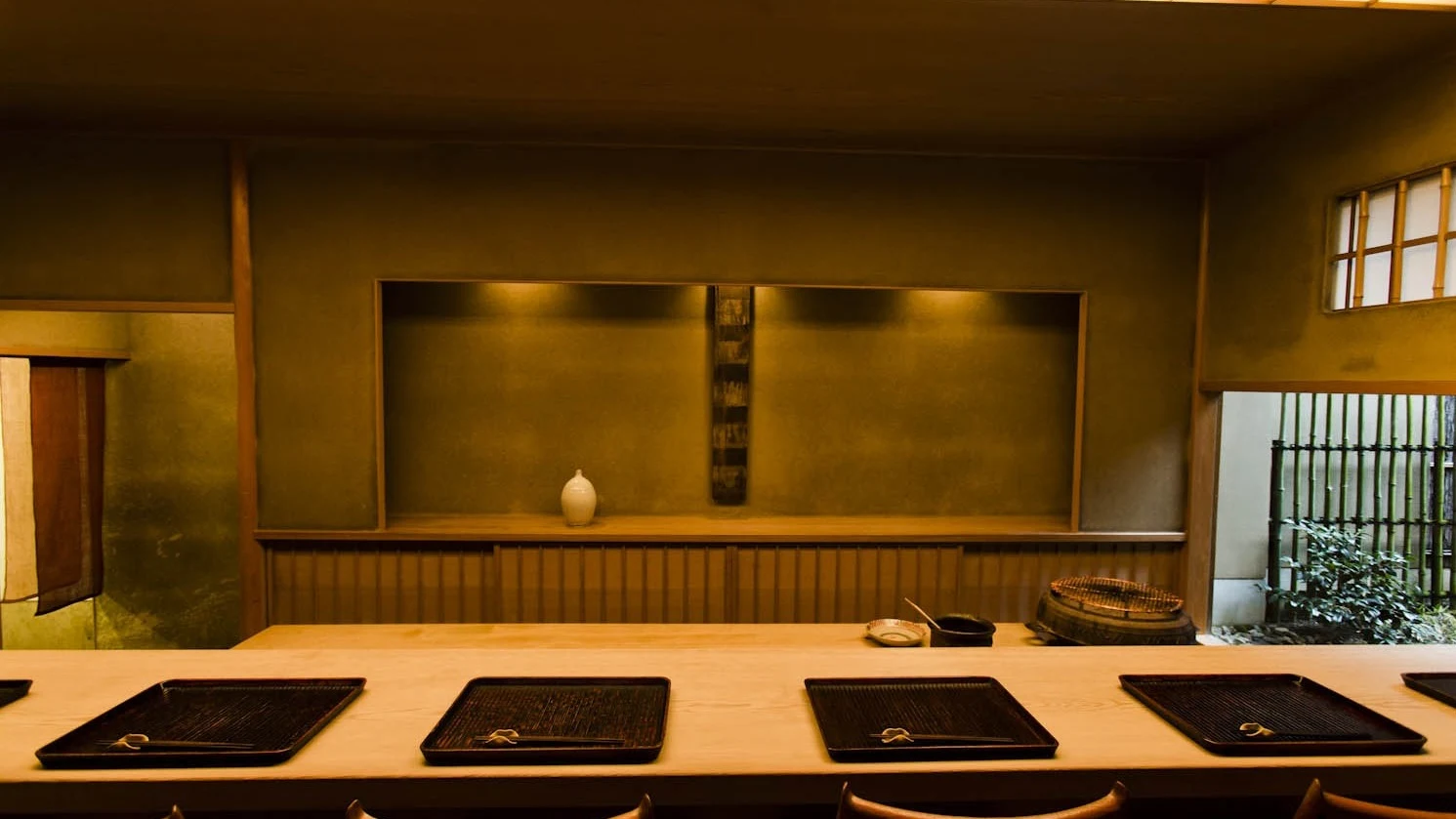
Kappo as a format predates kaiseki's elaborate ceremonial structure. At its core, it is chef-to-diner cooking, where the kitchen is open, courses arrive as they're ready, and the distance between hand and plate is short. That directness suits a restaurant with a hybrid identity: there's no need to force the progression into a traditional kaiseki container when the logic of each course can speak for itself across cultural registers.
The Arc of a Meal: Sequence as Argument
The tasting progression at Yamaji Yosuke is where the restaurant's premise becomes concrete. In the leading cross-cultural kitchens, the sequence itself makes an argument: not fusion in the sense of glossing over difference, but a deliberate movement through reference points that rewards attention to how flavours and techniques shift from course to course.
Chef Makoto Okamoto's time in France gave him direct working relationships with chefs from Italy, the Middle East, China, and beyond, and those encounters surface in the menu as specific co-creations rather than ambient influence. The squid carbonara, documented in the awards notes as a collaboration with a Paris-based chef, is one cited example: a dish that takes a Roman pasta logic and routes it through Japanese ingredient sensibility. Within a tasting sequence, that kind of course functions as a pivot, a moment where the diner recalibrates what genre they're eating in.
The progression also benefits from the kappo format's flexibility. Unlike a kaiseki sequence bound to the eight-course structure of hassun, mukozuke, and yakimono, a kappo counter can reorder the meal's rhythm to serve the cooking's internal logic rather than ceremonial precedent. Courses can be lighter or heavier, warm or cool, Japanese or European in character, without violating any house grammar. That latitude allows the meal's arc to build across a wider tonal range than most single-tradition restaurants of comparable price.
The Name as Credential
In Kyoto's restaurant culture, naming a restaurant after yourself is not a neutral decision. The city's most established houses, including Isshisoden Nakamura, carry family names as institutional signals. Yamaji named the restaurant after himself, and the awards notes are direct about the intention: to assert individuality in a city where conformity to tradition is the default competitive strategy.
That assertion carries a Michelin Plate in both 2024 and 2025, which places the restaurant in the inspected and recognised tier without the starred pressure that alters how kitchens operate and price.
For comparison, Mizai operates at the upper end of Kyoto's kaiseki tier. Yamaji Yosuke targets a different reader: someone who wants Michelin-recognised cooking, Gion's address credentials, and a menu that doesn't position itself as a custodian of Japanese culinary heritage but as a live conversation with it.
Kyoto's Mid-Tier Counter Scene in Context
Kyoto's dining market has a well-documented top-heavy quality: the ¥¥¥¥ kaiseki tier is internationally famous, and the casual izakaya end is well-served. The ¥¥¥ counter segment, where serious cooking meets accessible pricing, is smaller and more varied. It includes cross-cultural projects like this one, Italian-influenced kitchens like cenci, and Chinese-inflected counters like Kyo Seika. Within that peer group, Yamaji Yosuke's French axis is one explicit about the role of apprenticeship abroad as a structural ingredient in the restaurant's identity.
That cross-reference extends beyond Kyoto. Diners who have spent time at Harutaka in Tokyo or Goh in Fukuoka will recognise the model of a Japanese chef whose foreign training returns home as a specific culinary vocabulary rather than a general cosmopolitan sheen. The difference at Yamaji Yosuke is that the French influence is kappo-delivered: closer, faster, less ceremonial than a formal French-Japanese tasting format would allow.
For those planning broader Kansai itineraries, the full Kyoto restaurants guide covers the range from neighbourhood counters to multi-starred kaiseki. The Kyoto hotels guide, bars guide, wineries guide, and experiences guide are also available.
Planning Your Visit
Yamaji Yosuke is open seven days a week with consistent split-service hours: Lunch: 12 to 3 pm daily. Dinner: 6 to 10 pm Monday through Friday and Sunday; 7 to 10 pm Saturday. Address: 570-151 Gionmachi Minamigawa, Higashiyama Ward, Kyoto. Budget: ¥¥¥ tier, placing it below the ¥¥¥¥ kaiseki houses of the immediate neighbourhood. Recognition: Michelin Plate 2024 and 2025.3 from 176 reviews.
Questions
Frequently asked
How expensive is Yamaji Yosuke?
Yamaji Yosuke is listed at a price level of $$$$.
Where is Yamaji Yosuke and what does it serve?
Yamaji Yosuke is in Higashiyama, Kyoto, serving Innovative French Fusion.
The field
How it compares
| Place | Cuisine | Notes | Awards |
|---|---|---|---|
| Yamaji Yosuke | Innovative French Fusion | Higashiyama, $$$$ | · |
| Gion Sasaki | Modern Kaiseki | Kyoto | Michelin 3 Stars |
| Hyotei | Traditional Kaiseki | Kyoto | Michelin 3 Stars |
| Isshisoden Nakamura | Traditional Kyoto Kaiseki | Kyoto | Michelin 3 Stars |
| Kikunoi Honten | Kyoto Kaiseki Ryotei | Kyoto | Michelin 3 Stars |
| Mizai | Traditional Kaiseki | Kyoto | Michelin 3 Stars |
| Ogata | Kaiseki Omakase | Kyoto | Michelin 2 Stars |