Zaytinya
- 01CuisineMediterranean Mezze (Turkish, Greek, Lebanese)
- 02CityWashington DC, United States
- Michelin Bib Gourmand · Michelin Guide
- Wine Spectator · Tier 1
- Wine Spectator Award of Excellence · 2026
- Wine Spectator Award of Excellence · 2025
- Michelin Bib Gourmand · 2025
- Michelin Bib Gourmand · 2024
Where the Eastern Mediterranean Meets Penn Quarter
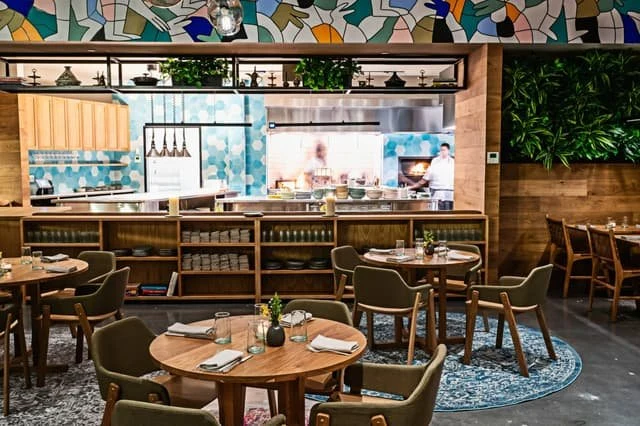
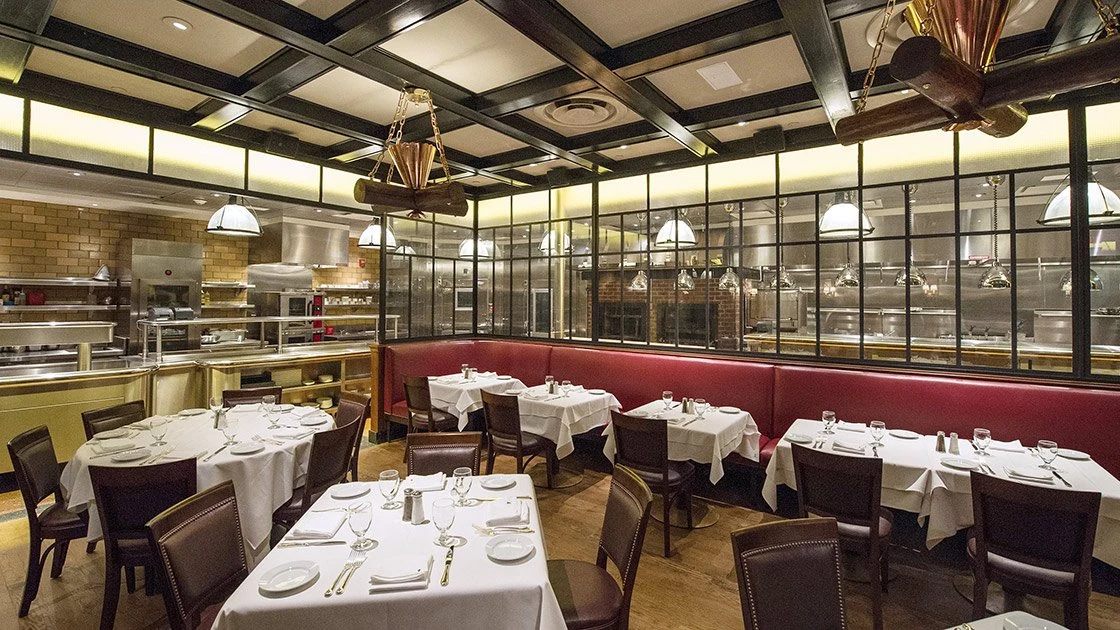
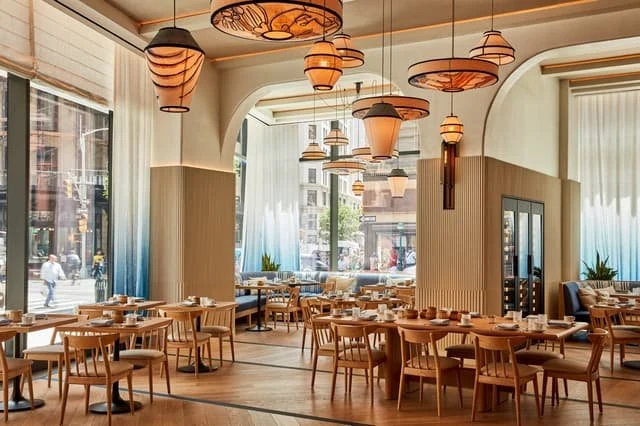
Penn Quarter sits at the intersection of Washington's cultural and commercial gravity, a neighbourhood where federal buildings give way to theater marquees and lunch crowds spill onto sidewalks at noon. The restaurant format that thrives here is the large, convivial dining room that can absorb a table of lobbyists, a couple splitting small plates, and a solo diner at the bar with equal ease. Zaytinya, on 9th Street NW, is precisely that kind of room: wide, sleek, and running on the logic of the mezze table.
The mezze format is worth understanding on its own terms before arriving. Across Greece, Lebanon, and Turkey, the tradition is less about individual dishes than about accumulation and sharing. A table that orders well ends up with a dozen small plates arriving in loose waves, the whole greater than the parts. That rhythm suits a mid-range urban dining room far better than it suits a formal tasting counter, and it is the format around which Zaytinya is built. The restaurant's recognition for 2024 reflects exactly this: serious cooking at a price point that does not require a special occasion to justify.
The Mezze Logic and the Eastern Mediterranean Spread
The menu spans the three culinary traditions the room is designed around. Spreads anchored with fresh pita open the table. Salads and flatbreads, including pide in the Turkish style, follow. Then the meze plates proper: vegetables, pulses, grilled and braised proteins. The mushroom kapnista, finished with dates, walnuts, and labneh, sits at the richer end of the vegetable section, the smokiness of the mushroom grounded by the tang of the labneh and the sweetness of the dates. Braised lamb reads as the room's Sunday register, the kind of slow-cooked preparation that makes sense of a leisurely weekend lunch when the restaurant opens at 11 am on Saturdays and Sundays.
Editorial angle worth pressing here is the gap between how Iranian and broader Persian-inflected cooking sits within the Eastern Mediterranean frame. The region that stretches from the Levant through Anatolia and into the Aegean does not always map neatly onto the Iranian culinary tradition, with its saffron-scented rice, tahdig technique, and stew complexity. Zaytinya draws from the Greek, Lebanese, and Turkish sides of the Eastern Mediterranean rather than the Persian interior, but it operates within the same broad logic of sharing plates, vegetable-forward cooking, and spice used for depth rather than heat. The labneh and walnut combination in the mushroom kapnista, for instance, or the diversity of the spreads section, would not be out of place at a table in Tehran or Isfahan, even if the dish names and specific preparations lean further west. This is the common grammar of a culinary zone that modern restaurant formats in American cities are only beginning to represent with the seriousness they deserve.
Vegetarian eaters will find more to order here than at most comparable price points in the city. The menu's architecture does not treat vegetables as a concession but as a structural pillar. That design choice reflects the source traditions: in a Lebanese or Greek meze spread, the vegetable and pulse dishes are typically among the most technically demanding, and the protein is the supplement rather than the centrepiece.
The Wine List as a Signal
A wine list with 140 selections and 170 inventory positions at this price tier is a meaningful statement in a city where lists of this scope often anchor to French and Californian names. Wine Director Jordi Paronella has weighted the list toward Greek and Lebanese labels, which is the correct move for a room serving this food. Greek wines, from Assyrtiko in Santorini through to the reds of Nemea and Xinomavro from Naoussa, have a tonal compatibility with the acidity and spice of Eastern Mediterranean food that Burgundy or Bordeaux do not. Lebanese producers, including those from the Bekaa Valley, work with grape varieties and winemaking philosophies that align with the flavour register of the kitchen. The corkage fee is $25, which is reasonable for a room at this tier.
The list prices in the $$ bracket, meaning a range across price points rather than all bottles under $50 or all bottles over $100. For a lunch or dinner built around sharing plates, this gives the table enough flexibility to drink well without the bill shifting into the territory of Washington's $$$$ tasting menu rooms. For that higher tier, the city has options like Jônt and minibar, both operating at a different price and format register entirely.
Zaytinya in the Washington Dining Context
Washington's Middle Eastern and Mediterranean dining options have expanded significantly over the past decade. At the higher end, Albi operates in the $$$$ tier with a more focused tasting approach to the same regional cuisine. Zaytinya sits below that in both price and format ambition, which is not a criticism: the Bib Gourmand is awarded precisely because the cooking justifies the spend, and the mezze format is structurally better suited to group dining than a set tasting menu. For a table of four or more, the economics and the experience both work well here.
The room also belongs to the broader José Andrés restaurant group, which operates across formats in the city and beyond. The group's other DC addresses include minibar, where the price and format sit at the opposite end of the accessibility spectrum. Zaytinya functions as the group's volume play, a room that can turn covers across lunch and dinner through the week while maintaining cooking standards worth Michelin's attention. Chef Michael Costa leads the kitchen.
For context on what else Penn Quarter and wider Washington offer, Causa and Oyster Oyster represent different but comparable commitments to serious cooking at accessible price points. Further afield and at higher price tiers, Le Bernardin in New York City, Alinea in Chicago, and The French Laundry in Napa occupy different categories entirely, but frame the wider range of what American fine dining looks like at its upper register.
Know Before You Go
- Address: 701 9th St NW, Washington, DC 20001
- Cuisine: Middle Eastern, Mediterranean mezze
- Price tier: $$
- Wine list: 140 selections, 170 inventory; strength in Greek and Lebanese labels; corkage $25
- Awards: 3 total awards
- Owner: José Andrés, Rob Wilder
- Chef: Michael Costa
- Wine Director: Jordi Paronella
- General Manager: Ally Scott
- Google rating: 4.5 from 9,642 reviews
Questions
Frequently asked
What recognition does Zaytinya hold?
Zaytinya holds a Michelin Bib Gourmand.
How expensive is Zaytinya?
Zaytinya is listed at a price level of $$.
Where is Zaytinya and what does it serve?
Zaytinya is in Penn Quarter, Washington DC, serving Mediterranean Mezze (Turkish, Greek, Lebanese).
The field
How it compares
| Place | Cuisine | Notes | Awards |
|---|---|---|---|
| Zaytinya | Mediterranean Mezze (Turkish, Greek, Lebanese) | Penn Quarter, $$ | · |
| Albi | Modern Levantine Fine Dining | Washington DC | Michelin 1 Star, World's 50 Best |
| Dōgon | Modern Afro-Caribbean | Washington DC | World's 50 Best |
| Jônt | Modern Japanese Fine Dining | Washington DC | Michelin 2 Stars |
| minibar | Avant-Garde Molecular Gastronomy | Washington DC | Michelin 2 Stars |
| Moon Rabbit | Creative Vietnamese-Cajun Fusion | Washington DC | World's 50 Best |
| Oyster Oyster | Modern Vegetable-Focused Tasting Menu | Washington DC | Michelin 1 Star |
Similar places
Modern Levantine Fine Dining
Albi
Washington DC, United States
★ · 50 Best
Modern Afro-Caribbean
Dōgon
Washington DC, United States
50 Best
Modern Japanese Fine Dining
Jônt
Washington DC, United States
★★
Avant-Garde Molecular Gastronomy
minibar
Washington DC, United States
★★
Creative Vietnamese-Cajun Fusion
Moon Rabbit
Washington DC, United States
50 Best
Modern Vegetable-Focused Tasting Menu
Oyster Oyster
Washington DC, United States
★