Saison is often described through its hearth, but Co-Owner and Executive Chef Richard Lee is the more useful place to begin. His cooking explains why the fire, the producers, and the commissioned objects belong in the same story. Technique is not imposed on an ingredient; it is built around the people who raised, caught, grew, shaped, or selected it. Saison’s June 2026 Guest Literature Book names 54 farms, ranches, fisheries, pantry specialists, beverage partners, artists, and makers. Read together, they form the working system behind a two-Michelin-star kitchen.
Richard Lee’s Saison
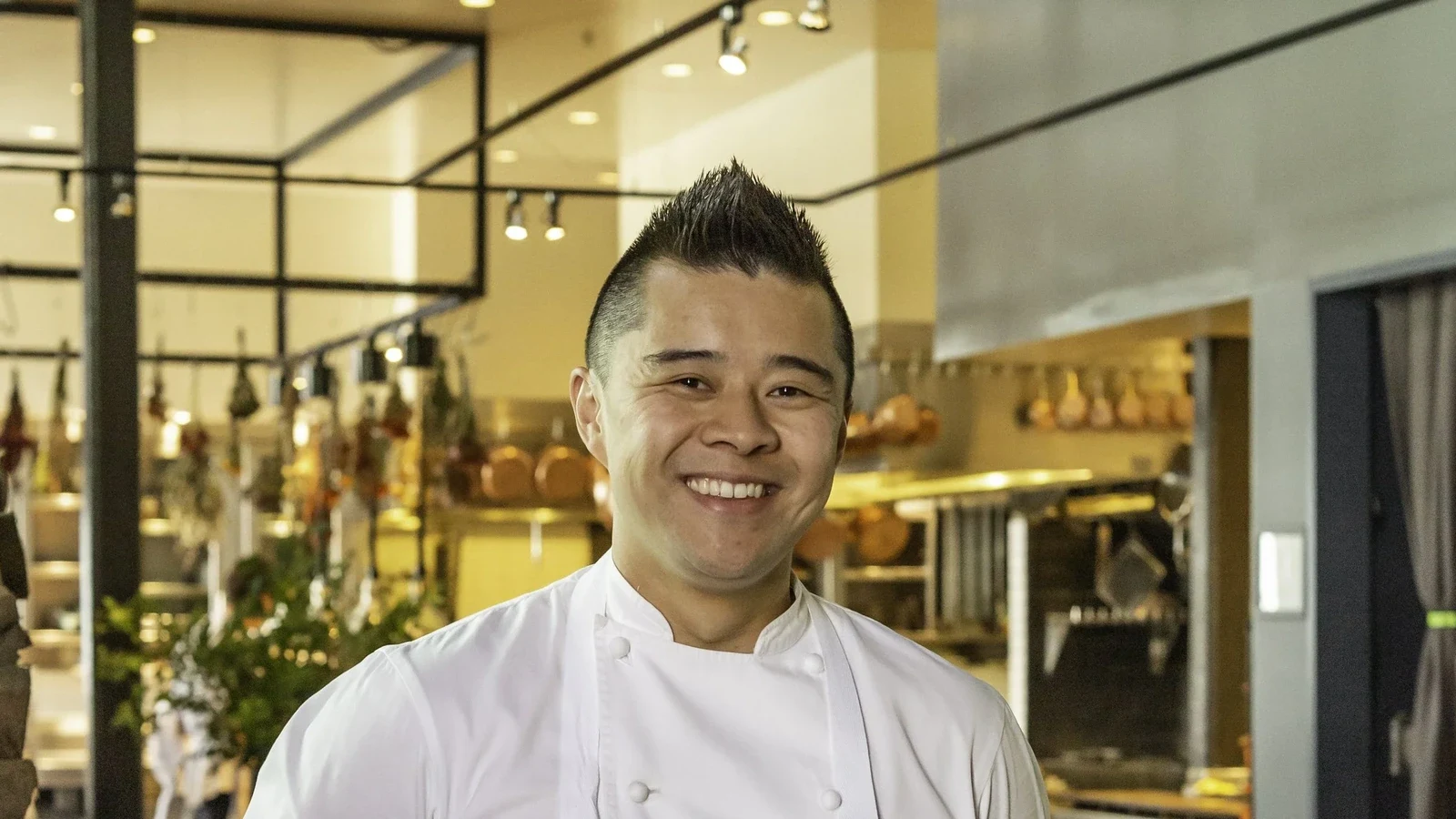
Lee is a San Francisco native and a first-generation Chinese American. He began cooking professionally at 17, graduated from the Culinary Institute of America in 2009, and developed his fine-dining discipline at One Market, Gilt, and Eleven Madison Park, where he rose to sous chef before serving as chef de cuisine for the EMP Summer and Winter House projects. He joined Saison in 2019 as executive sous chef under Laurent Gras, progressed to chef de cuisine, and became executive chef in 2023 before taking an ownership role. In 2025, the James Beard Foundation named him a Best Chef: California nominee, recognition that affirmed what the menu had already made clear: this is not simply a caretaker chapter in Saison’s history, but Lee’s restaurant.
His influence is most legible in the balance between Saison’s open-hearth foundation and the flavors of the Bay Area that raised him. Lee draws from Northern California produce and seafood, San Francisco’s Latin American and Asian food cultures, and the flavor architecture of his Chinese heritage. He has described balancing umami with gentle sweetness, using infused oils to carry aroma with brightness, and cooking sauces only until their aromatics peak rather than reducing them solely for viscosity. The result is live-fire cooking with range: smoke and char are available, but never mandatory. Fire can concentrate sweetness, expose minerality, soften bitterness, or change texture without becoming the dominant taste.
Lee’s authorship also extends beyond individual dishes. He has pushed Saison to focus less on preserving a fixed idea of what the restaurant used to be and more on what it can become: a local, product-led kitchen with rigorous technique, a fermentation program that turns vegetable, bread, and meat trim into useful flavor, and a brigade built around curiosity, accountability, and respect. That culture helps explain why the producer list matters. Saison can work at this level only when the kitchen, dining room, farmers, fishers, ranchers, craftspeople, and beverage team are treated as parts of the same creative system.
The hearth is a supply-chain tool
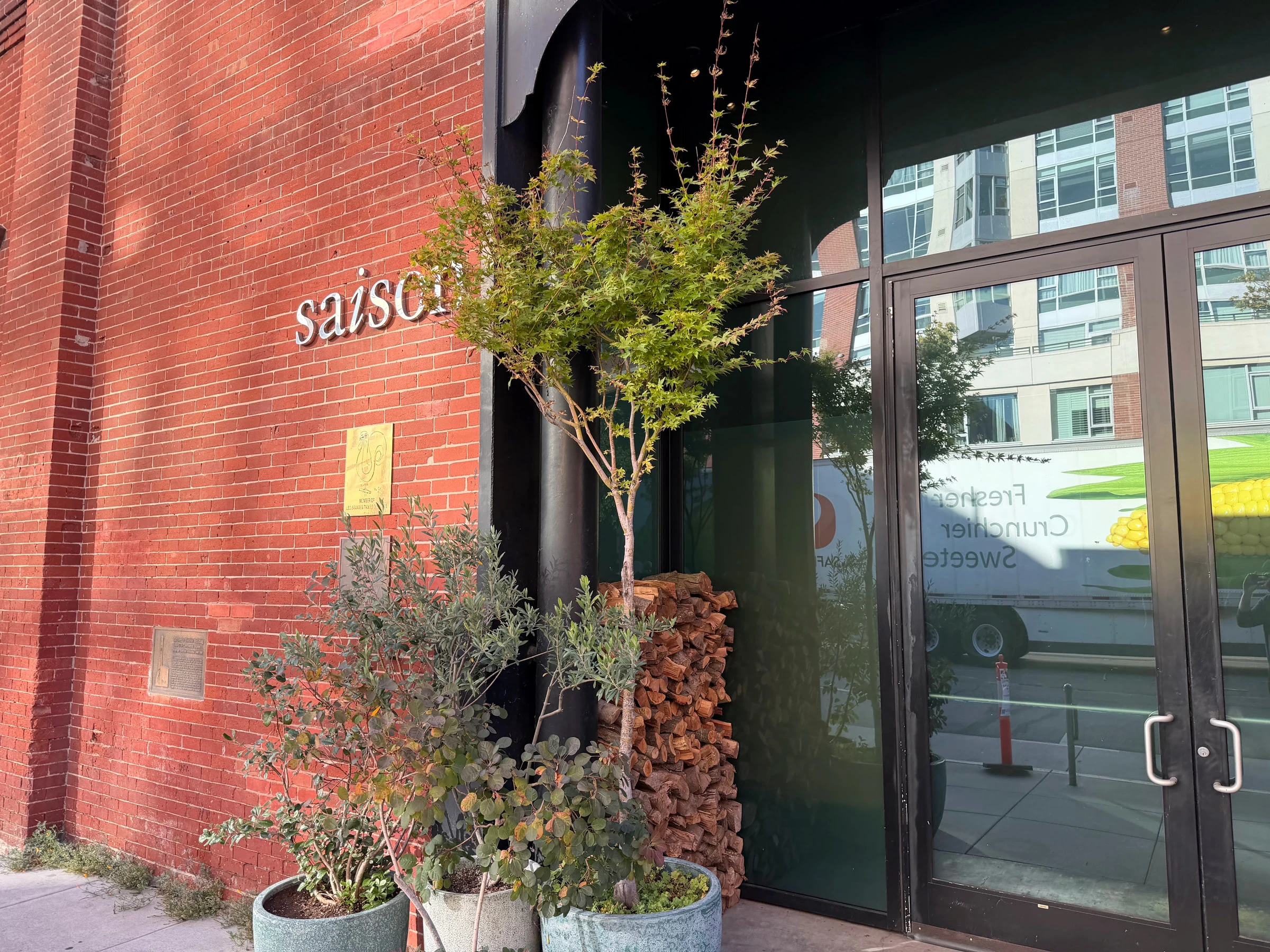
Saison calls itself an open wood-fire restaurant, but the useful distinction is the fuel. Lazzari Fuel Company, a San Francisco family business dating to 1908, exclusively supplies the restaurant’s almond wood. Almond wood burns differently from oak or fruit wood; its heat curve, ember bed, and aromatic contribution become variables the kitchen can learn and repeat. Once a restaurant commits its menu to live fire, fuel procurement belongs beside fish quality and harvest timing as a technical input.
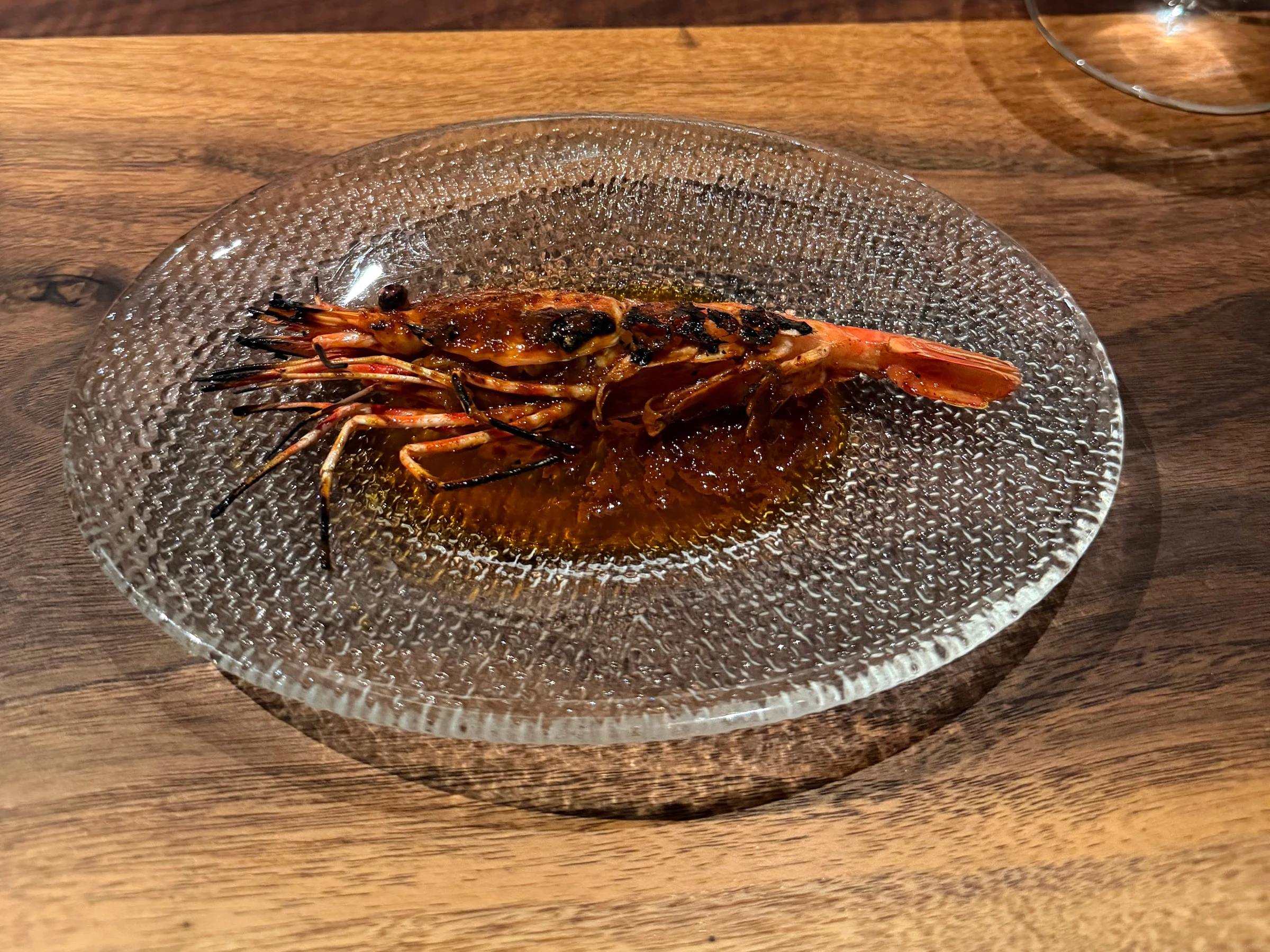
The hearth also changes how a brigade reads ingredients. Radiant heat, direct flame, smoke, and the resting temperature around the fire create several cooking zones without the uniformity of a conventional range. The cook must account for water content, fat, surface area, distance from the coals, and the rate at which the fire is being fed. Saison’s restraint on the plate begins with that control. The aim is not to make every course taste smoky; it is to use fire to expose sweetness, minerality, bitterness, or texture that the ingredient already contains.
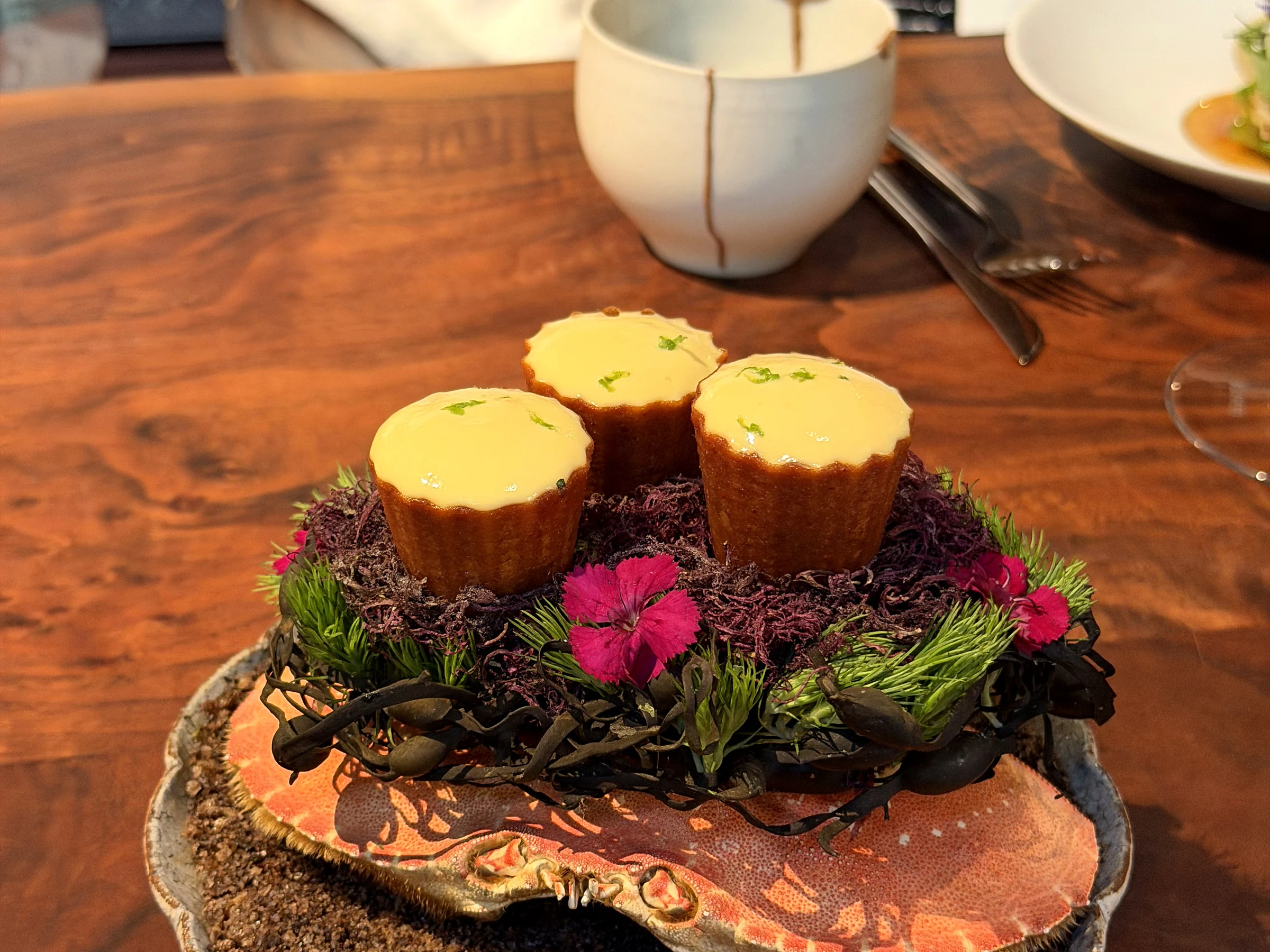
A produce program built on crop planning
The strongest farm relationships do more than deliver good produce. They change what can be planted. Kibo Farm, a four-acre organic family farm on Sonoma Mountain, follows an exclusive crop plan for Saison covering more than 50 varieties of fruit and vegetables. That arrangement moves menu development upstream: the kitchen and farm can discuss cultivar, sowing schedule, maturity, size, and intended use before a seed goes into the ground.
K&J Orchards is a cornerstone of the fruit program, growing stone fruit, nuts, and citrus in Winters and Yuba City. Brokaw Ranch Company supplies avocados and subtropical fruit from Ventura County. Lonely Mountain Farm interplants flowers, fruit trees, and row vegetables, using biological diversity as part of pest management. These are different agricultural models, but each gives the kitchen something more precise than a generic category such as “local produce.”
Scale becomes especially important at the pass. Tucker Taylor Culinary Gardens grows herbs and petite vegetables at plating scale, where leaf size, stem tenderness, and harvest timing affect whether an ingredient can be used whole. Pacific Wildcraft harvests sea plants along the Mendocino coast, bringing salinity and texture from the Pacific into the same sourcing conversation as the cultivated garden.
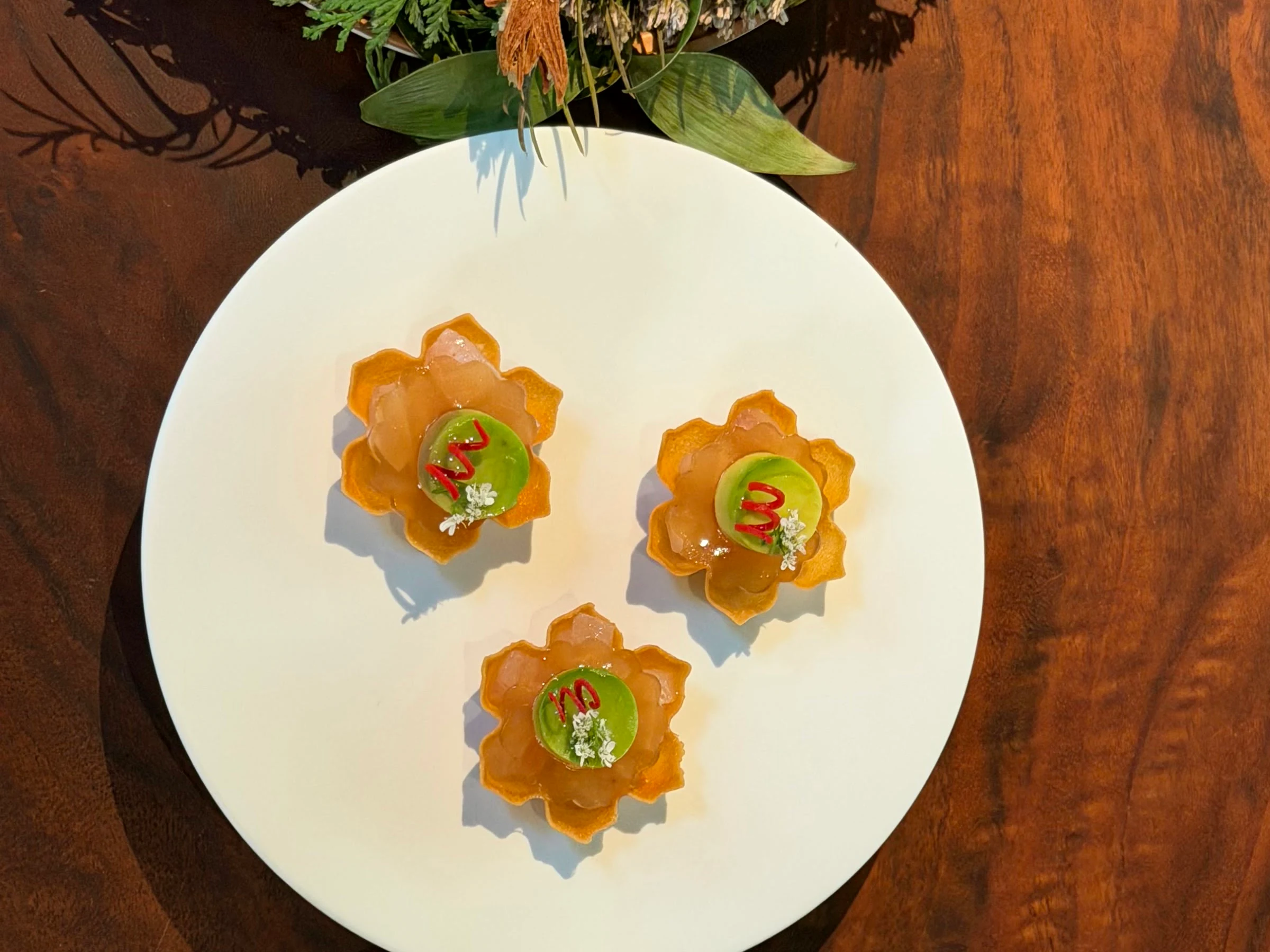
The broader produce bench includes Brooks & Daughters, Dirty Girl Produce, Fifth Crow Farm, Four Sisters Farm, Front Porch Farm, Kashiwase Farms, Marin Roots Farm, Star Route Farms, and Tierra Vegetables. The significance of the list is not its length but its redundancy of expertise: orchards, row crops, flowers, herbs, coastal plants, and specialty varieties are handled by operations built around different soils and harvest rhythms.
Animal, seafood, and pantry sources define the usable palette
Saison’s animal program is similarly specific. Silver Sky Ranch is the restaurant’s sole egg source. Corvus supplies all of its rabbit, with weekly hand deliveries from Pescadero. Liberty Ducks supports whole-animal preparations, while Broken Arrow Ranch supplies field-harvested wild venison. A kitchen cooking over fire needs this continuity: fat composition, age, musculature, and handling determine how an ingredient reacts to direct heat.
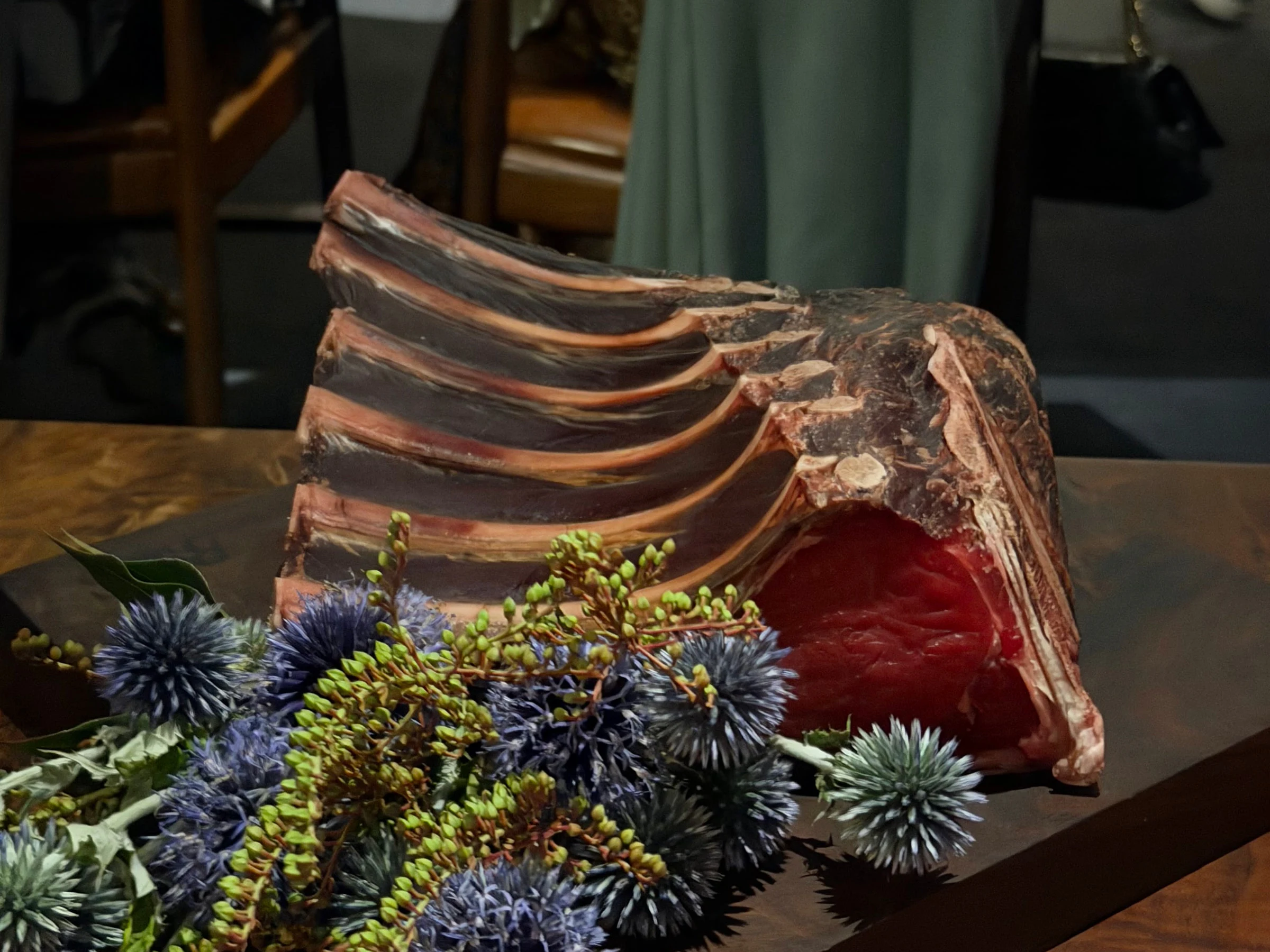
Some relationships approach custom manufacturing. California Caviar Company grows caviar specifically for Saison, after which the kitchen smokes it for the restaurant’s signature preparation. Monterey Abalone Company hand-raises abalone in Monterey Bay. Water2Table Fish Company, founded by Andi and Joe Conte, connects the kitchen with local small-boat, hook-and-line fishers. The usable output is not merely “seafood.” It is product whose origin, harvest method, and handling can be discussed with the person who supplied it.
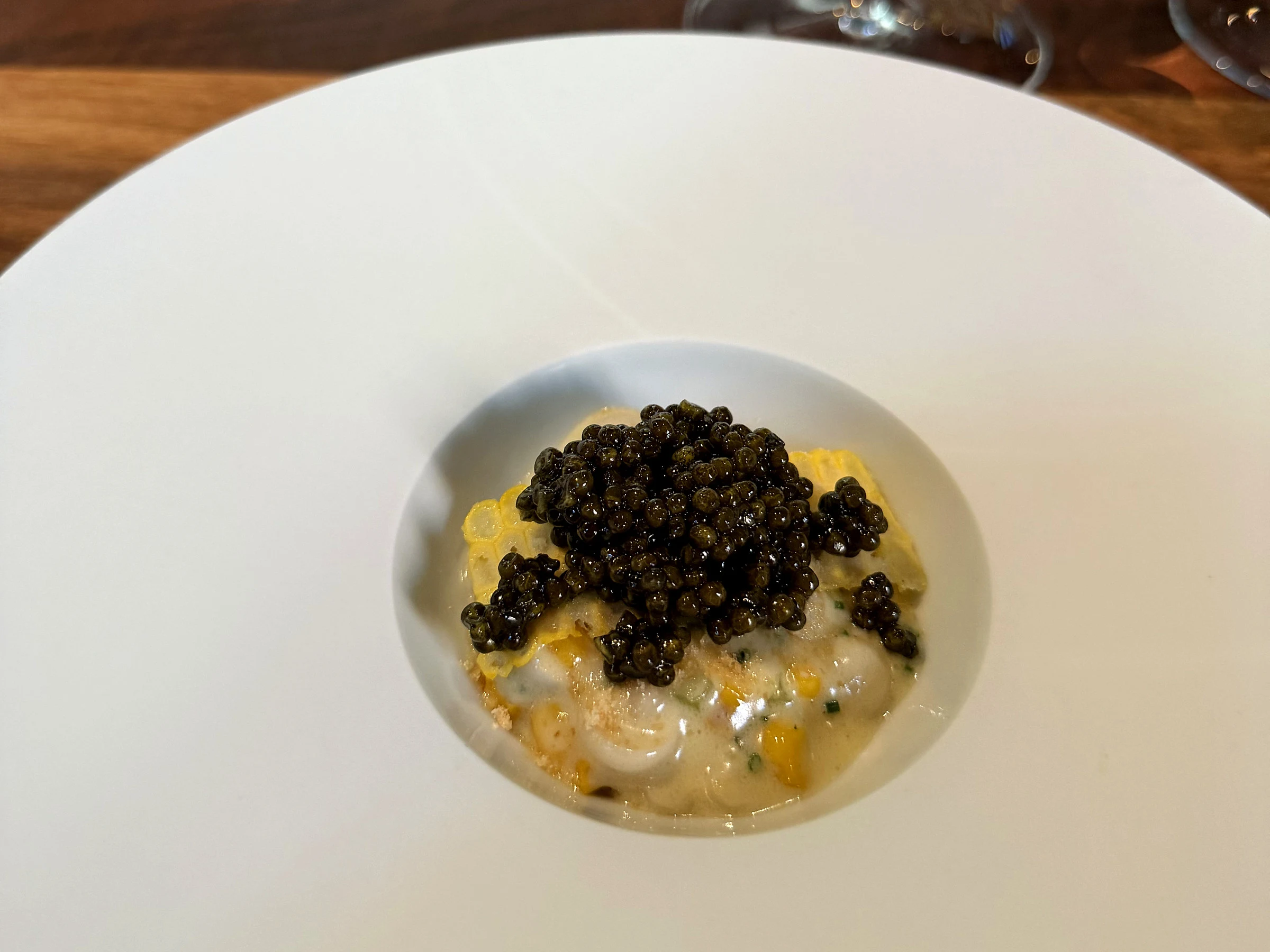
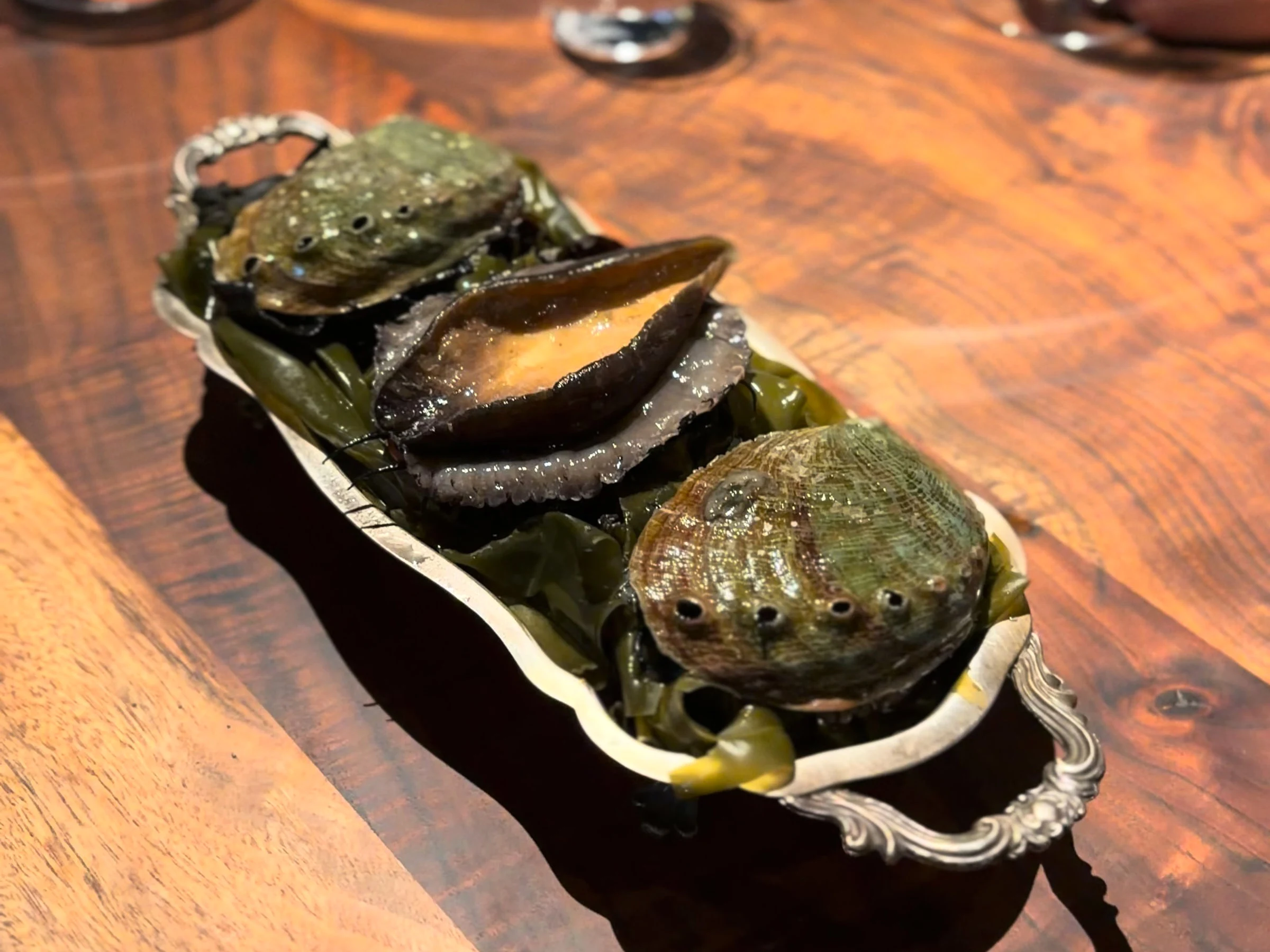
Additional animal and seafood partners named by Saison are Anderson Ranches, Meadowood Farm, Wolfe Ranch Quail, Hog Island Oyster Co., Taylor Shellfish Farms, and Mt. Lassen Trout.
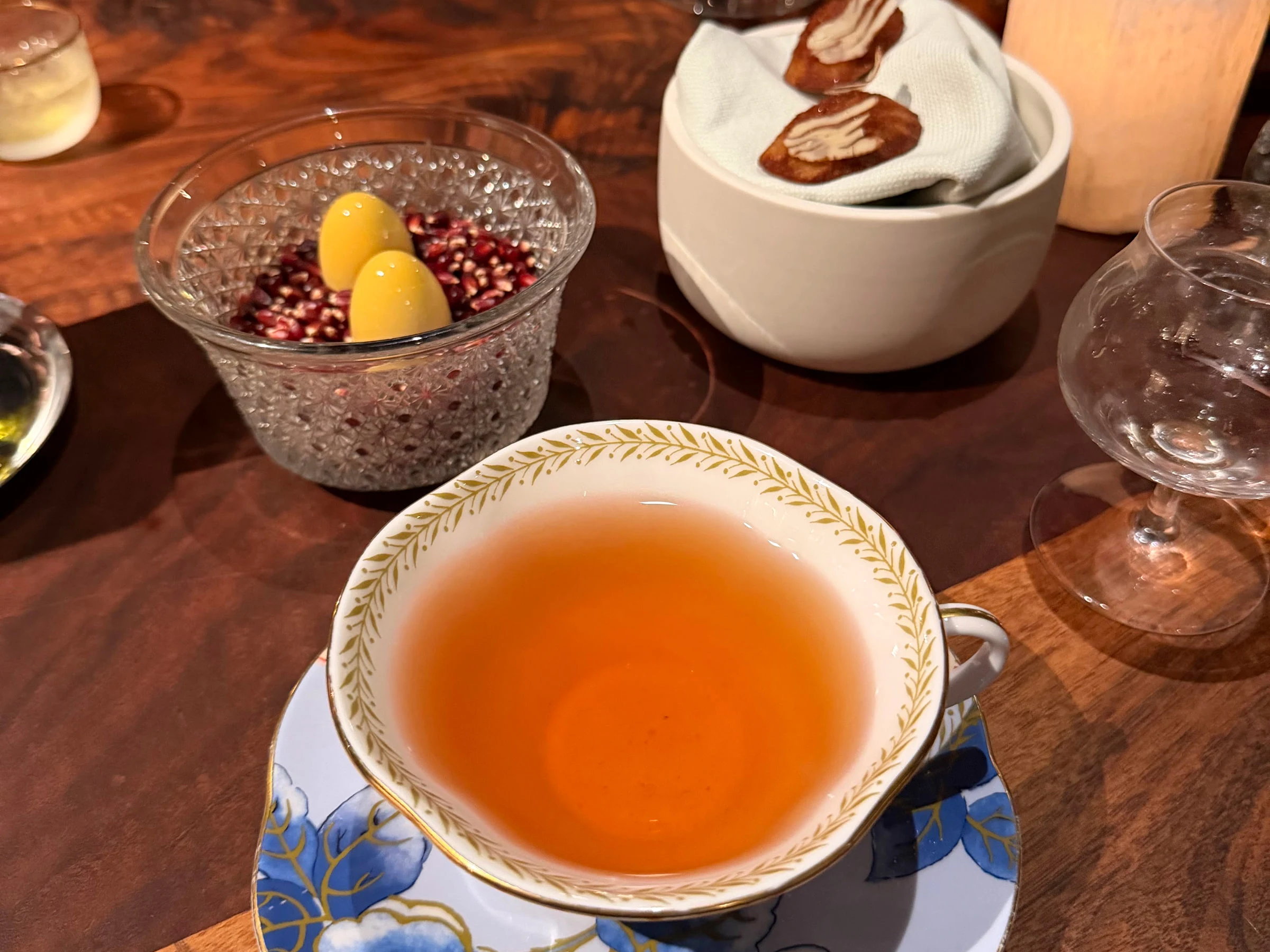
The pantry follows the same logic. Marshall’s Farm preserves the differences between Bay Area microclimates by keeping its honeys unblended. Straus Family Creamery supplies organic, pasture-based dairy. Luna Koshihikari Rice grows single-origin organic Koshihikari in the Sacramento Valley. Le Sanctuaire supplies five-spice, harissa, and its proprietary Swarnadwipa spice blend. Kettl provides the Japanese buckwheat tea served as the meal’s final course since Saison’s inception.
That pantry network also includes Capay Mills, Diaspora Co., Spotlight Oil, Sightglass Coffee, Sake Tengoku, Wine Forest, Gallia Imports, Lyra, and Misubi. Each expands the kitchen’s vocabulary without requiring Saison to collapse the source into an anonymous commodity.
The plate and glass are part of the recipe
A tasting menu is read through vessels as well as ingredients. Saison works with porcelain and ceramic pieces from Hering Berlin, Lilith Rockett, Mitch Iburg, Lynn Mahon Ceramics, and Christina Liu Ceramics. Japanese ceramicist Jin Yamanaka of Studio KO makes pieces exclusively for the restaurant.
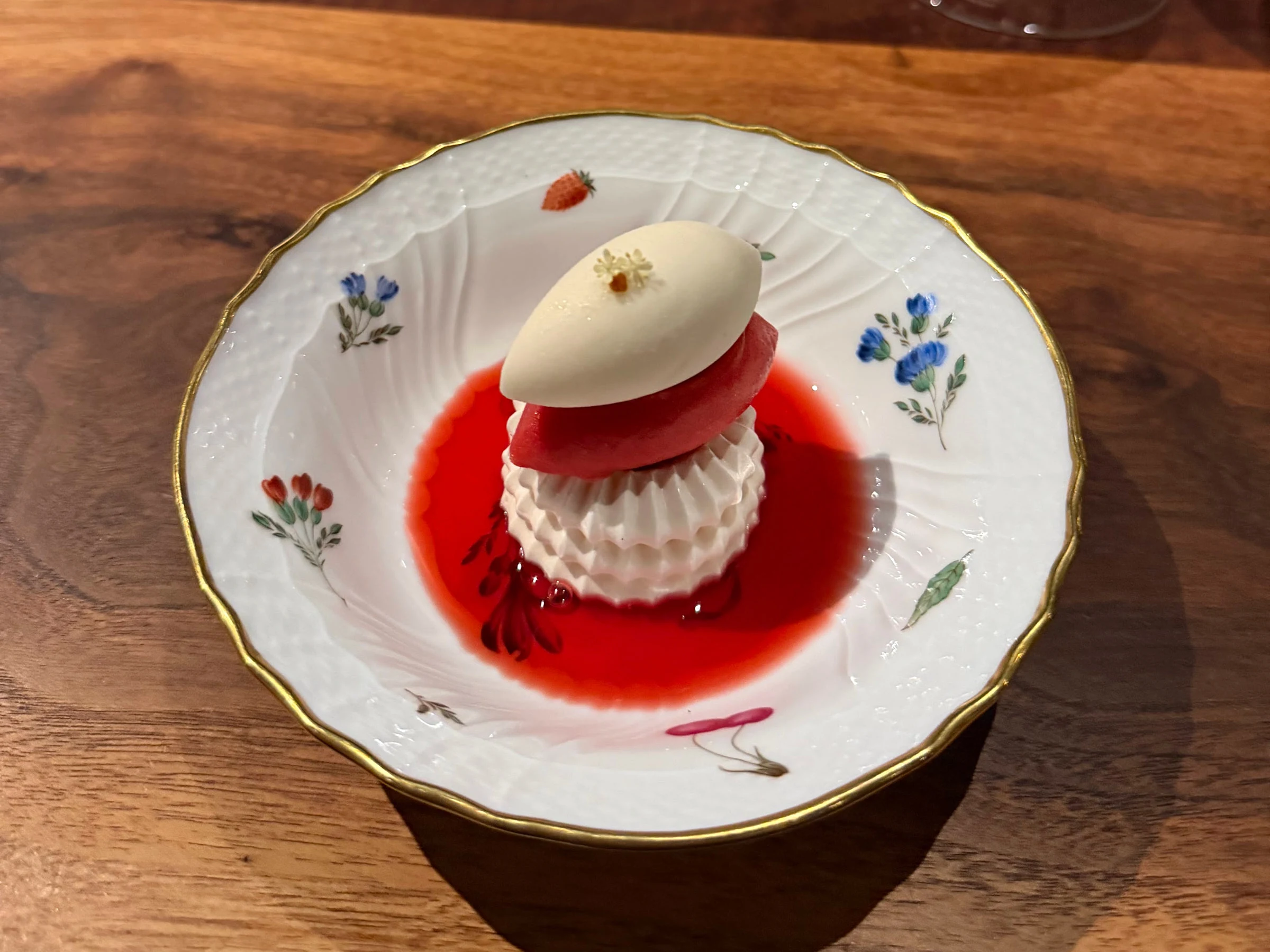
Those commissions matter because a plate regulates contrast, negative space, sauce movement, heat retention, and the angle from which a guest encounters a course. A shallow porcelain form can make a broth behave differently from a deep stoneware bowl; a dark, irregular surface changes how char and glaze register under dining-room light. The maker’s decisions continue working after the cook’s hands leave the plate.
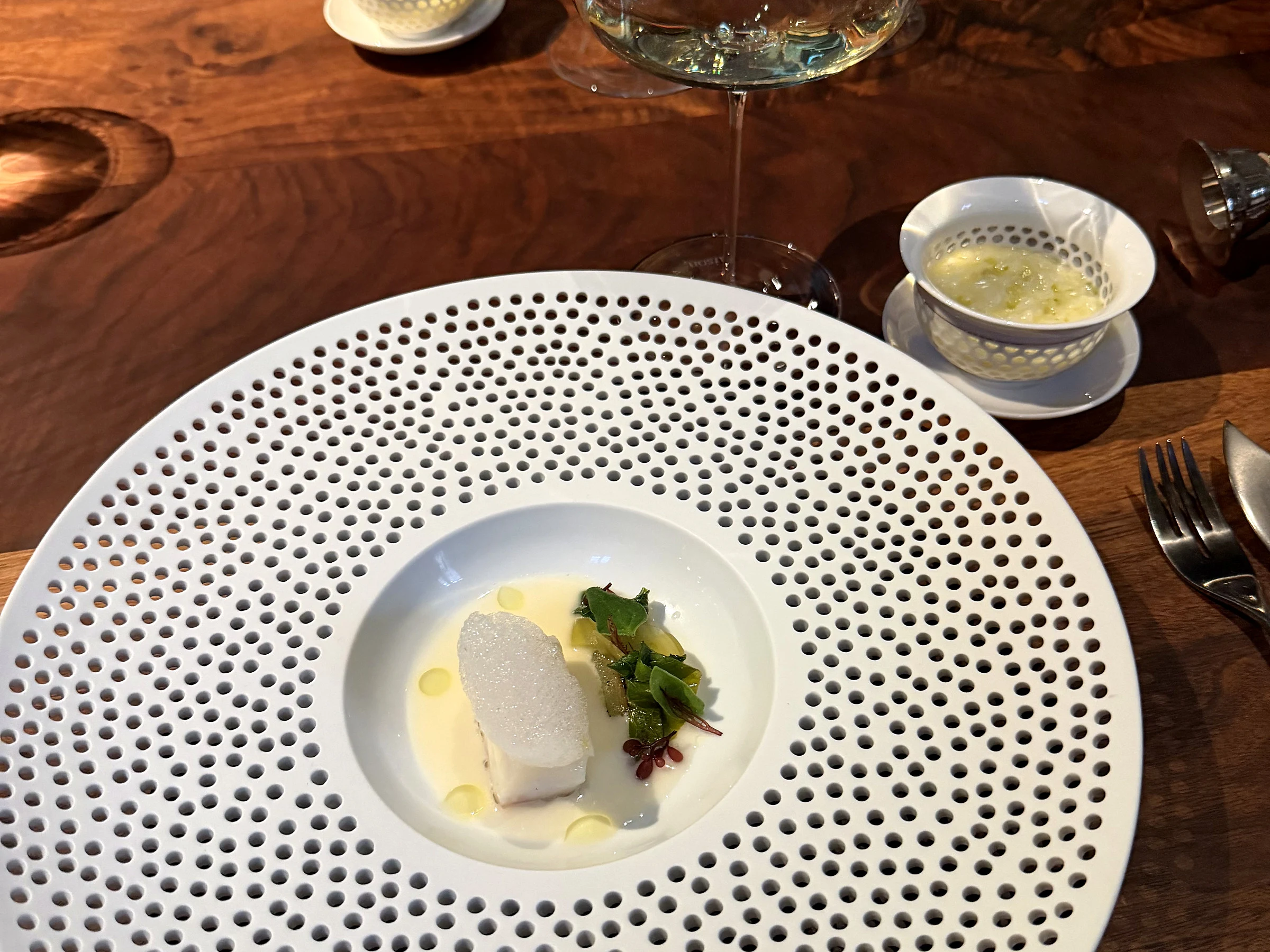
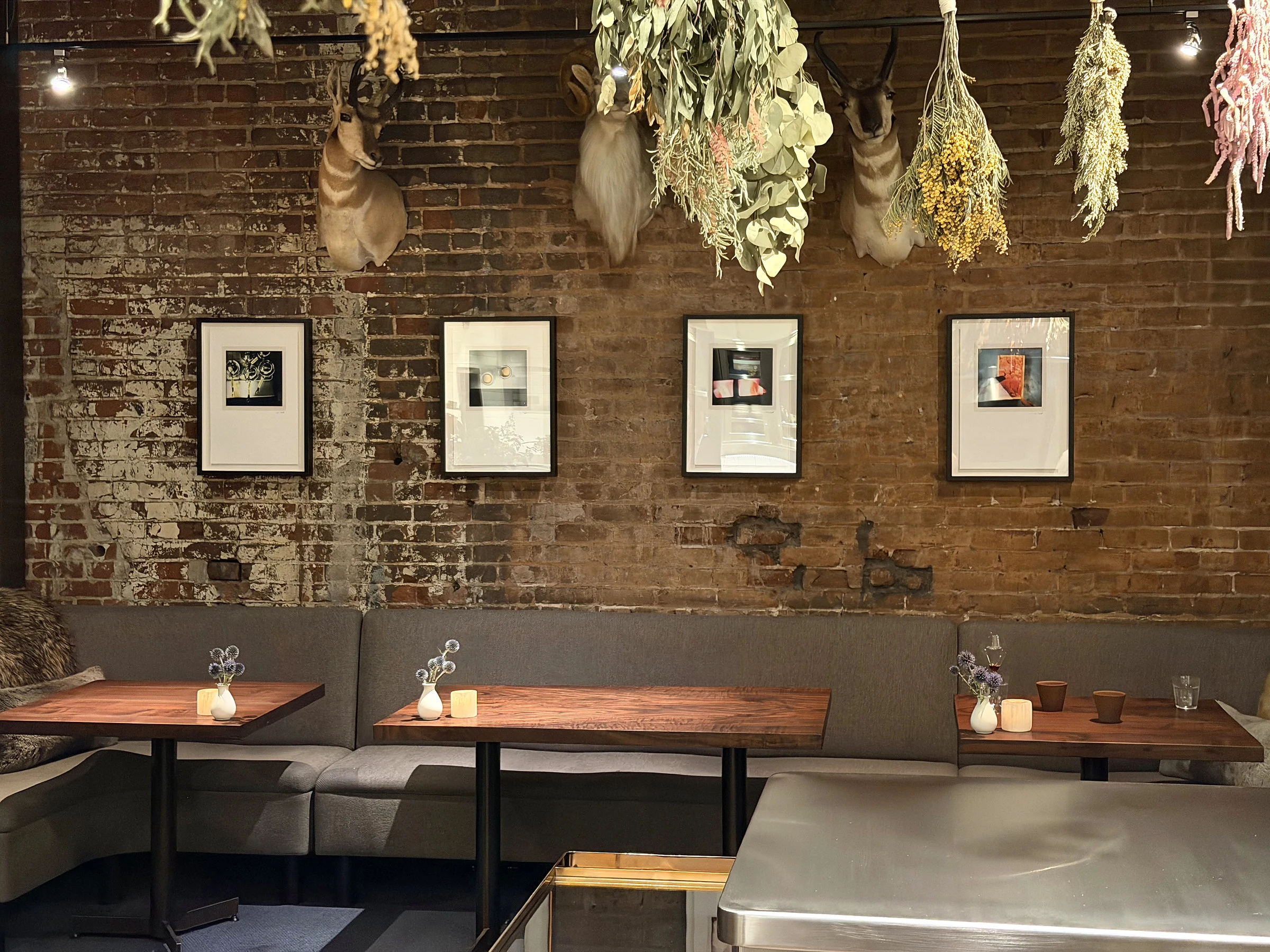
The wider table setting includes Ginori 1735, Kimura Glass, J. & L. Lobmeyr, and Zalto Glas. Floral and plant work comes from Bound By The Ground, the studio of former Saison captain Brent McDowell. These contributors are not décor appended to the food. They establish the physical conditions in which the food and wine are perceived.
The beverage bench: Mark Bright and Molly Greene
Saison’s wine program was established by Mark Bright, co-founder and beverage director of Saison Hospitality and winemaker at Saison Winery. It is curated by Molly Greene, the restaurant’s beverage and service director. The list places particular emphasis on Burgundy while maintaining depth across Old and New World regions, mature vintages, and large formats. Wine Spectator has awarded it the Grand Award every year since 2014.
A St. Louis native, Greene graduated from the University of Missouri in 2014 with degrees in finance and hospitality management. An internship at Four Seasons Hotel St. Louis drew her into fine dining; after earning her wine certification in 2018, she moved to San Francisco, worked at Rich Table, and joined Angler’s opening team. Greene moved to Saison in 2021 and became beverage director in 2022. Relais & Châteaux awarded her its 2025 Savoir-Faire Trophy, recognizing both her cellar work and her ability to make serious wine service feel generous and approachable.
Greene’s stated interest in under-the-radar and newly discovered producers gives the program a working tension: canonical bottles provide historical reference, while less familiar growers keep the cellar from becoming a museum. Pairing in a live-fire restaurant requires more than matching weight. Smoke, char, rendered fat, bitter edges, salinity, and sweet Maillard notes can all change how acidity, tannin, reduction, and élevage are perceived.
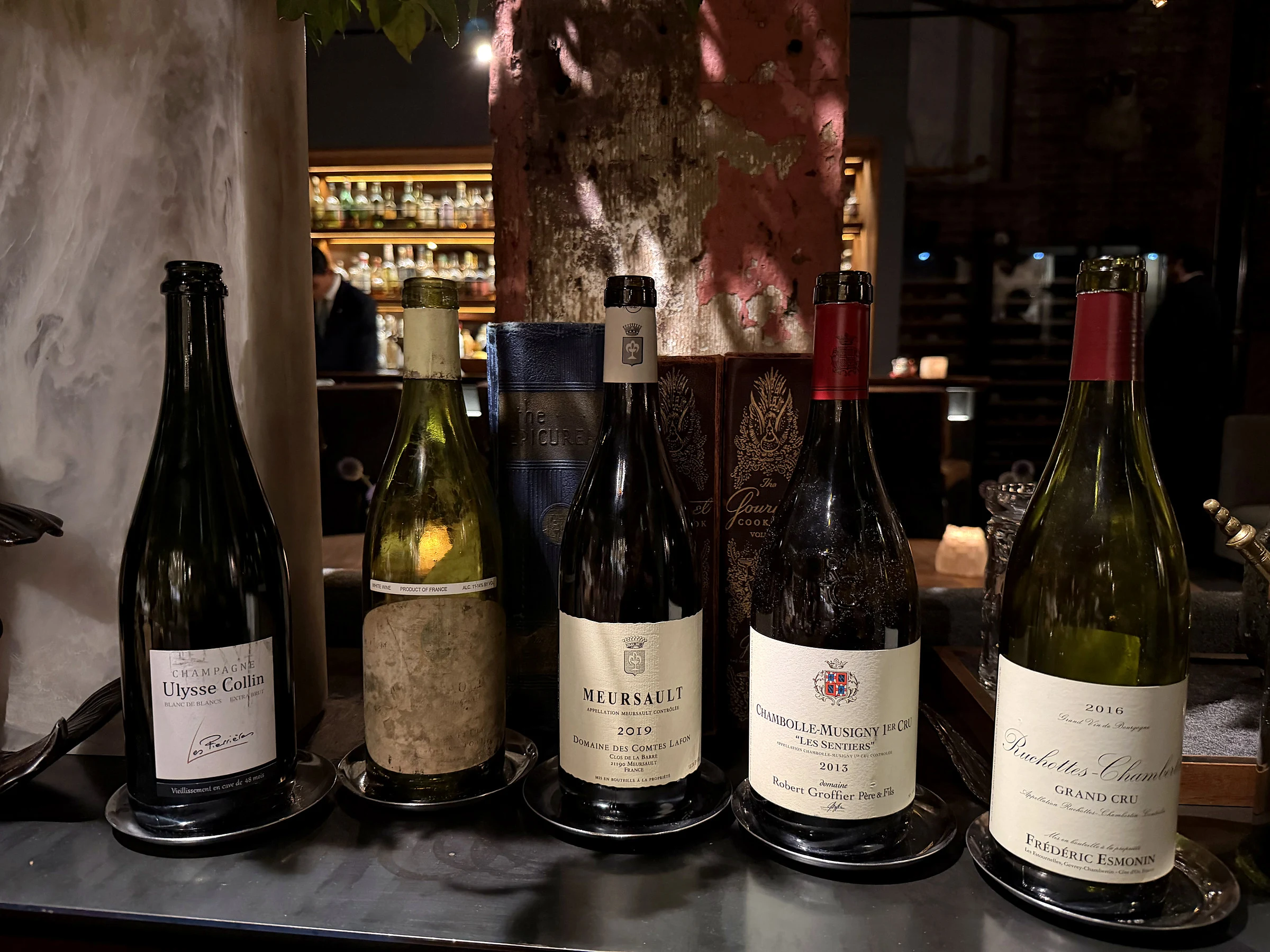
The service structure is part of that translation. Darlyn Celis, general manager, works alongside Greene and the dining-room team, while Lee’s kitchen includes chef de cuisine Dan Sita, executive sous chef Tanya Jimenez, and pastry chef Michelle Fried. The current roster makes authorship legible: the restaurant can name who is responsible for the hearth, the cellar, the dining room, and dessert rather than presenting “Saison” as a single anonymous hand.
Why a 54-member producer list matters
Restaurants often use the language of seasonality and local sourcing without exposing the mechanisms behind it. Saison’s literature does the more useful thing: it names the network. That creates a record of who grows the fruit, harvests the seaweed, raises the rabbit, mills the grain, shapes the porcelain, blows the glass, supplies the wood, and curates the cellar.
The result is not a claim that every relationship carries equal weight in every menu. A seasonal restaurant will draw on the network unevenly. What the list demonstrates is capacity. When the kitchen needs a particular cultivar, a smaller herb, a different marine texture, a specific vessel, or fuel with a known burn, it has a specialist relationship to call upon.
That is the Made By reading of Saison: not simply a restaurant “inspired by California terroir,” but a workshop whose output depends on dozens of other workshops. The coherence of the meal comes from making those dependencies intentional. Ingredient, flame, plate, glass, wine, and room are separate crafts; Saison’s work is to edit them into one service.
Source note: producer relationships in this article are drawn from Saison’s 41-page Guest Literature Book dated June 8, 2026, supplied by Beverage & Service Director Molly Greene. Richard Lee’s background and culinary approach were cross-checked against Saison’s current website, Saison Hospitality’s official profile, StarChefs, his November 2023 Forbes interview, and the James Beard Foundation’s 2025 nominee list. Molly Greene’s biography and current role were cross-checked against Saison’s current team and wine-program pages, StarChefs, and Relais & Châteaux’s 2025 Savoir-Faire Trophy record.