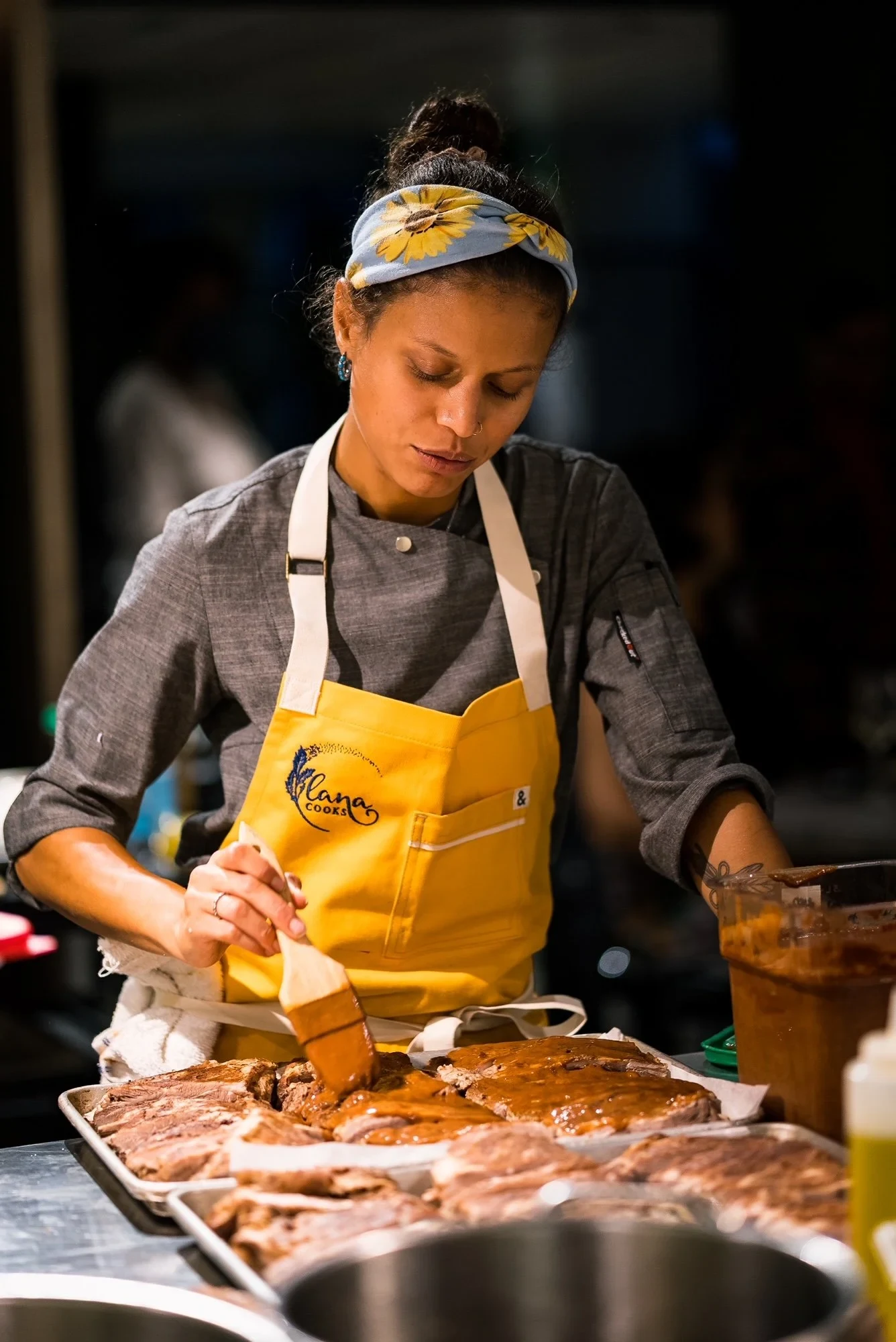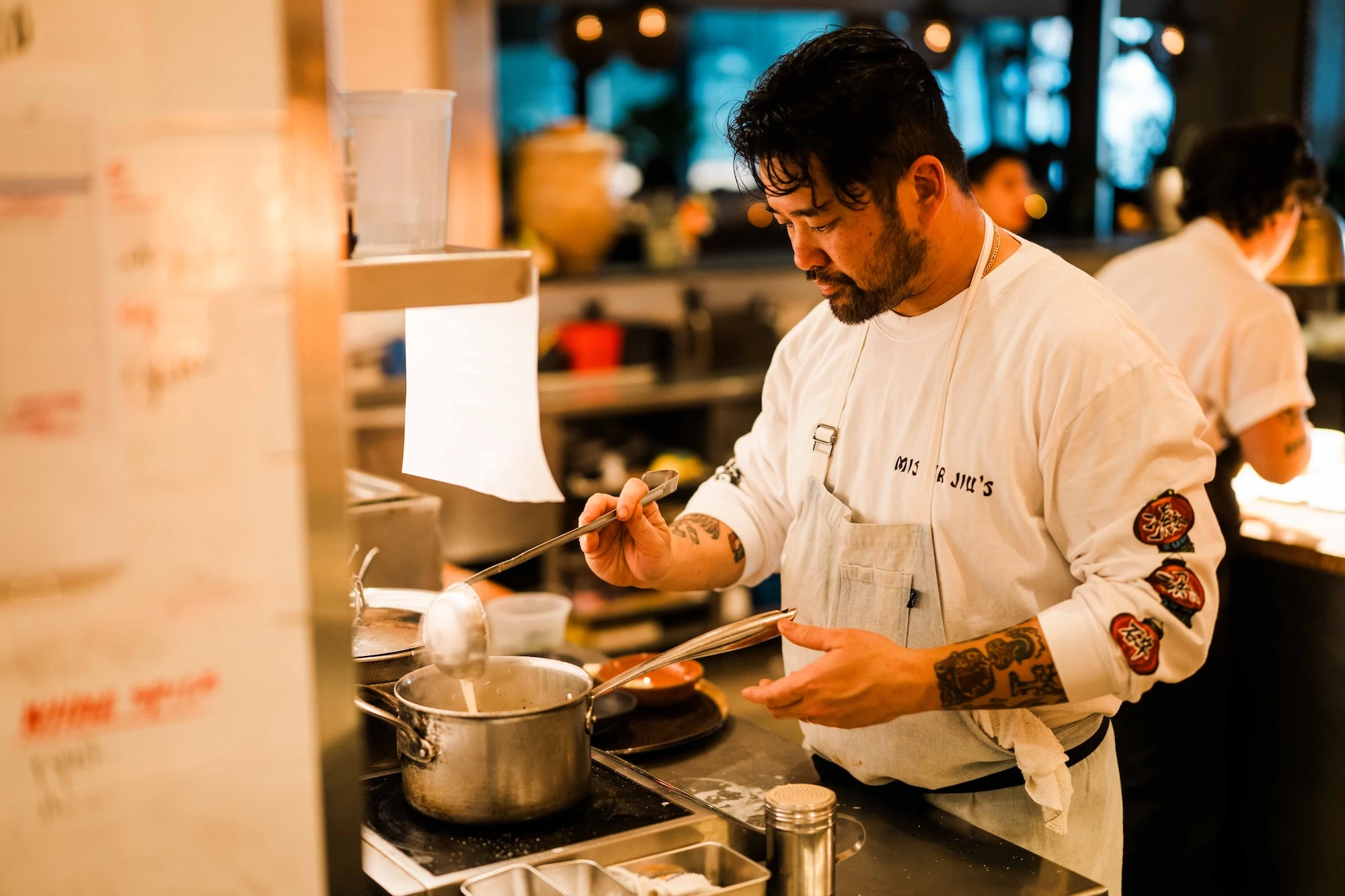
"Very quickly after starting at Smyth, I felt my knowledge and skills jump exponentially. After working there, I knew I could work anywhere thanks to what I learned and experienced."1Benjamin Tyson, now Chef-Owner of Butterlamp in Nashville, is describing time on the tools under John Shields and Karen Urie Shields, the husband-and-wife team behind Smyth in Chicago 's West Loop. The Smyth Chicago anniversary marks 10 years of that bench-side education, a decade in which the restaurant earned three Michelin stars and ranked number one on the 2026 North America 50 Best Restaurants list.
That is the credential visible from the street. The deeper measure sits in the cooks who left the pass changed, and in the peers who kept returning to study what John Shields and Karen Urie Shields had built: fermentation, seaweed, umami, vegetables, seafood, and a room that does not raise its voice to prove the work.
The Smyth Chicago anniversary belongs to John Shields and Karen Urie Shields
Smyth's 10-year mark is not only a restaurant date. It is a record of a two-person discipline held long enough for other cooks to test themselves against it. John Shields and Karen Urie Shields opened a place in the West Loop that peers now discuss through the language of method rather than trend. They are named first because the room, the menu, the recognition, and the anniversary all trail behind their hands.
Three Michelin stars give Smyth a public shorthand. The number one position on the 2026 North America 50 Best Restaurants list gives it another. Those markers matter because they fix the work in time: 10 years, a West Loop address, a husband-and-wife team, and a program that other chefs use as a point of reference. But awards flatten kitchens if they are allowed to stand alone. Smyth is better understood through the things peers noticed when they were close enough to the bench.
Tyson's line is useful because it names apprenticeship rather than admiration. He does not say only that he liked the food. He says his knowledge and skills jumped after starting there. That distinction matters. A meal can move a diner for an evening; a station can alter a cook's standard for years. Tyson's next kitchen is in Nashville, but his sentence keeps the West Loop in the frame. He carries Smyth as training, not nostalgia.
The Smyth Chicago anniversary arrives with that kind of evidence. Six chefs and former team members have spoken about the Shields' influence: Benjamin Tyson of Butterlamp, Zach Engel of Galit, Grant Achatz of The Alinea Group, Luke Feltz of noma, Alex Catotti of Restaurant Cornelia in Durham, North Carolina, and Brian Barker of Perlée Vineyards. The list reaches across Chicago, Nashville, Durham, and Copenhagen 's research culture. That spread says something specific. Smyth did not remain a local secret passed among diners. It became a kitchen other cooks measured themselves against.
How Smyth earned three Michelin stars in a decade
A decade gives a restaurant enough time to reveal whether its first ideas were durable. At Smyth, the recurring vocabulary is not built around luxury product hierarchy. The language that comes back from peers is technical: fermentation, seaweed, umami, vegetables, seafood, natural quietness. That is not a soft program. It asks a kitchen to make flavor through time, contact, reduction, and restraint rather than through excess.
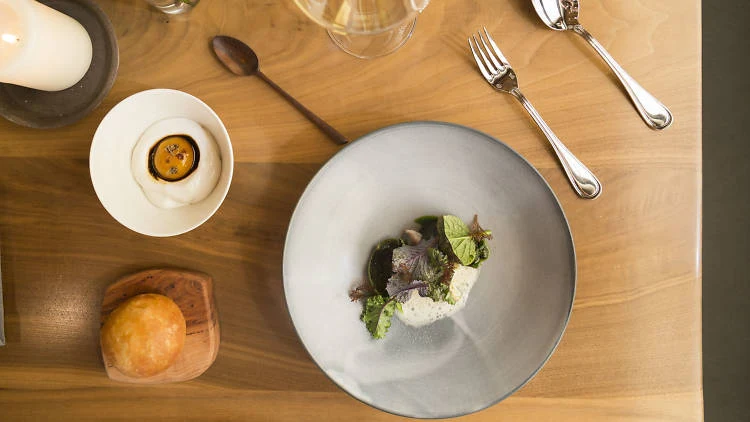
Grant Achatz, Chef-Owner of The Alinea Group, frames Smyth's arrival as something new to Chicago and points to a technical vocabulary more often associated with Nordic regions. He names fermentation and seaweed. He names a patient pursuit of umami. He notes vegetables and seafood handled with the seriousness many kitchens reserve for protein. In a city with its own strong fine-dining lineage, that is a precise statement from a chef who understands what it means to introduce a new grammar to a dining scene.
The Nordic influence matters here because it is not decoration. In American fine dining, Nordic technique can too easily become a surface: pale wood, stones, moss, tweezed leaves, a little smoke. The version attributed to Smyth by its peers sits deeper. Fermentation is not a garnish. Seaweed is not a visual cue. Umami is not a menu word. These are tools for building savory depth from products that other kitchens might treat as supporting actors.
That is where the decade counts. A restaurant can borrow an aesthetic for a season. It cannot teach multiple cooks a way of thinking without a repeated method behind it. The three Michelin stars and the 2026 North America 50 Best ranking now sit on top of those repetitions. They mark recognition, but the work was already legible to the people who stood near it, ate it yearly, or carried it into their own kitchens.
For a practitioner reading the room from the outside, the interesting detail is not only that Smyth achieved the stars. It is that peers describe the achievement through craft rather than spectacle. They talk about technique, philosophy, nature, product curiosity, and the way a meal can reset a cook's sense of what vegetables and seafood can bear.
The Nordic vocabulary behind the vegetable and seafood program
The phrase vegetable-forward can dull quickly. At Smyth, the more useful description comes from the named terms around it: fermentation, seaweed, umami, and equal seriousness for vegetables and seafood. That is a different proposition from simply reducing meat on a menu. It asks the kitchen to build depth from ingredients whose strength often depends on timing, salinity, acidity, and texture.
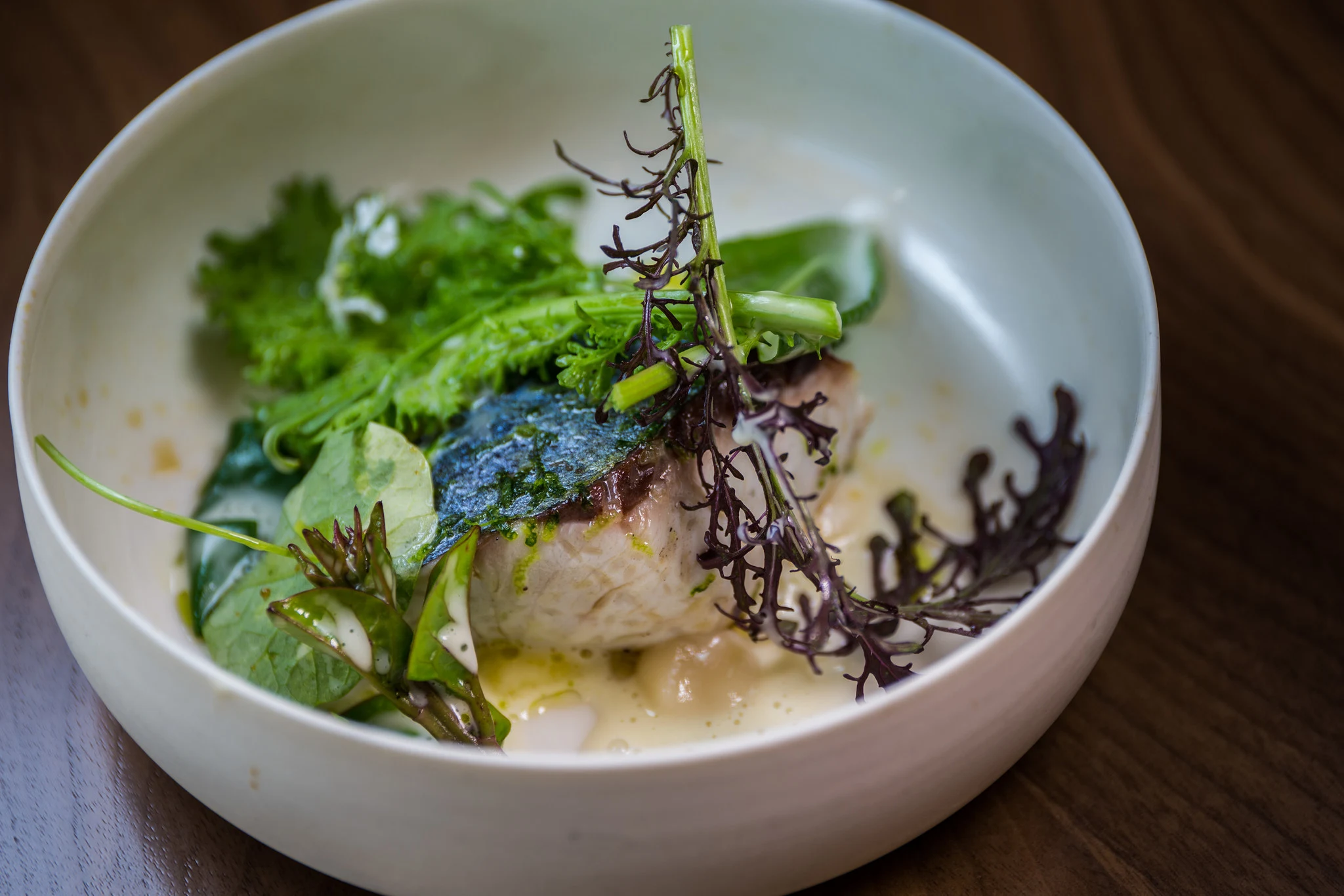
Fermentation gives a cook a second timeline. A vegetable is no longer only what arrived that morning. It can become what time has pulled from it. Seaweed brings mineral salinity and marine savor without needing to announce itself as seafood. Umami becomes a structural pursuit, not a seasoning. None of those tools guarantees a good dish. In the wrong hands, fermentation becomes sour noise, seaweed becomes iodine, and restraint becomes thinness. The peers who speak about Smyth are responding to a kitchen that kept those forces in proportion.
The source descriptions do not give recipe percentages, brine ratios, or fermentation hours, and the absence is useful in its own way. It keeps attention on the discipline rather than on a borrowed formula. A cook cannot reproduce Smyth by writing down seaweed and fermentation in a notebook. The lesson appears to be hierarchy: deciding that a vegetable deserves the same station discipline as a piece of seafood, and that both can carry a menu when flavor is built through method.
That hierarchy is one reason the Smyth Chicago anniversary carries weight beyond a date. Ten years of this work means 10 years of cooks watching where the kitchen places seriousness. Protein does not disappear from the conversation; it loses its automatic command of the room. Vegetables and seafood move to the center not by slogan, but by the pressure of technique.
The natural, quiet aesthetic named by peers belongs to the same system. Quietness in a restaurant can be misread as simplicity. At Smyth, the quieter frame appears to make the technical work more visible to the people trained to see it. A plate does not need to shout if the fermentation is in line, the seaweed is carrying depth, and the vegetable has been treated as the primary subject rather than a margin note.
Six chefs trace the lineage from the West Loop
The six voices around Smyth's anniversary map a lineage in motion. Benjamin Tyson gives the clearest apprentice's account: Smyth accelerated his skills and left him feeling he could work anywhere. That is not a small claim from someone who now owns Butterlamp in Nashville. It places Smyth among the kitchens that function as finishing schools, where the bench teaches pace, judgment, and standards that travel.
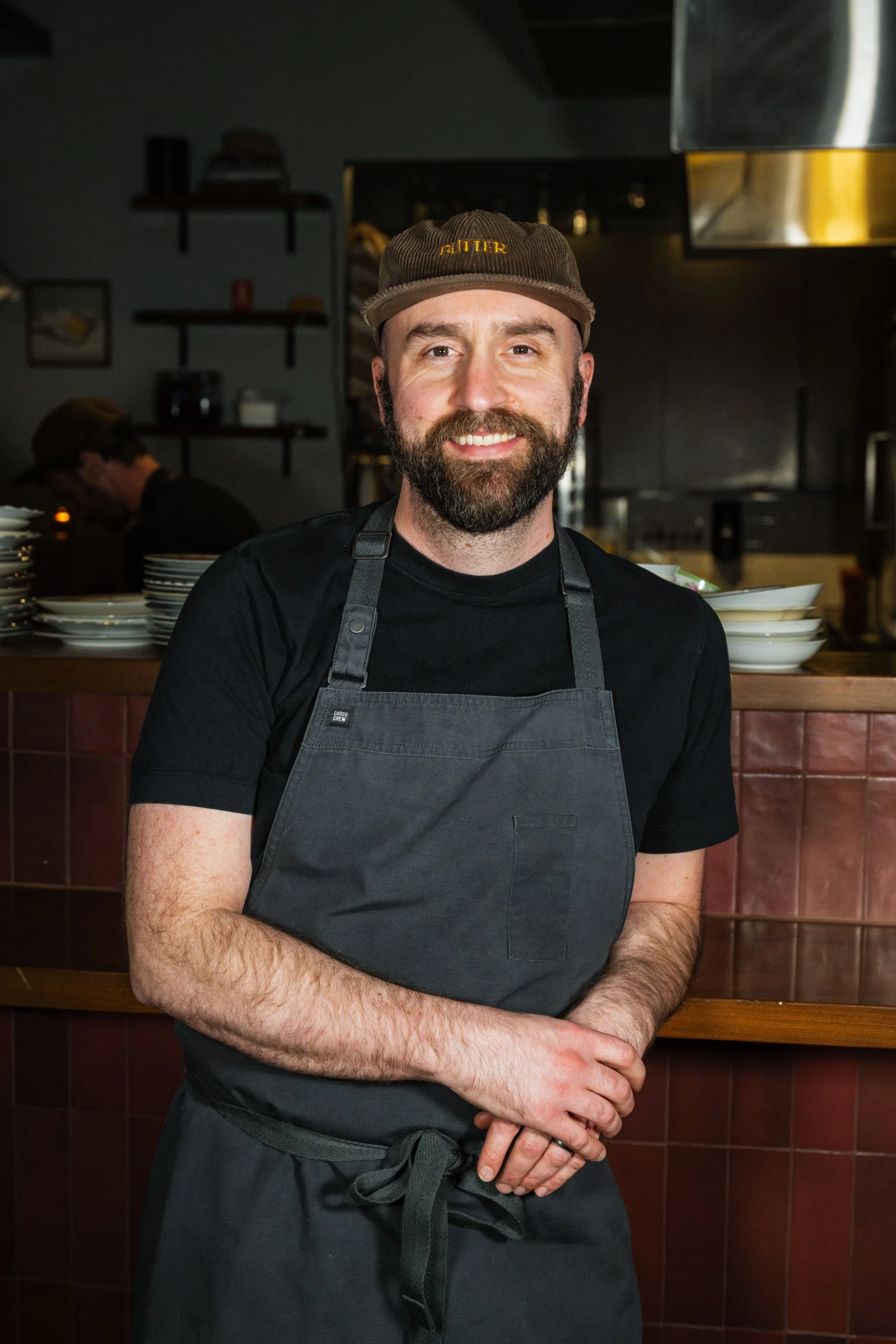
Zach Engel, Chef-Partner at Galit, approaches from the position of a peer who returns. "I've gone at least once a year and every meal, I walk away feeling reinvigorated to push the boundaries of my own creativity and to elevate my technique. They do some serious cooking over there."2 The useful part of Engel's sentence is the rhythm of return: at least once a year. Smyth becomes a recurring calibration, a place another chef uses to check the edge of his own tools.
Grant Achatz brings the Chicago frame. His response places Smyth inside the city's dining history as a restaurant that introduced something new, not by rejecting fine-dining technique, but by shifting its vocabulary. He names John and the team, which matters. A restaurant with three Michelin stars can become abstract in public talk. Achatz pulls it back to people at the pass.
Luke Feltz, R&D Chef at noma, reads Smyth through philosophy. His tribute connects the restaurant to a reflective relationship with nature, curiosity for products and flavors, and creativity treated as a constant practice. Coming from a research-and-development role at noma, that attention to curiosity has a specific charge. It places Smyth within an international conversation about how kitchens investigate ingredients rather than merely plate them.
Alex Catotti, Chef-Owner of Restaurant Cornelia in Durham, North Carolina, speaks as a former Smyth team member and independent chef. His account keeps John and Karen together as the team to follow. That pairing is central to the anniversary. Smyth's influence does not read as a single-chef mythology in the tributes; it reads as a shared house style built by two owners and carried by a team.
Brian Barker of Perlée Vineyards gives the diner's and cook's compression: every bite coming from the same place. Stripped of praise language, the useful idea is coherence. At Smyth, the bites register as part of one method, not as unrelated displays of technique. For chefs, coherence is often harder than surprise. A decade of coherence is harder still.
Fermentation and umami as a kitchen discipline
Fermentation is often discussed as flavor, but in a working kitchen it is also scheduling, storage, sanitation, judgment, and repetition. The Smyth tributes do not name the vessels, temperatures, or dwell times. They do name the pursuit. That pursuit is enough to understand why the restaurant has become a reference point for other cooks: fermentation demands a kitchen that thinks beyond service tonight.
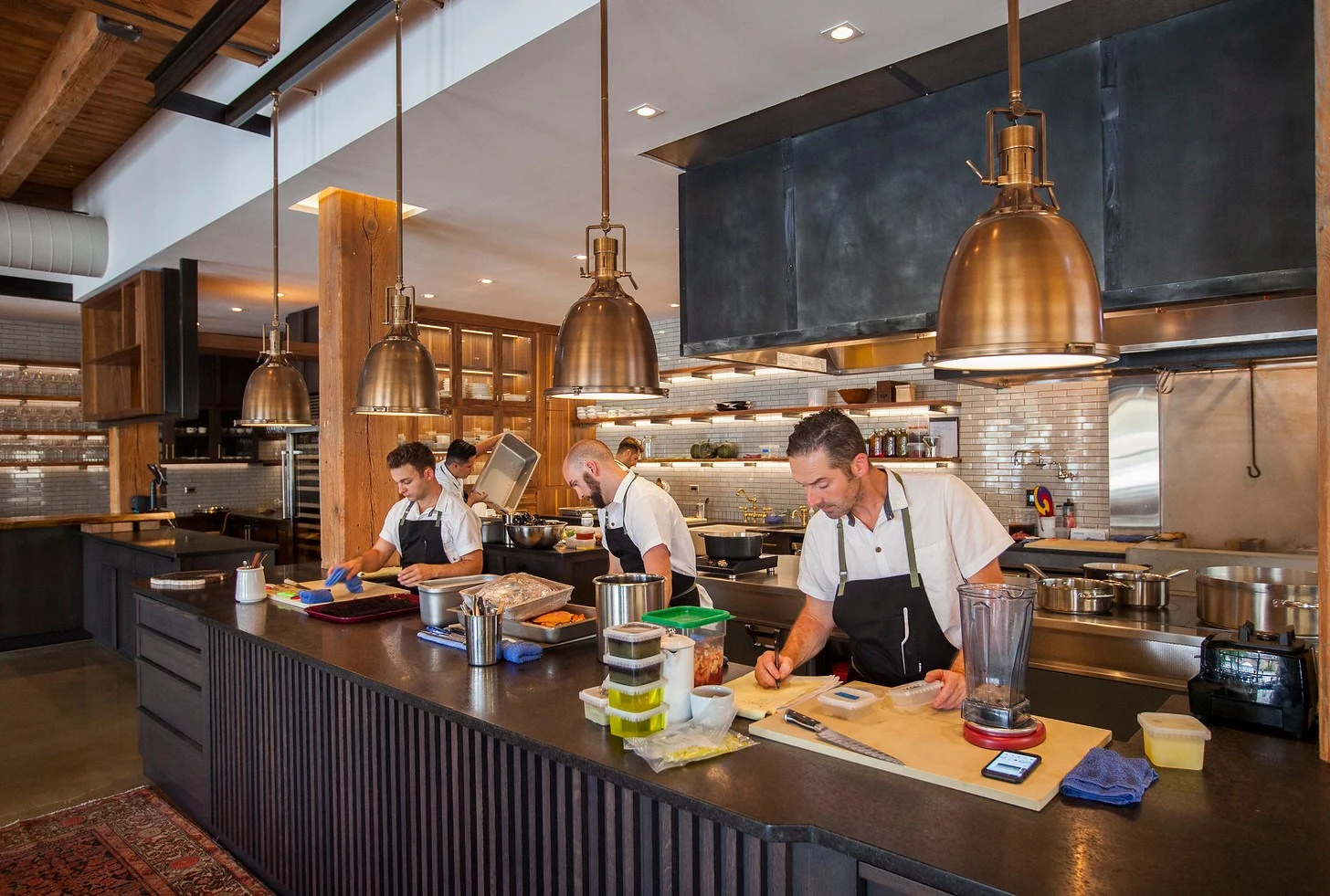
Seaweed works in a similar way. Used poorly, it dominates. Used with control, it can frame sweetness in vegetables, deepen seafood, and bring the palate toward savor without the weight of meat stock. Smyth's peers point to seaweed as part of a Nordic technical vocabulary, which suggests a tool integrated into the kitchen's thinking rather than a single dish effect.
Umami is the word that links the two. It is also the word most easily abused. At Smyth, the pursuit described by peers appears patient, meaning flavor arrives through accumulation rather than blunt force. A fermented element, a marine note, a vegetable handled as the main event, a piece of seafood treated without theatrical excess: the method depends on increments. The hand matters because each increment can tip the dish.
For cooks watching Smyth from outside, the lesson is not to copy seaweed or start a fermentation shelf because the West Loop has made it visible. The lesson is to ask what the kitchen is trying to make deeper, and what it is willing to treat with seriousness. A carrot, a shellfish, a broth, a leaf, a piece of kelp: none of these carries the plate on its own. The craft sits in the decisions between them.
That is where a quiet aesthetic becomes more than style. If the room and plate stay calm, the ingredient has fewer places to hide. Fermentation cannot be messy. Salinity cannot be vague. A vegetable cannot be under-considered and still survive at the center of the composition. Smyth's decade suggests that the Shields have kept returning to that pressure rather than moving away from it.
What the anniversary asks of the next cooks
The Smyth Chicago anniversary is a marker for John Shields and Karen Urie Shields, but it also asks what their former cooks and watching peers will do with the method. Tyson has carried his training to Butterlamp in Nashville. Catotti has carried his time at Smyth into Restaurant Cornelia in Durham. Engel keeps returning from Galit. Feltz reads the restaurant from the R&D station at noma. Achatz places it in Chicago's larger fine-dining conversation. Barker speaks to the coherence of the bites.
That is how influence becomes visible without turning into branding. It shows up when a former cook describes the kitchen as preparation for anywhere. It shows up when a chef returns every year not for comfort, but to sharpen technique. It shows up when peers can name the tools: fermentation, seaweed, umami, vegetables, seafood, quietness. These are not vague compliments. They are the parts of the method that survived contact with other kitchens.
For diners, the practical pointer is simple: read Smyth through the people before reading it through the list placement. The three Michelin stars and the 2026 North America 50 Best ranking will bring new attention to the West Loop dining room. The 10-year anniversary gives a better reason to look closely. John Shields and Karen Urie Shields have held a point of view long enough for others to learn from it, argue with it, and carry pieces of it to new stations.
Watch the next cooks who come through Smyth, and watch the chefs who keep returning to its dining room as a yearly calibration. A restaurant's next decade often begins in the hands of the people it has already trained.