Beihouse
- 01CuisineModern Levantine Mediterranean
- 02CityBeirut, Lebanon
- 03RecognitionWorld's 50 Best — No. 5
- World's 50 Best · #5 · World's 50 Best Restaurants
- World's 50 Best MENA's Best Restaurants #5 · 2026
- The Best Chef One Knife · 2025
A Dining Room Built on Resilience
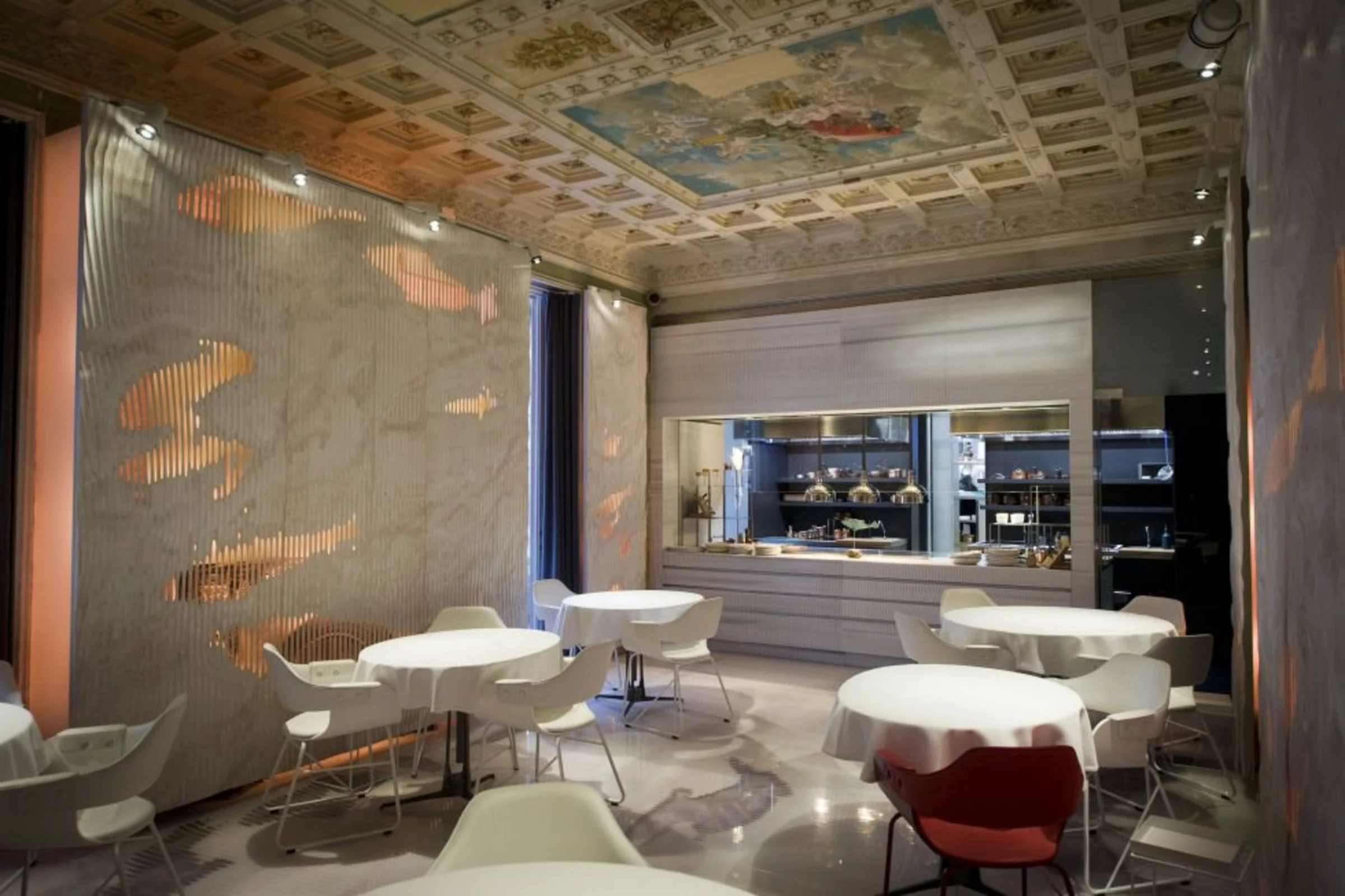
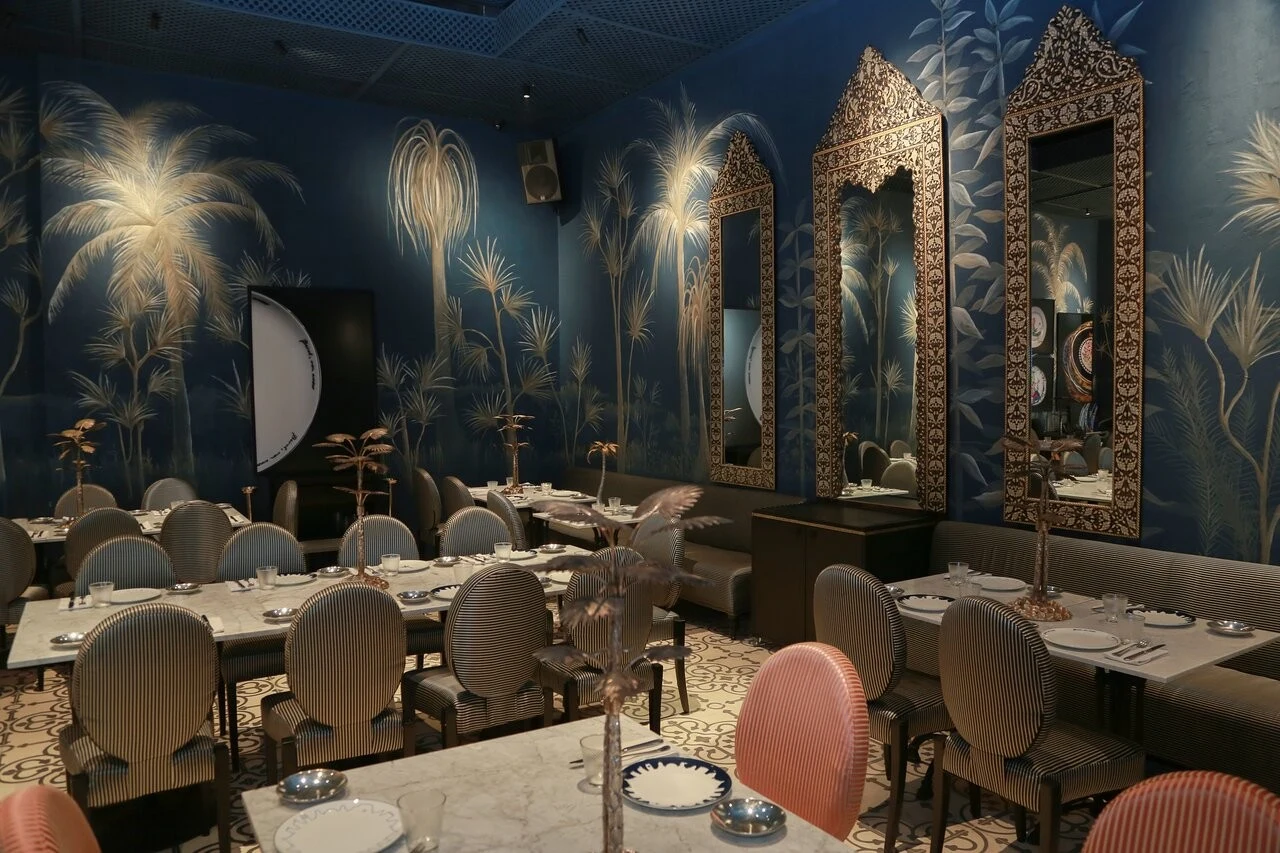
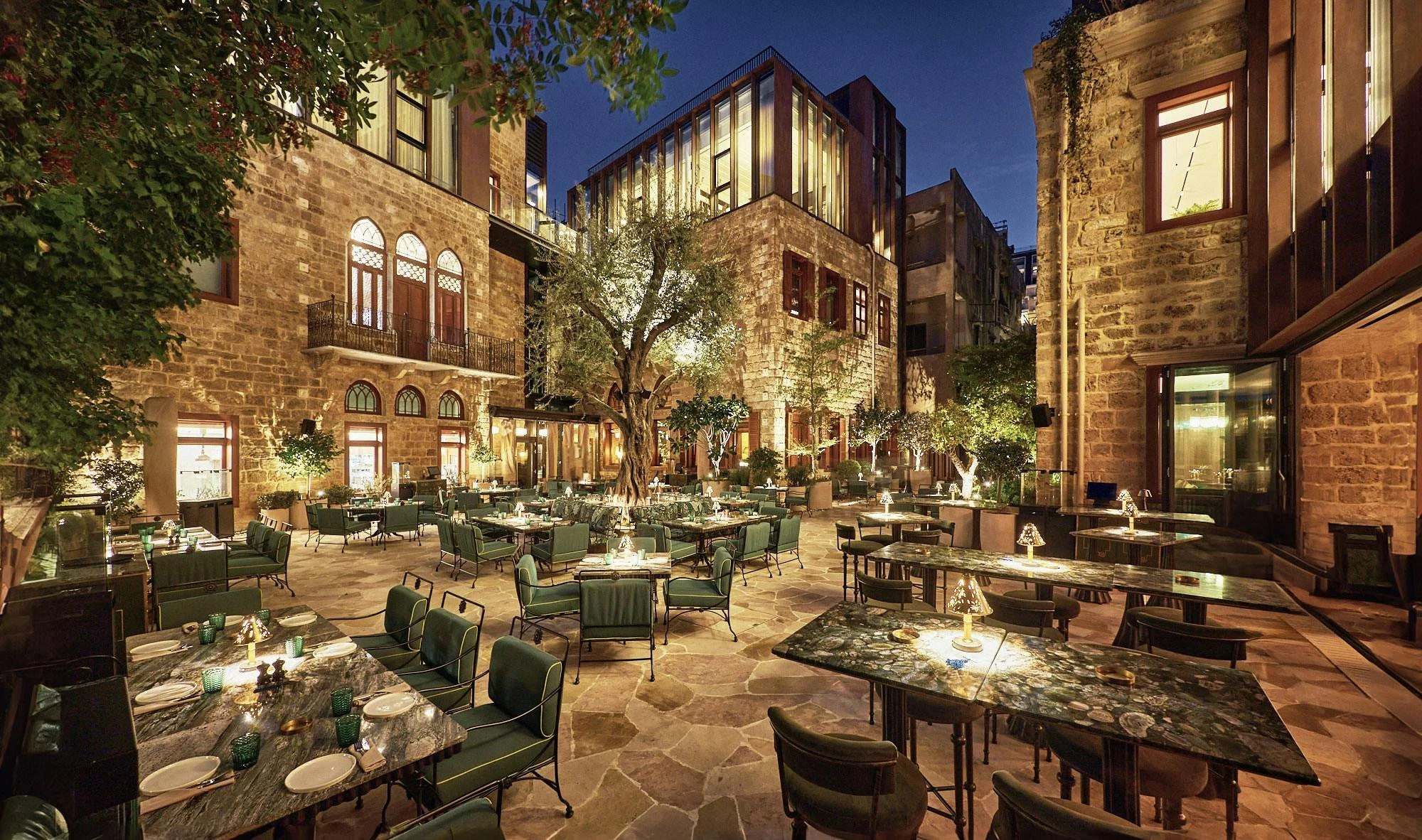
Beirut's restaurant culture has always operated under pressure, but the August 2020 port explosion reset the city's hospitality calendar in ways that are still being felt. Entire neighbourhoods were rebuilt, interiors gutted and reconfigured, and a generation of chefs and restaurateurs had to decide whether to leave or recommit. Beihouse, on Pasteur Street, belongs to the second category: a palatial property that was damaged in the blast and has since reopened as one of the city's more architecturally ambitious dining addresses. The space carries that history not as a marketing note but as a physical fact, visible in the restoration work and the deliberate scale of the room.
That scale places Beihouse in a specific tier of Beirut dining. The city has a long tradition of grand Lebanese restaurants, places where the architecture is as much a statement as the food, where the mezze arrives in waves and the table holds eight or ten. Beihouse operates in that register, trading on the kind of palatial formality that distinguishes it from the more casual neighbourhood spots and the tightly focused tasting-menu formats that have appeared in recent years.
The Sourcing Logic Behind Lebanese Staples
Lebanese cuisine at its core is an ingredient-forward tradition. The mezze canon, kibbeh through fattoush, relies on produce quality in a way that French mother sauces or Japanese precision cuts do not. When a tomato or a bunch of parsley is doing structural work in a dish, the sourcing question becomes a culinary one, not just an ethical footnote. Lebanon's agricultural geography supports this: the Bekaa Valley supplies some of the region's most consistent produce, from the herbs that anchor tabbouleh to the wheat varieties that inform the bread and kibbeh traditions. The mountain and coastal microclimates add further range, with citrus, pomegranate, and olive oil each pulling from distinct growing conditions within a relatively small country.
Chef Tarek Alameldine's approach at Beihouse works within this tradition while applying a more considered editorial hand to the classics. Lebanese staples reimagined is a phrase that appears in enough Beirut restaurant descriptions to border on cliché, but the underlying logic is sound when the reimagining is ingredient-led rather than technique-led. The distinction matters: an ingredient-led revision asks what version of this dish reflects the leading available produce and the most direct route to flavour, while a technique-led revision risks importing methods that pull the dish away from its context. Beihouse, from what the available record suggests, leans toward the former.
This positions the kitchen in a different conversation from Em Sherif, which operates as one of Beirut's most formal and ceremonially presented Lebanese dining experiences, and from Albergo Rooftop, which layers Lebanese cuisine with a rooftop setting that foregrounds the city view as much as the plate. Beihouse's palatial interior makes the room itself the primary frame, with the food working within that context rather than against it.
The Setting and What It Demands of the Food
There is a specific challenge that large, formally designed restaurants set for their kitchens: the food has to be confident enough to hold its own against the room. In settings where the architecture is doing significant work, average cooking can disappear into the background, absorbed by the grandeur. The restaurants that use scale well are those where the menu is as deliberate as the interior design, where a slow-cooked lamb shoulder or a properly assembled kibbeh nayyeh arrives with the same intention as the lighting above the table.
Across Beirut's higher-end dining tier, this balance is an ongoing negotiation. Restaurants like Buco have built reputations on tighter, more focused formats that let the kitchen's specificity drive the experience. Beihouse operates differently, betting that the combination of scale, architectural restoration, and a reimagined Lebanese menu creates a coherent offer for a particular kind of dinner: celebratory, group-oriented, rooted in the Lebanese tradition of the table as a communal, extended event.
That bet is not a retreat from ambition. Some of the world's most technically rigorous restaurants operate in palatial spaces, from Alain Ducasse at Louis XV in Monte Carlo to Alléno Paris au Pavillon Ledoyen. The difference is usually the degree to which the kitchen insists on its own terms within the setting. At Beihouse, Chef Alameldine's framing of Lebanese staples as the menu's backbone suggests the kitchen is not trying to transcend the tradition but to present it with sharper clarity.
Beirut as a Dining City in 2024
Beirut's restaurant culture has a specific resilience that regular visitors recognise and newcomers often find surprising. The city has absorbed multiple periods of disruption over the past two decades and has consistently produced new restaurants, new culinary voices, and renewed energy in its dining neighbourhoods. The post-2020 period has been the most difficult, combining the physical damage of the explosion with an acute economic crisis that compressed disposable income and made imported ingredients significantly more expensive in local currency terms.
The restaurants that have opened or reopened in this environment have had to make harder decisions about what to serve and what to charge. An increased focus on Lebanese ingredients and domestic sourcing is partly a philosophical choice and partly a practical response to import costs. This gives the current moment in Beirut dining a particular authenticity: menus built on local produce not as a trend signal but as an economic and culinary necessity. Beihouse's positioning within this moment, a grand room serving thoughtfully approached Lebanese staples, reads as genuinely aligned with where the city's better restaurants are placing their bets.
For those building a full Beirut itinerary, the city's hospitality offer extends well beyond the dining room. Our full Beirut hotels guide, full Beirut bars guide, full Beirut wineries guide, and full Beirut experiences guide cover the complementary layers of a city that rewards deliberate planning. Internationally, if you're benchmarking ambitious restaurants that operate in demanding architectural settings, Le Bernardin in New York, Atomix in New York, Amber in Hong Kong, and 8½ Otto e Mezzo Bombana in Hong Kong offer useful comparison points for what rigour inside a grand room looks like at its ceiling. For restaurants that have rebuilt their identities around a specific culinary conviction, Aponiente in El Puerto de Santa María and Lazy Bear in San Francisco demonstrate how strong a proposition that can be. Alinea in Chicago, Emeril's in New Orleans, and the format discipline seen at Amber round out the wider peer context for anyone thinking about where Beihouse sits on the global register of serious restaurants working within a defined culinary tradition.
Planning Your Visit
Beihouse is located on Pasteur Street in central Beirut, a neighbourhood that sits within walking reach of several of the city's key cultural and dining districts. As with most Beirut restaurants operating at this level, advance contact through the venue is advisable, particularly for larger groups or for weekend evenings when demand tightens. Pricing is about $60 per person. It is open daily from 5 PM to 1 AM, and reservations are essential. Dress code is smart casual.
Questions
Frequently asked
What recognition does Beihouse hold?
Beihouse holds a place on the World's 50 Best list at number 5.
How expensive is Beihouse?
Beihouse is listed at a price level of $$$.
Where is Beihouse and what does it serve?
Beihouse is in Gemmayzeh, Beirut, serving Modern Levantine Mediterranean.
The field
How it compares
| Place | Awards | Cuisine | Notes |
|---|---|---|---|
| Beihouse | World's 50 Best #5 | Modern Levantine Mediterranean | Gemmayzeh, $$$ |
| Alkimia | Michelin 1 Star | Modern Catalan Fine Dining | Barcelona |
| Amber | Michelin 3 Stars, World's 50 Best | Contemporary French Fine Dining | Hong Kong |
| Em Sherif | World's 50 Best | Traditional Lebanese Fine Dining | Beirut |
| ESqUISSE | Michelin 2 Stars, World's 50 Best | Modern French with Japanese Influences | Tokyo |
| Jungsik New York | Michelin 3 Stars, World's 50 Best | Modern Korean Fine Dining | New York City |
| The Modern | Michelin 2 Stars | Contemporary American Fine Dining | New York City |
Similar places
Modern Catalan Fine Dining
Alkimia
Barcelona, Spain
★
Contemporary French Fine Dining
Amber
Hong Kong, Hong Kong
★★★ · 50 Best
Traditional Lebanese Fine Dining
Em Sherif
Beirut, Lebanon
50 Best
Modern French with Japanese Influences
ESqUISSE
Tokyo, Japan
★★ · 50 Best
Modern Korean Fine Dining
Jungsik New York
New York City, United States
★★★ · 50 Best
Contemporary American Fine Dining
The Modern
New York City, United States
★★