Causa and Amazonia
- 01CuisineModern Peruvian tasting menu & rooftop bar
- 02CityWashington DC, United States
- 03RecognitionJames Beard Award
- James Beard Winner · James Beard Foundation
- James Beard Award Semi Finalist · 2025
The room’s name sets the terms before the first plate arrives: Causa and Amazonia is not using Peru as a loose decorative idea. It points to two different registers of Peruvian cooking, one tied to the layered, chilled potato preparation that has long carried coastal, home-kitchen, and criollo associations, the other to the Amazon basin’s ingredients and culinary memory. In Washington, D.C., where international restaurants often get flattened into embassy-row shorthand, that specificity matters. The restaurant belongs to a more exacting category: places that ask diners to read a cuisine through region, migration, and technique rather than through a generic national label.
That framing has gained outside validation. Carlos Delgado was named a 2025 James Beard Award semifinalist for Best Chef: Mid-Atlantic, a category covering D.C., Delaware, Maryland, New Jersey, Pennsylvania, and Virginia. For a Peruvian restaurant in the capital, the recognition is useful because it moves the conversation beyond novelty. It places the cooking inside a regional chef-award context where technique, point of view, and consistency matter more than broad popularity.
Peruvian cooking in D.C. is strongest when it resists the catch-all Latin label
Peru’s restaurant culture has a long history of absorbing influence without losing structure: Indigenous crops, Spanish colonial technique, African-Peruvian cooking, Nikkei precision, Chinese-Peruvian chifa, Andean preservation, and Amazonian biodiversity all sit inside the same national conversation. The risk outside Peru is reduction. Menus can become a familiar parade of ceviche, pisco, and grilled meat, useful but thin. Causa and Amazonia signals a narrower argument by naming both a canonical preparation and a regional world that many U.S. diners know less well.
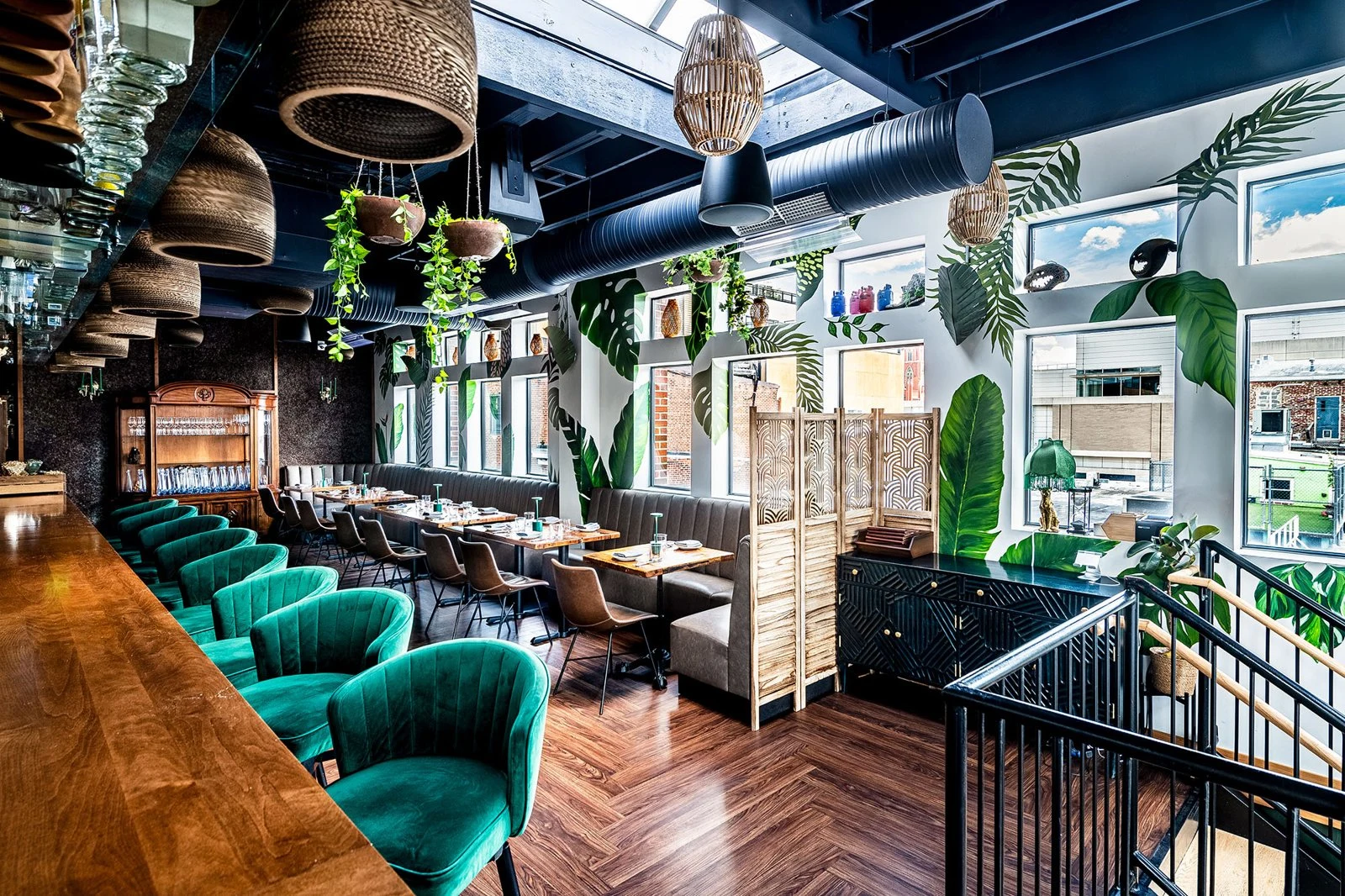
Causa, at its core, is a lesson in how Peruvian cooking treats texture and acidity: potato as architecture, chile as seasoning rather than blunt heat, citrus as lift, seafood or vegetables as contrast. Amazonian cooking brings a different set of references, including river fish, tropical fruit, herbs, tubers, and preservation traditions shaped by climate and geography. Without needing to turn dinner into a lecture, the restaurant’s premise asks guests to separate Peru’s coastal vocabulary from its rainforest one. That is a more serious cultural proposition than simply offering a polished Latin American night out.
D.C. is a fitting city for that argument. The capital’s dining audience is unusually comfortable with regional specificity because the city’s international communities, policy circles, and diplomatic traffic have made diners accustomed to cuisines with internal divisions. The same reader who uses Our full Washington, D.C. restaurants guide to sort formal dining from neighborhood regulars may also be choosing between pre-dinner drinks in Our full Washington, D.C. bars guide, a stay from Our full Washington, D.C. hotels guide, or a broader itinerary through Our full Washington, D.C. experiences guide. In that ecosystem, a Peruvian restaurant with a defined culinary thesis reads less like a category filler and more like part of the city’s adult dining vocabulary.
The award signal matters because the format depends on trust
Restaurants built around underexplained regional cuisines need a different kind of confidence from diners. Familiarity does not do all the work. A James Beard semifinalist citation gives Causa and Amazonia an external trust signal, especially for guests deciding between a safer American dining room and a cuisine they may know only through ceviche. The award does not guarantee a particular dish or experience, but it does mark the restaurant as part of the Mid-Atlantic’s chef-driven conversation in 2025.
That distinction is useful in Washington because the city’s dining map is fragmented. Georgetown has long carried its own formal-restaurant gravity, with rooms such as 1789 (American) tied to a different strand of capital dining. Casual institutions and address-led neighborhood pages such as 2 Amys (Pizzeria), 1226 36th St NW, 1339 H St NE, and 1608 14th St NW show how much D.C. dining depends on neighborhood habit as much as chef recognition. Causa and Amazonia operates in the more interpretive lane: the point is not only where dinner happens, but how a national cuisine is edited for a capital-city audience.
That makes the restaurant most useful for diners who want cultural context with polish rather than a survey menu. It is not the same decision as chasing a single famous dish or choosing a room for pure convenience. The sharper reason to go is to see Peruvian cooking presented with regional tension intact: the coast beside the forest, comfort beside technique, recognition beside education.
How to place it in a wider food itinerary
For travelers building a food-led trip, Causa and Amazonia sits comfortably in a D.C. schedule that mixes serious restaurants with category-specific stops rather than repeating the same style at every meal. The city’s restaurant scene rewards that approach: one night can be formal and historically American, another can focus on a diasporic cuisine with a contemporary frame, and drinks or cultural programming can fill the gaps without turning the itinerary into a checklist.
Readers looking beyond Washington can see the same editorial pattern in other cities, where regional identity carries more weight than broad cuisine labels. Japanese drinking and rice-focused formats appear in pages such as Jōdo Saké Bar in Los Angeles, Onigiri Time in Pasadena, and -Grilled beef Sukiyaki- KAMAKURA TANUKIAN 鎌倉 たぬき庵 in Kamakura. Pacific and plant-forward contexts appear through 'Ai Love Nalo in Waimanalo Beach, 'āina in San Francisco, and 'Ama 'Ama in Kapolei. Mexican and Latin American references take different shapes at ¿Por Qué No? in Portland and ¡Salud! in Los Angeles. The common thread is not sameness; it is the value of restaurants that clarify place rather than blur it.
In Washington, that is the useful reading of Causa and Amazonia. It gives Peruvian cuisine a frame specific enough to reward attention, and the James Beard recognition gives travelers a credible reason to prioritize it within a city crowded with official occasions, familiar dining rooms, and safe choices. For guests interested in how a cuisine travels without losing its internal map, this is the point of the reservation.
Questions
Frequently asked
What recognition does Causa and Amazonia hold?
Causa and Amazonia holds a James Beard award.
How expensive is Causa and Amazonia?
Causa and Amazonia is listed at a price level of $$$.
Where is Causa and Amazonia and what does it serve?
Causa and Amazonia is in Mount Vernon Square, Washington DC, serving Modern Peruvian tasting menu & rooftop bar.
The field
How it compares
| Place | Awards | Cuisine | Notes |
|---|---|---|---|
| Causa and Amazonia | James Beard | Modern Peruvian tasting menu & rooftop bar | Mount Vernon Square, $$$ |
| Albi | Michelin 1 Star, World's 50 Best | Modern Levantine Fine Dining | Washington DC |
| Dōgon | World's 50 Best | Modern Afro-Caribbean | Washington DC |
| Jônt | Michelin 2 Stars | Modern Japanese Fine Dining | Washington DC |
| minibar | Michelin 2 Stars | Avant-Garde Molecular Gastronomy | Washington DC |
| Moon Rabbit | World's 50 Best | Creative Vietnamese-Cajun Fusion | Washington DC |
| Oyster Oyster | Michelin 1 Star | Modern Vegetable-Focused Tasting Menu | Washington DC |
Similar places
Modern Levantine Fine Dining
Albi
Washington DC, United States
★ · 50 Best
Modern Afro-Caribbean
Dōgon
Washington DC, United States
50 Best
Modern Japanese Fine Dining
Jônt
Washington DC, United States
★★
Avant-Garde Molecular Gastronomy
minibar
Washington DC, United States
★★
Creative Vietnamese-Cajun Fusion
Moon Rabbit
Washington DC, United States
50 Best
Modern Vegetable-Focused Tasting Menu
Oyster Oyster
Washington DC, United States
★