Komal
In Residence
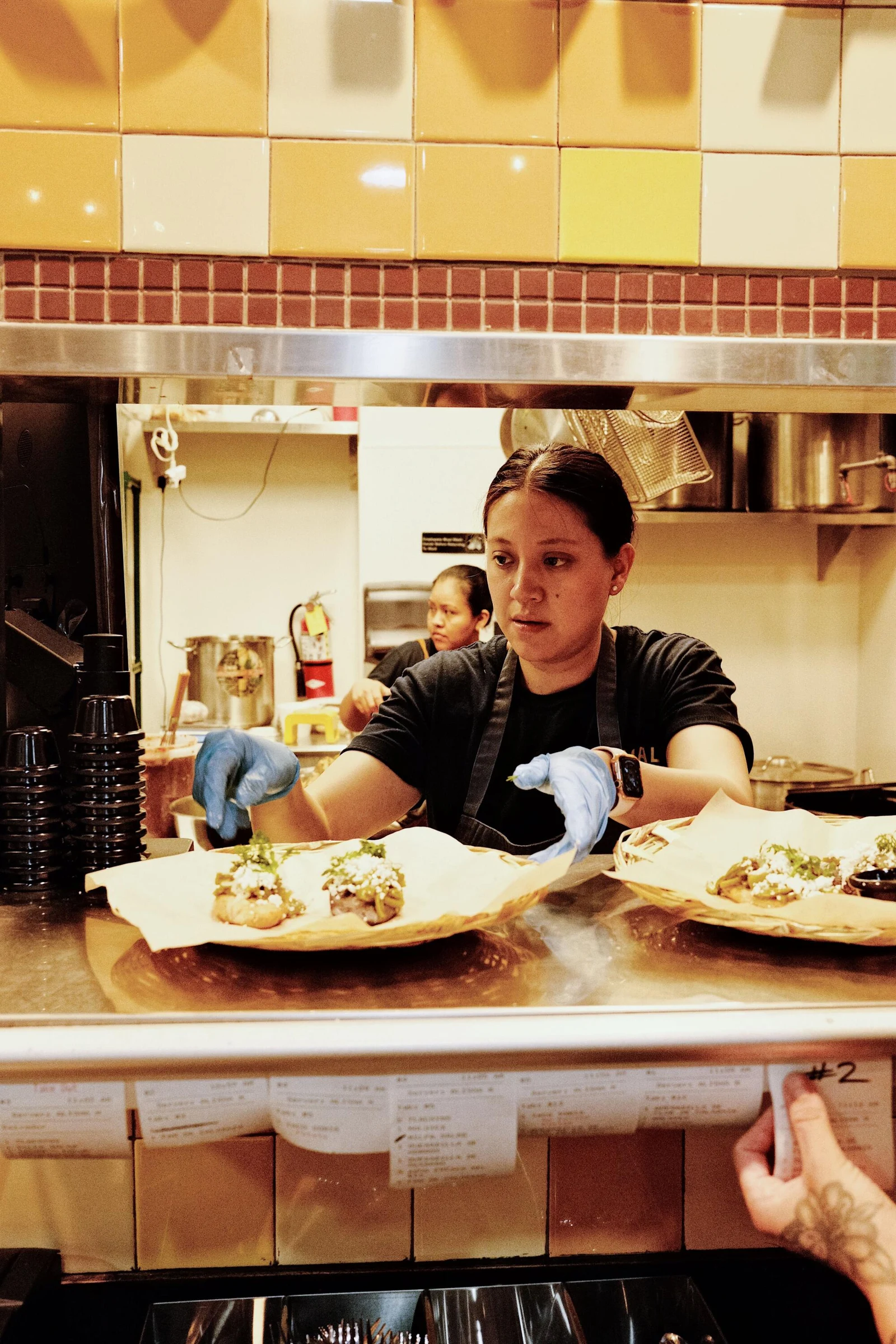
Fátima Juárez
Chef
- 01CuisineMexican Masa Antojitos
- 02CityLos Angeles, United States
- 03RecognitionJames Beard Award
- Michelin Bib Gourmand · Michelin Guide
- James Beard Winner · James Beard Foundation
- Michelin Bib Gourmand · 2026
- James Beard Award Semi Finalist · 2026
- James Beard Award Nominee · 2026
- Bon Appétit The 20 Best New Restaurants #16 · 2025
- Resy Best of the Hit List · 2025
- Esquire Best New Restaurants · 2025
- Eater Best New Restaurants · 2025
- LA Taco Best Tacos in LA #36 · 2025
- Michelin Bib Gourmand · 2025
- LA Times 101 Best Restaurants #38 · 2024
Masa as the Starting Point
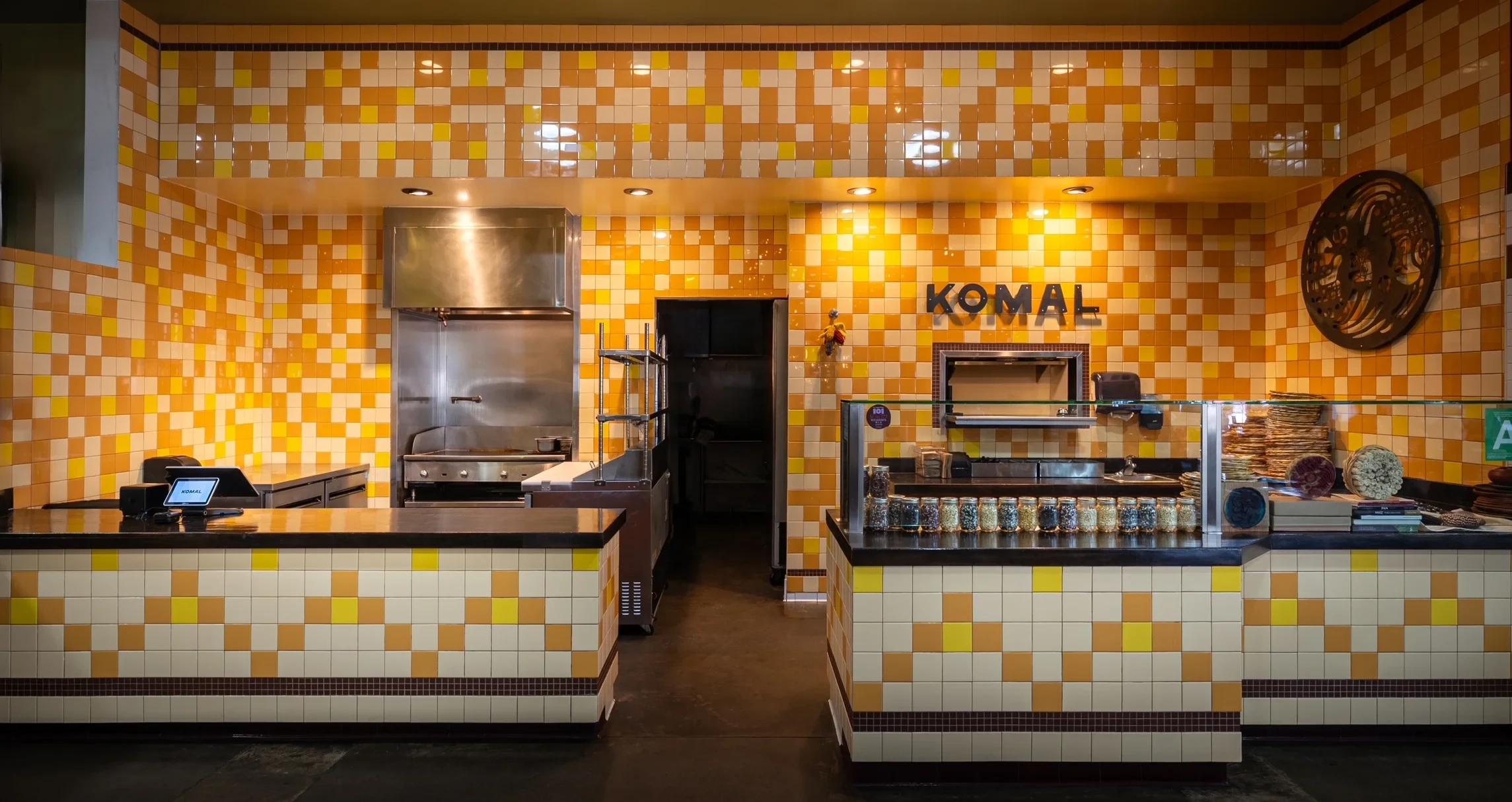
Mercado La Paloma sits on South Grand Avenue in a converted warehouse that houses a rotating cast of small food stalls and community vendors. The market format is characteristically unglamorous: communal seating, fluorescent light, plastic chairs. Inside that setting, Komal occupies a position that few casual visitors would anticipate. The smell of fresh masa reaches you before you locate the counter, warm and faintly sweet, the kind of scent that signals grain rather than processed starch. That distinction is the whole argument of the place.
Los Angeles has a long-established tortilla industry, but industrially produced masa and fresh, stone-ground masa from heirloom corn are fundamentally different products. Komal is the city's first craft molino, a workshop dedicated exclusively to nixtamalizing and grinding corn, and operates on a narrow premise: that the tortilla deserves the same sourcing attention the broader food world has given to coffee, bread, or charcuterie. The menu of antojitos exists, in part, to demonstrate what happens when that premise is applied seriously.
The Corn Program and What It Produces
The sourcing spans multiple Mexican heirloom varieties. Chalqueño corn from the State of Mexico and Oaxacan blue bolita both appear in the menu, each carrying a distinct flavor profile that becomes legible once you eat them side by side. The LA Times, which ranked Komal 38th on its 2024 list of 101 Best Restaurants, described the tortillas as tasting of "the sun and soil, earthy and bursting with the sweetness of summer corn", a description grounded in the varietal character of the corn itself.
The same level of sourcing precision that underpins tasting menus at places like The French Laundry in Napa or Single Thread Farm in Healdsburg is applied here to street-food formats at street-food prices. Where a meal at Michelin-starred LA peers, Lazy Bear in San Francisco operates in the same regional conversation, runs into the hundreds of dollars per head, Komal's price range sits at roughly $20 per person, making the Bib Gourmand recognition a reasonably accurate signal.
The Antojitos Menu
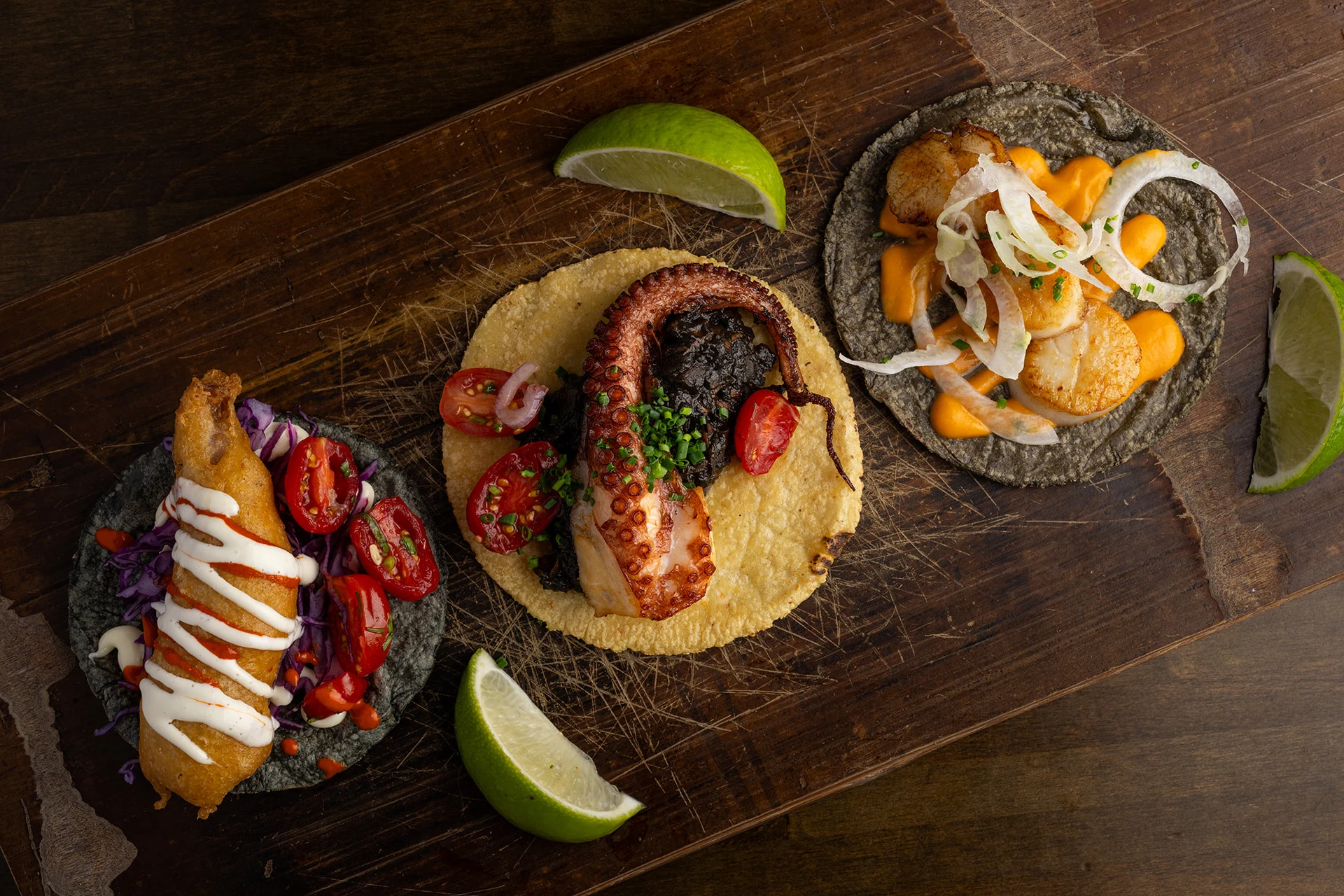
Menu is short and structured around Mexico City street-food formats: tacos, quesadillas, tlacoyos, molotes, and mole. Each dish functions as a vehicle for the masa rather than an independent showcase, which means the quality differential between Komal and a standard taqueria is most visible in the base rather than the garnish.
Tlacoyos, griddled corn cakes stuffed with ayocote beans, arrive garnished with nopales and queso fresco, a preparation that mirrors the Oaxacan and central Mexican traditions the kitchen draws on. The flor de calabaza quesadilla, filled with Oaxacan cheese and a corn sofrito, is the LA Times critic's recommended order for appreciating fresh masa in its least-interrupted form. Tortillas are also available by the dozen, an option that frames the molino function directly.
Mole is described by the LA Times as "dusky and intricately spiced, noticeably sweet and redolent with toasted chiles", a preparation credited to chef Fátima Juárez's background in Oaxaca. Mole of this complexity takes days to build; its presence on a short street-food menu at this price point is one of the more unusual propositions in the city's Mexican dining scene.
Among the tacos, the Taco Sonia is noted as a signature. Menu breadth is intentionally limited, which keeps execution focused and reinforces the grain-sourcing argument rather than diffusing it.
Where Komal Sits in LA's Mexican Dining Tier
Los Angeles has one of the most layered Mexican dining scenes in North America, running from loncheras and family-run taquerias through to refined regional formats. Chichen Itza, also in Mercado La Paloma, represents the Yucatecan end of that range. Broken Spanish operates in a more refined register. Chulita, Carnitas El Momo, and Carnes Asadas Pancho Lopez each anchor different regional and format traditions. Komal's position is distinct from all of them: it is the only operation in the city whose central activity is the molino itself, making it less a competitor to other taquerias than an antecedent, the place that produces the raw material others approximate with inferior inputs.
The reference points that make Komal's work legible internationally sit in Mexico City rather than Los Angeles. Pujol in Mexico City operates at the haute end of that tradition; Komal is the street-food counterpart, applying the same corn-first logic without the tasting-menu format. Alma Fonda Fina in Denver represents another point on the spectrum of serious regional Mexican cooking in the US, though without the molino component. For context on where LA fits against the national fine-dining conversation more broadly, see coverage of Le Bernardin in New York City, Emeril's in New Orleans, and Alinea in Chicago.
Recognition and Timing
The Michelin Bib Gourmand awarded in 2025, alongside placement on Resy's Best of the Hit List for the same year and the LA Times ranking in 2024, represents a convergence of recognition across three independent editorial systems within roughly twelve months. The market setting currently makes access relatively open, but the critical attention is recent.
Spring through summer is the most relevant seasonal window for the corn program. Heirloom corn varieties have defined harvest cycles, and masa ground from freshly dried grain from the prior autumn's harvest carries different character than masa made later in the year from older stock. The LA Times review specifically noted the corn's "sweetness of summer corn," suggesting the menu expresses leading when the sourcing cycle is at its most current.
Planning Your Visit
Komal is located at 3655 S Grand Ave, Los Angeles, CA 90007, inside Mercado La Paloma. Budget: Single-dollar sign pricing; the menu is one of the more affordable ways to access Michelin-recognized cooking in the city. Reservations: The market format means walk-in access is the current norm; arriving at lunch on a weekday reduces wait times. Dress: Casual, the market environment sets the register. Tortillas are available by the dozen as a takeaway option from the molino.
Questions
Frequently asked
What recognition does Komal hold?
Komal holds a Michelin Bib Gourmand and a James Beard award.
Who works at Komal?
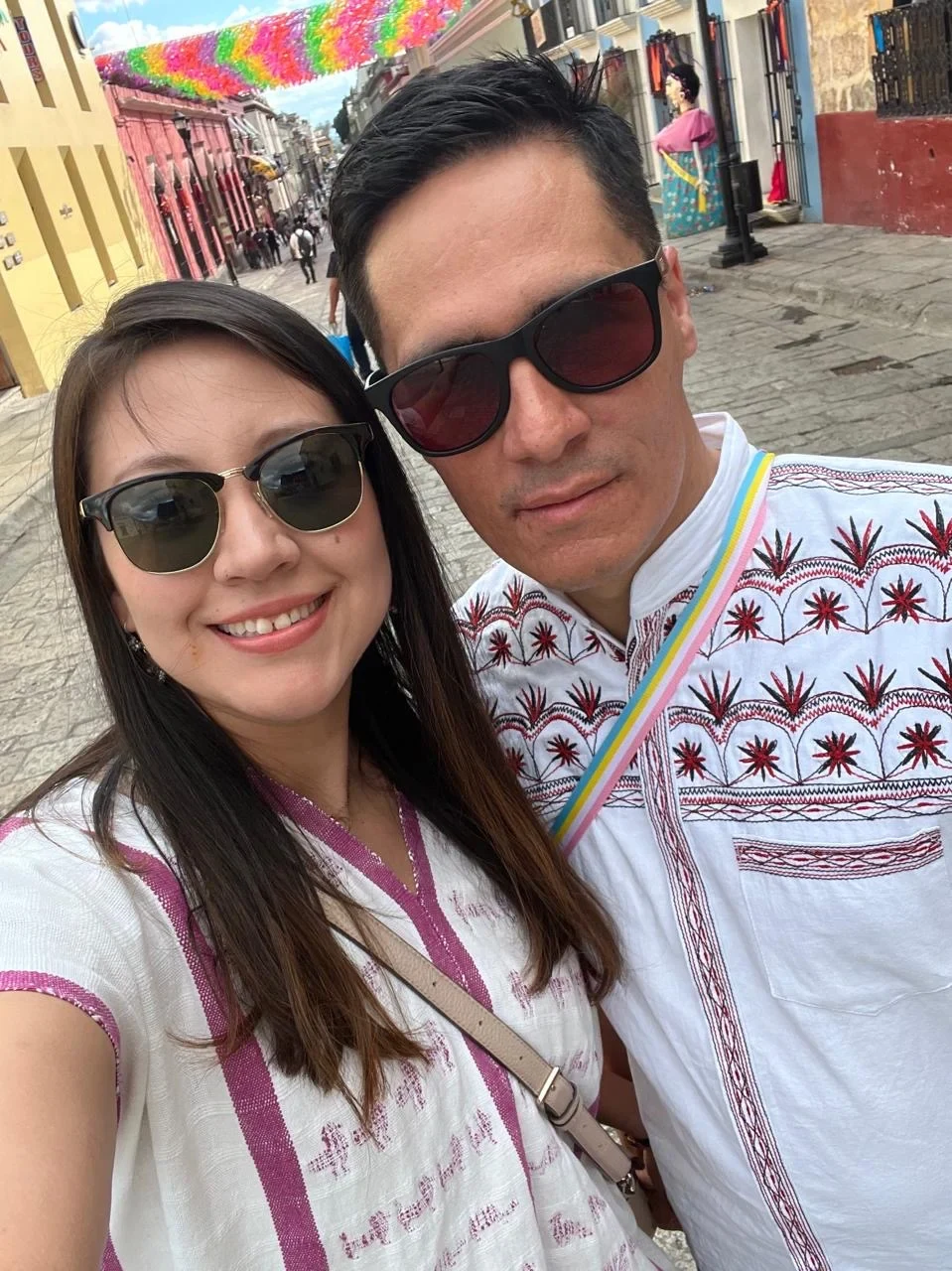
Made By profiles Fátima Juárez (Chef-Founder & Co-Owner) and Conrado Rivera (Co-Founder & Co-Owner) at Komal.
How expensive is Komal?
Komal is listed at a price level of $$.
Where is Komal and what does it serve?
Komal is in South Central, Los Angeles, serving Mexican Masa Antojitos.
The field
How it compares
| Place | Awards | Cuisine | Notes |
|---|---|---|---|
| Komal | James Beard | Mexican Masa Antojitos | South Central, $$ |
| Hayato | Michelin 2 Stars | Traditional Japanese Kaiseki | Los Angeles |
| Holbox | Michelin 1 Star, World's 50 Best | Modern Mexican Seafood | Los Angeles |
| Kato | Michelin 2 Stars, World's 50 Best | Modern Taiwanese Fine Dining | Los Angeles |
| Mélisse | Michelin 2 Stars | California-French Fine Dining | Los Angeles |
| Providence | Michelin 3 Stars, World's 50 Best | Modern Seafood Fine Dining | Los Angeles |
| Somni | Michelin 3 Stars, World's 50 Best | Modern Spanish Fine Dining | Los Angeles |
In residence
Similar places
Traditional Japanese Kaiseki
Hayato
Los Angeles, United States
★★
Modern Mexican Seafood
Holbox
Los Angeles, United States
★ · 50 Best
Modern Taiwanese Fine Dining
Kato
Los Angeles, United States
★★ · 50 Best
California-French Fine Dining
Mélisse
Los Angeles, United States
★★
Modern Seafood Fine Dining
Providence
Los Angeles, United States
★★★ · 50 Best
Modern Spanish Fine Dining
Somni
Los Angeles, United States
★★★ · 50 Best