Mari Vanna
- 01CuisineTraditional Russian & Eastern European Home Cooking
- 02CityNew York City, United States
From the people index
Recommended by
One trusted voice points here.
Russian Hospitality in a City That Rarely Sits Still
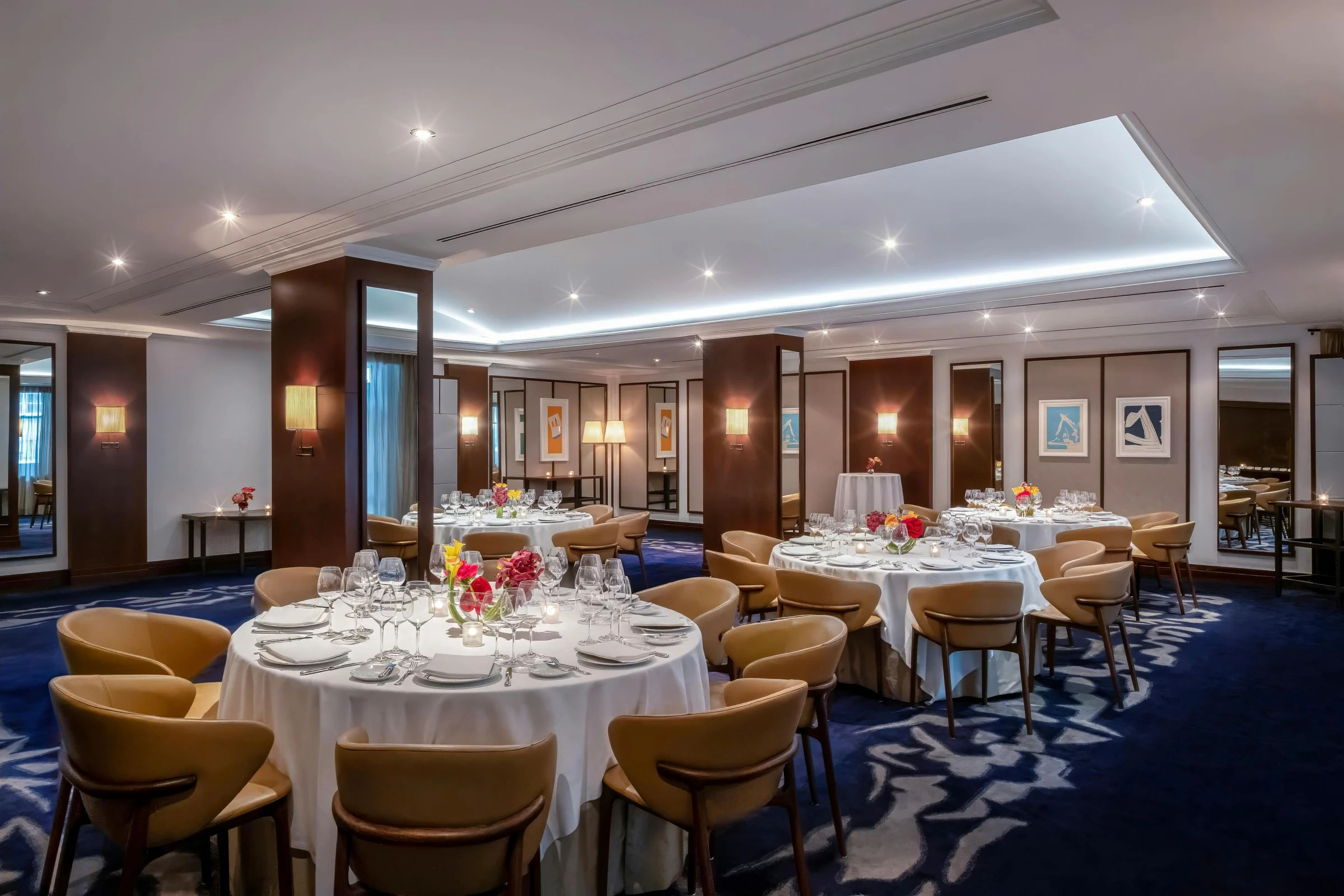
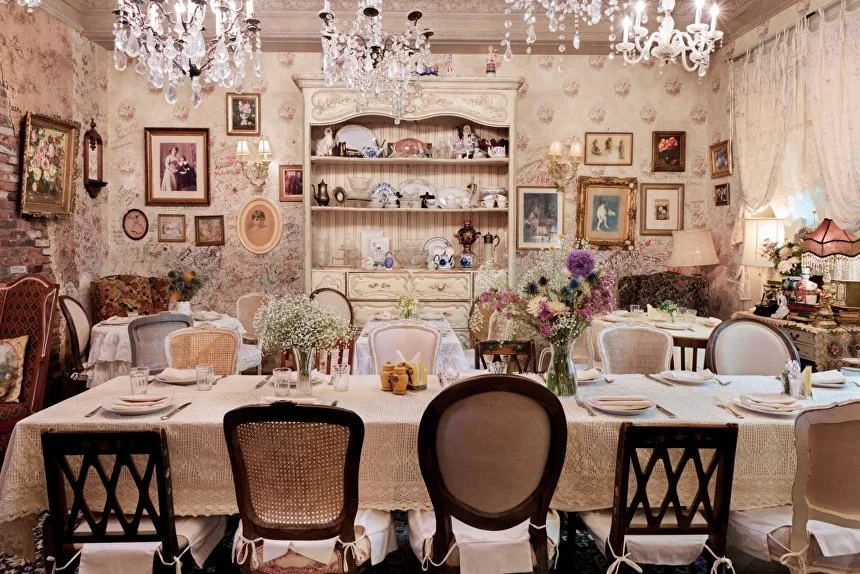
New York's dining room has long been a negotiation between novelty and comfort. The city that sustains institutions like Le Bernardin and Per Se at the ultra-formal end also makes room, periodically, for restaurants that operate on a different register entirely: not technical spectacle, but the convincing recreation of a domestic world. Mari Vanna, which arrived in the Flatiron district at 41 E 20th St as part of an international expansion that had already taken root in London, Moscow, and Washington D.C., belongs to that second category. The premise is a Russian living room, complete with mismatched china, lace curtains, framed photographs, and the implicit suggestion that someone's babushka might appear from the kitchen at any moment.
That premise is worth taking seriously rather than dismissing as theatrical gimmick. In a New York market where the dominant fine-dining conversation circles Korean progressives like Atomix and Jungsik New York, or Japanese precision counters like Masa, the Russian dining tradition has almost no serious representation at the table-service level. Mari Vanna fills that gap with a format that is part restaurant, part social club, and part cultural artifact.
What the Wine and Spirits Program Says About the Room
The drinks program at a restaurant like this functions as a clearer signal of positioning than the food menu does. Russian dining tradition is not primarily a wine culture in the French or Italian sense. The cellar exists, and it serves the room, but the spine of the beverage program here is vodka: house-infused varieties that track the domestic Russian tradition of flavoring neutral spirits with horseradish, pepper, citrus, berry, or herb. These infusions are not novelty items placed on a cocktail menu as a footnote. In the Russian hospitality register, they are the aperitif, the punctuation between courses, and sometimes the entire point of the gathering.
For those who approach the table as wine drinkers, Eastern European bottles provide the most coherent pairing with the food's flavor profile. Georgian wines, which have experienced a significant critical revival over the past decade largely because of their amber wine tradition and skin-contact production methods, sit logically alongside dishes built on pickled, fermented, and cured flavors. The sour and saline notes that define a great deal of Russian table food are not well served by a Napa Cabernet or a Burgundian Chardonnay of the kind you might find driving the cellar at The French Laundry or Single Thread Farm in Healdsburg. The logic of pairing here is different, and a drinks program that acknowledges that difference is operating with more intellectual honesty than one that simply imports a Western European wine list and calls it done.
American fine dining's sommelier culture, which has produced some of the most technically accomplished wine programs in the world at places like Blue Hill at Stone Barns or Providence in Los Angeles, is built around European appellations and their American equivalents. A restaurant rooted in Slavic hospitality that takes its spirits program seriously is doing something categorically different, and for guests who understand that, the experience is more coherent than it might appear from the outside.
The Flatiron Setting and Who the Room Attracts
The Flatiron district, where Mari Vanna sits, has historically accommodated a wide range of dining formats, from fast-casual daytime options to destination dinner rooms. The address on East 20th Street places it close enough to Gramercy and Union Square to draw from the residential Russian-speaking community on the Upper East Side and the broader expat dining circuit that follows familiar cultural coordinates across a new city. The interior design, which replicates a pre-Soviet domestic environment with deliberate specificity, works differently on different guests: for Russian speakers, it reads as a knowing cultural reference point; for international diners, it functions as an immersive set piece that happens to serve food.
That dual function is not unusual in New York. The city's dining culture has long supported restaurants that operate as community anchors for diaspora populations while simultaneously marketing themselves to the broader curious-dining public.
Situating Mari Vanna in the Broader American Fine Dining Conversation
Comparing Mari Vanna to the prestige tier of American restaurant culture requires acknowledging that it belongs to a different competitive set. It does not compete with Michelin-starred tasting menus or the kind of ingredient-driven destination dining you find at Alinea in Chicago, Addison in San Diego, or The Inn at Little Washington. Its comparable set is the restaurant that serves a defined cultural tradition with enough conviction and consistency to sustain a loyal clientele over years, in a market that otherwise provides little access to that tradition. In that specific niche, alongside perhaps a handful of Georgian, Armenian, or Uzbek restaurants scattered across the outer boroughs, Mari Vanna holds a position that is difficult to replicate.
The international footprint of the Mari Vanna brand, which spans multiple cities and countries, gives it an operational consistency that standalone independent restaurants often lack. The recipe and concept discipline required to open the same premise in London, New York, and Washington D.C. is not trivial. Restaurants in other American cities, like Emeril's in New Orleans or Bacchanalia in Atlanta, have built durable institutions around regional identity rather than international cultural transplant. Mari Vanna's challenge and achievement is the inverse: transplanting a cultural identity into a city that already has everything, and making it stick.
For an international comparison point, the kind of cultural specificity Mari Vanna deploys in New York is not unlike what you find in European cities where a particular cuisine occupies a carefully maintained niche: think of the precision with which Alain Ducasse at Louis XV in Monte Carlo or 8 1/2 Otto e Mezzo Bombana in Hong Kong serve as definitive expressions of a cuisine in a market that might otherwise reduce it to a caricature. The scale and ambition differ sharply, but the structural logic is recognizable.
Planning Your Visit
Mari Vanna is located at 41 E 20th St in the Flatiron district, accessible by subway from the 23rd Street stations on the N, R, W, and 6 lines, each within a few minutes' walk.
Questions
Frequently asked
How expensive is Mari Vanna?
Mari Vanna is listed at a price level of $$$.
Where is Mari Vanna and what does it serve?
Mari Vanna is in Midtown South-Flatiron-Union Square, New York City, serving Traditional Russian & Eastern European Home Cooking.
The field
How it compares
| Place | Cuisine | Notes | Awards |
|---|---|---|---|
| Mari Vanna | Traditional Russian & Eastern European Home Cooking | Midtown South-Flatiron-Union Square, $$$ | · |
| Atomix | Modern Korean Tasting Menu | New York City | Michelin 2 Stars, World's 50 Best |
| Daniel | Modern French Fine Dining | New York City | Michelin 1 Star, World's 50 Best |
| Eleven Madison Park | Contemporary Plant-Based Fine Dining | New York City | Michelin 3 Stars, World's 50 Best |
| Jungsik New York | Modern Korean Fine Dining | New York City | Michelin 3 Stars, World's 50 Best |
| Kabawa | Modern Caribbean Prix Fixe | New York City | World's 50 Best |
| Le Bernardin | French Seafood Fine Dining | New York City | Michelin 3 Stars, World's 50 Best |
Similar places
Modern Korean Tasting Menu
Atomix
New York City, United States
★★ · 50 Best
Modern French Fine Dining
Daniel
New York City, United States
★ · 50 Best
Contemporary Plant-Based Fine Dining
Eleven Madison Park
New York City, United States
★★★ · 50 Best
Modern Korean Fine Dining
Jungsik New York
New York City, United States
★★★ · 50 Best
Modern Caribbean Prix Fixe
Kabawa
New York City, United States
50 Best
French Seafood Fine Dining
Le Bernardin
New York City, United States
★★★ · 50 Best