Mekumi - すし処 めくみ
In Residence
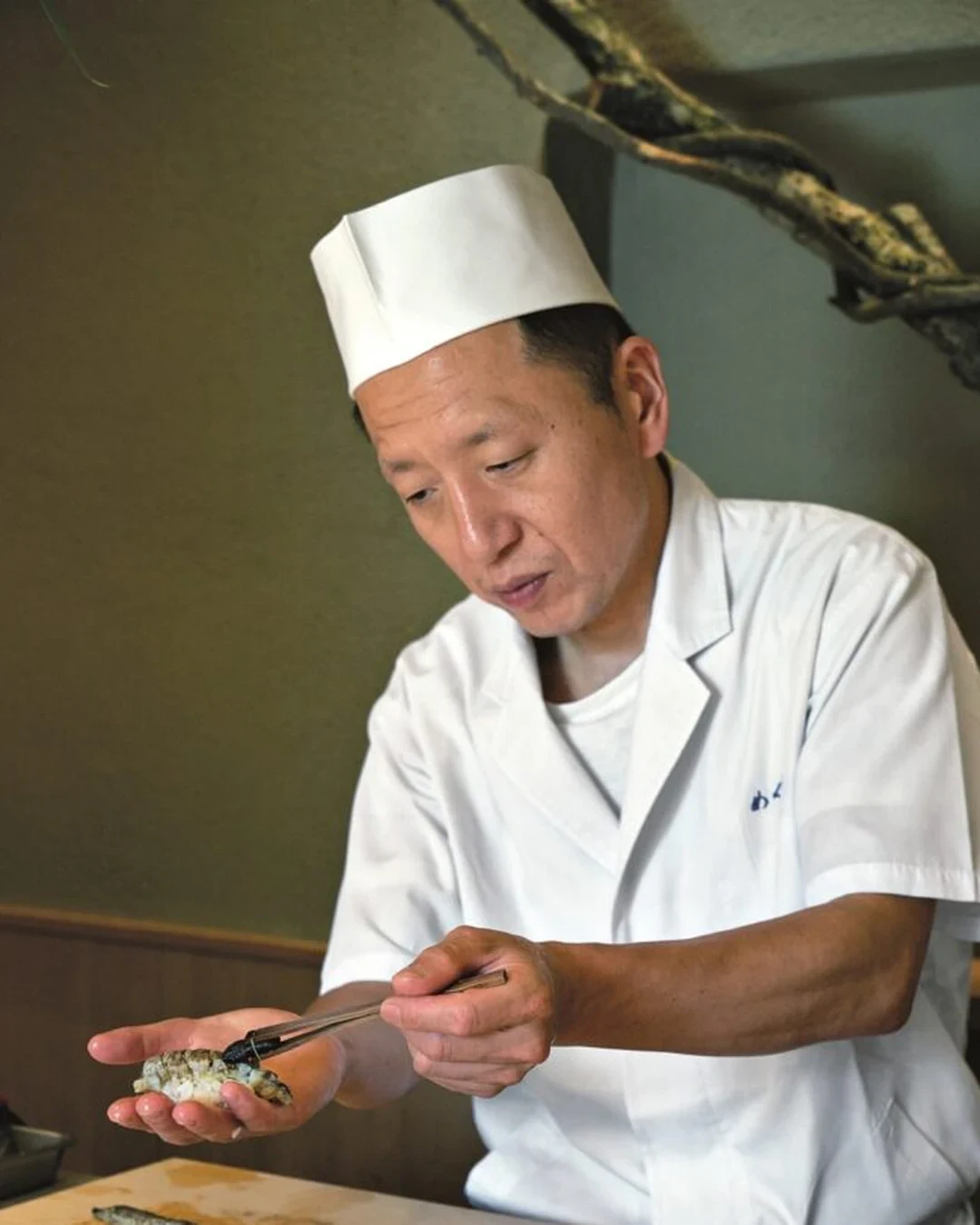
Takayoshi Yamaguchi
Chef
- 01CuisineTraditional Japanese Omakase Sushi
- 02CityNonoichi, Japan
- Tabelog Silver #77: 4.5pts · 2026
- La Liste Top Restaurants: 96pts · 2026
- Tabelog 100 #96: 4.5pts · 2025
- Tabelog Silver · 2025
- La Liste Top Restaurants: 96pts · 2025
- Opinionated About Dining Top Restaurants in Japan Ranked #6 · 2025
- Opinionated About Dining Top Restaurants in Japan Ranked #6 · 2024
- Opinionated About Dining Top Restaurants in Japan Ranked #6 · 2023
- The Japan Times Destination Restaurants Destination Restaurants Selection #7 · 2021
A Counter in the Quiet, Earning Attention Across Japan
The residential streets of Nonoichi, a modest city absorbed into the greater Kanazawa conurbation of Ishikawa Prefecture, offer none of the architectural drama that typically frames a destination-grade restaurant. There are no lantern-lit alleys, no heritage machiya frontages, no neighbourhood cachet to borrow. The building that houses Sushi Dokoro Mekumi reads, from the outside, as a house restaurant in the plainest sense: domestic in scale, set back from the road, with parking rather than ceremony at the entrance. That physical understatement is not incidental. It is, in the context of Hokuriku sushi culture, almost a declaration.
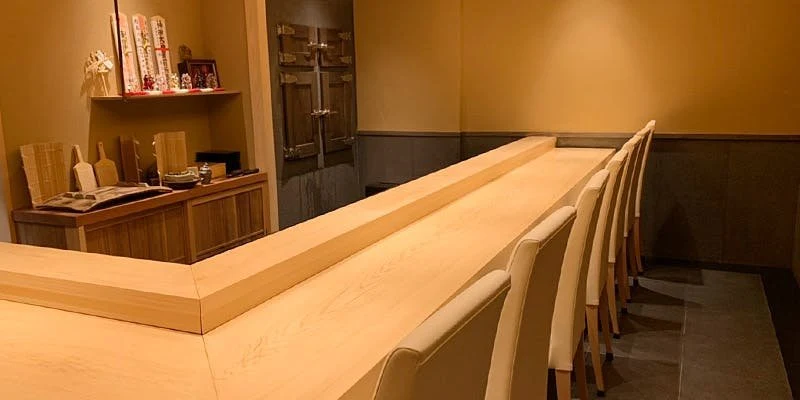
Inside, the counter holds eight seats, all facing the chef, all oriented toward the same act of focused attention that defines the serious omakase format. The space is described as relaxed rather than theatrical, a quality that sits in deliberate contrast to the credentials of what is served across that counter. Photography is not permitted. The dress code is smart casual. Both conditions point toward a room that takes the food seriously and asks its guests to do the same, without requiring the performance of occasion.
The Sunday letter
Find new places through the people who run them.
Our Sunday email brings you the chefs, winemakers and hoteliers behind our newest stories. See a sample before you subscribe.
See a sample of the Sunday emailOne email a week. Unsubscribe from any issue.
What the Awards Record Says About Hokuriku Sushi
Japan's serious dining scene is often mapped through Tokyo and Osaka, with Kyoto's kaiseki tradition absorbing most of the remaining critical attention. The Hokuriku region, anchored by Kanazawa and its satellite cities, operates as a distinct culinary zone, one whose access to the Sea of Japan's cold-water seafood has long made it a reference point for fish-focused cooking, but whose restaurants have only recently begun attracting the sustained international recognition that smaller metropolitan addresses receive as a matter of course.
Mekumi's award trajectory is, in that context, worth examining carefully. The counter has earned 7 awards in total, and its Tabelog recognition has remained a major part of that profile.
For comparison with counters in Japan's larger cities, see Harutaka in Tokyo, which operates in a different competitive register shaped by Ginza pricing and density, or the kaiseki tradition represented by Gion Sasaki in Kyoto. Mekumi's positioning is distinct: a counter that draws its authority from regional seafood access and sustained critical validation rather than metropolitan concentration.
Noto-Mae Nigiri and the Hokuriku Ingredient Base
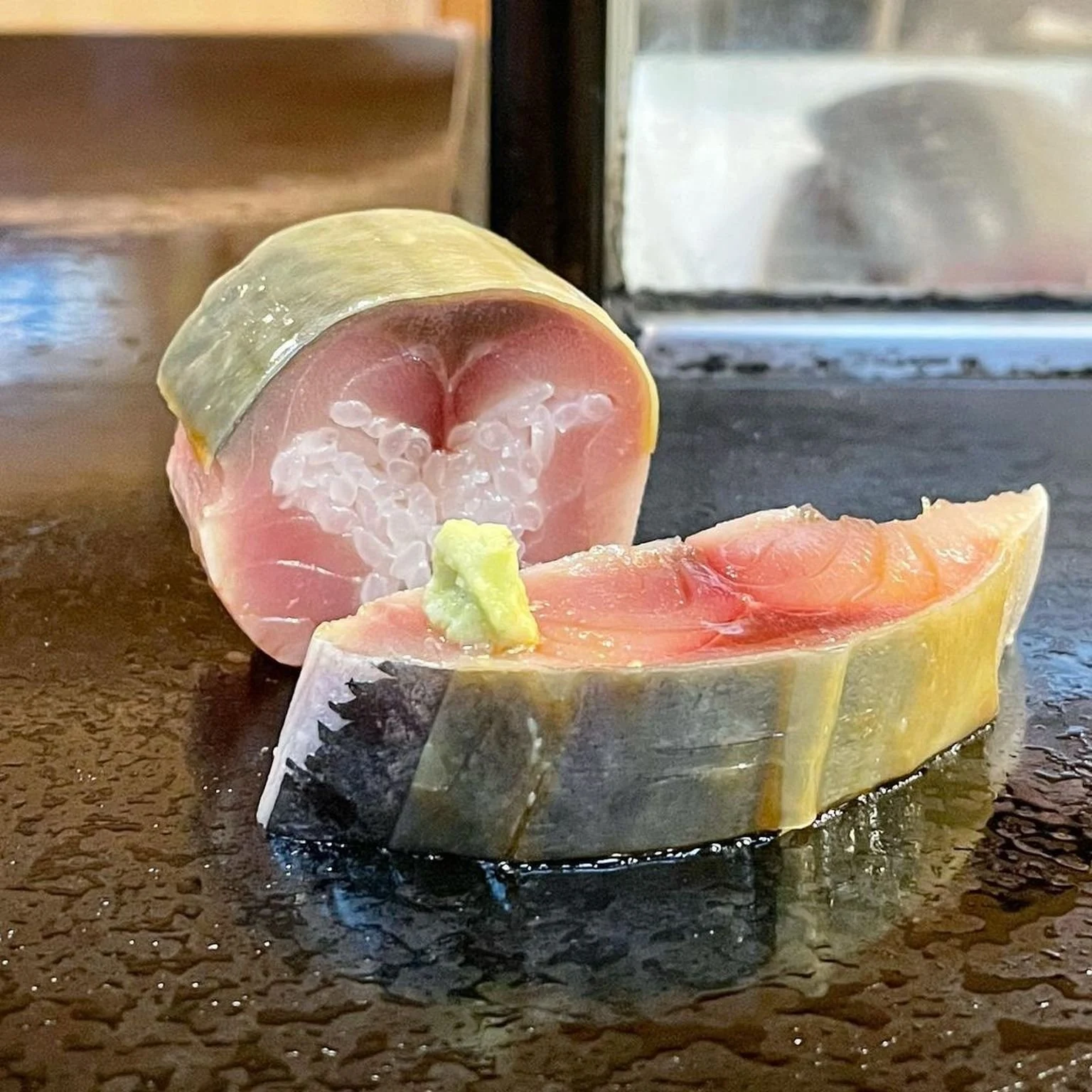
The editorial framing on Mekumi's Tabelog listing references Noto-mae nigiri, nigiri shaped by the seafood sourced from waters off the Noto Peninsula, the finger of land extending north from Ishikawa into the Sea of Japan. Noto-mae as a concept positions the counter within a specific regional ingredient philosophy: that the Sea of Japan's colder, slower waters produce fish with different fat content, texture, and seasonal behaviour than Pacific-side equivalents, and that a serious Hokuriku counter should build its repertoire around those characteristics rather than defaulting to Tsukiji or Toyosu sourcing.
This is not a philosophical novelty but a practical commitment that shapes the entire seasonal arc of an omakase at this latitude. Crab seasons in the Sea of Japan run to strict regulatory calendars. The region's winter fish profiles differ substantially from summer, and the proximity to the source compresses the distance between sea and counter. Chef Takayoshi Yamaguchi operates within that tradition, and the counter's focus on regional seafood specificity is consistent with how Hokuriku's most regarded sushi practitioners have historically differentiated themselves from their metropolitan counterparts.
The kaiseki principle of shun, cooking at the precise moment of seasonal peak, translates directly into nigiri-focused omakase at this level. The meal's structure across one nightly seating from 6 to 10 PM creates a contained, high-concentration service model where the counter's entire operational focus channels into those few hours. That structure is common to the highest-tier omakase format and reflects an approach to quality control that resists the volume dilution of larger operations.
Price, Booking, and the Planning Reality
Pricing at Mekumi runs in the JPY 40,000 to 49,999 range per person for both lunch and dinner at the listed average, with some review-based estimates reaching JPY 80,000 to 99,999 for dinner, reflecting either beverage additions or variation in the omakase composition. At the lower end of that range, the counter sits in a price bracket shared by serious Tokyo omakase addresses; at the upper end, it represents a significant premium relative to other Hokuriku sushi options. The calculus changes when weighed against the booking difficulty and metropolitan transport costs that attend equivalent Tokyo counters.
Reservations are essential. The eight-seat format means that demand consistently outpaces supply.
Getting there from Kanazawa takes approximately 25 minutes by taxi from Kanazawa Station's east exit, at a cost of around JPY 2,500 to 3,000 one way. From JR Nonoichi Station, the fare is approximately JPY 1,000 by taxi. The Shimobayashi bus stop, served by several bus routes and the Nonoichi Town Community Bus Western and Central Routes, is about five minutes' walk from the counter. Parking is available on-site for those driving. Credit cards are accepted (Visa, Mastercard, JCB, American Express, Diners). Electronic money and QR code payments are not.
The restaurant is open daily from 6 to 10 PM.
Where Mekumi Sits in the Wider Region
Ishikawa's dining scene has developed a coherent identity built on proximity to notable raw materials, seafood from the Japan Sea, rice from local paddies, sake from Hokuriku breweries, and a tradition of quiet, technically serious cooking that resists the spectacle orientation of larger urban markets. Mekumi sits at the apex of that regional scene in the sushi category, in a way that is comparable, in structural terms, to how counters like Goh in Fukuoka or Abon in Ashiya occupy the upper tier of their respective regional dining environments. These are not Ginza counters competing on metropolitan density; they are regional anchors whose consistency over time has built recognition that now travels.
For visitors building a Hokuriku itinerary, the counter functions as the meal around which a trip to Kanazawa and Nonoichi is organised, not an add-on to a tourist agenda, but the destination itself. Combine a reservation here with exploration of Kanazawa's covered markets, the Kenroku-en garden, and the Higashi Chaya district, and the city's broader food culture comes into clearer focus. For those extending into wider Ishikawa or Japan, the regional comparison set includes destinations as different as HAJIME in Osaka, akordu in Nara, Mitsuyasu in Kyoto, and Beppu Hirokado in Oita, each anchoring a different register of Japanese culinary tradition.
Other reference points for the broader sweep of Japan's serious dining include 1000 in Yokohama, 6 in Okinawa, affetto akita in Akita, Aji Arai in Oita, and Ajidocoro in Yubari District.
Questions
Frequently asked
Who works at Mekumi - すし処 めくみ?
Made By profiles Takayoshi Yamaguchi (Chef) at Mekumi - すし処 めくみ.
How expensive is Mekumi - すし処 めくみ?
Mekumi - すし処 めくみ is listed at a price level of $$$.
Where is Mekumi - すし処 めくみ and what does it serve?
Mekumi - すし処 めくみ is in Nonoichi, Nonoichi, serving Traditional Japanese Omakase Sushi.
The field
How it compares
| Place | Cuisine | Notes | Awards |
|---|---|---|---|
| Mekumi - すし処 めくみ | Traditional Japanese Omakase Sushi | Nonoichi, $$$ | · |
| Botanist | Modern Canadian Fine Dining | Vancouver | · |
| Kyubey | Traditional Japanese Omakase Sushi | Tokyo | · |
| Sazenka | Modern Chinese Fine Dining | Tokyo | Michelin 3 Stars, World's 50 Best |
| Sushi Osamu | Traditional Japanese Omakase Sushi | Fukuoka | · |
| Sushi Ryujiro | Traditional Japanese Omakase Sushi | Tokyo | Michelin 1 Star |
| Una Pizza Napoletana | Neapolitan Pizza | New York City | · |
In residence
Similar places
Modern Canadian Fine Dining
Botanist
Vancouver, Canada
Traditional Japanese Omakase Sushi
Kyubey
Tokyo, Japan
Modern Chinese Fine Dining
Sazenka
Tokyo, Japan
★★★ · 50 Best
Traditional Japanese Omakase Sushi
Sushi Osamu
Fukuoka, Japan
Traditional Japanese Omakase Sushi
Sushi Ryujiro
Tokyo, Japan
★
Neapolitan Pizza
Una Pizza Napoletana
New York City, United States
The Sunday letter
Get the next Made By story in your inbox.
We send one email every Sunday morning with the places and people we covered that week.
See a sample of the Sunday emailOne email a week. Unsubscribe from any issue.