Bintü Atelier
In Residence
Bintou N'Daw
Owner
- 01CuisineWest African Senegalese
- 02CityCharleston, United States
- 03RecognitionJames Beard Award
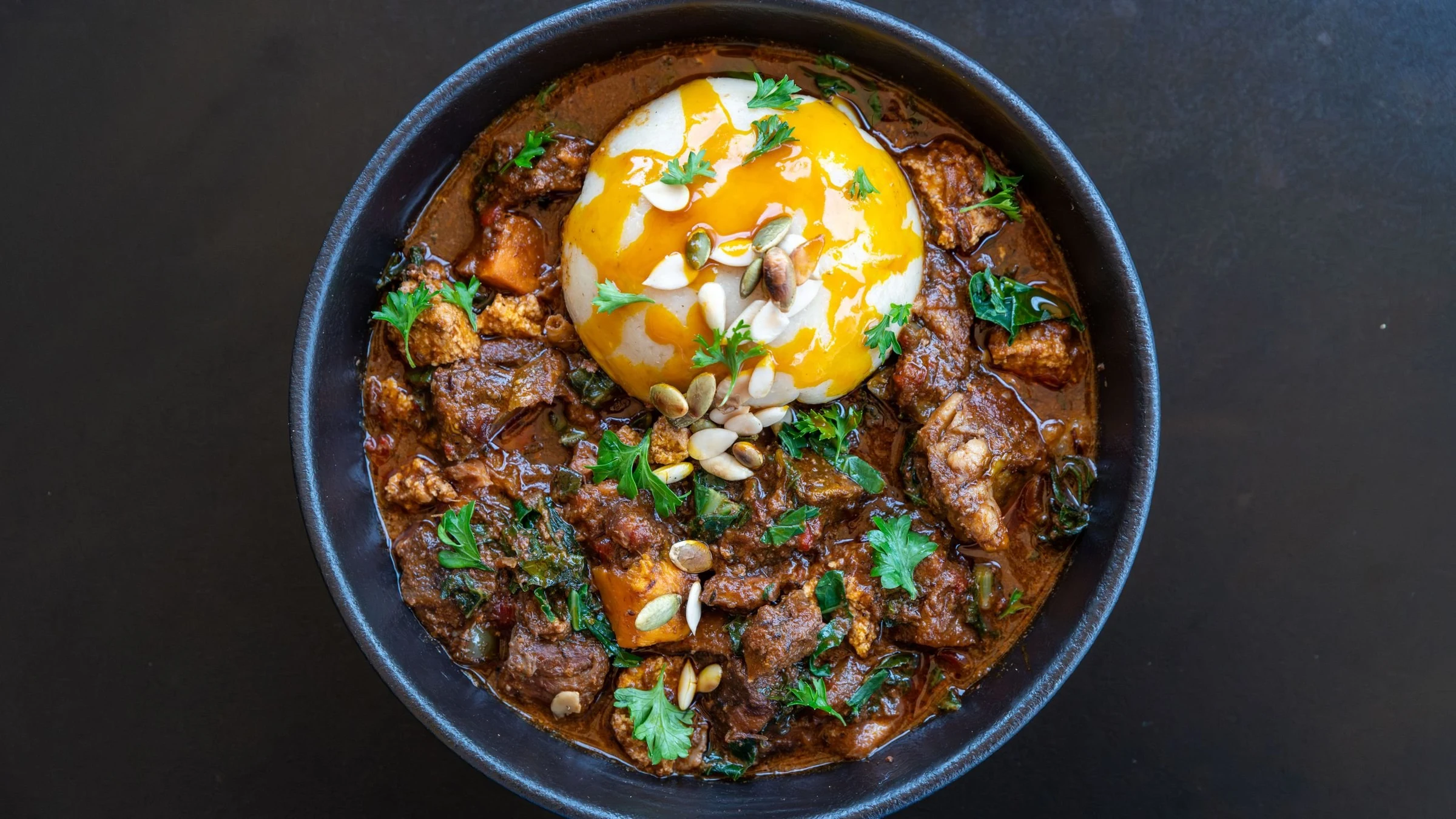
Where Charleston's African Roots Surface on the Plate
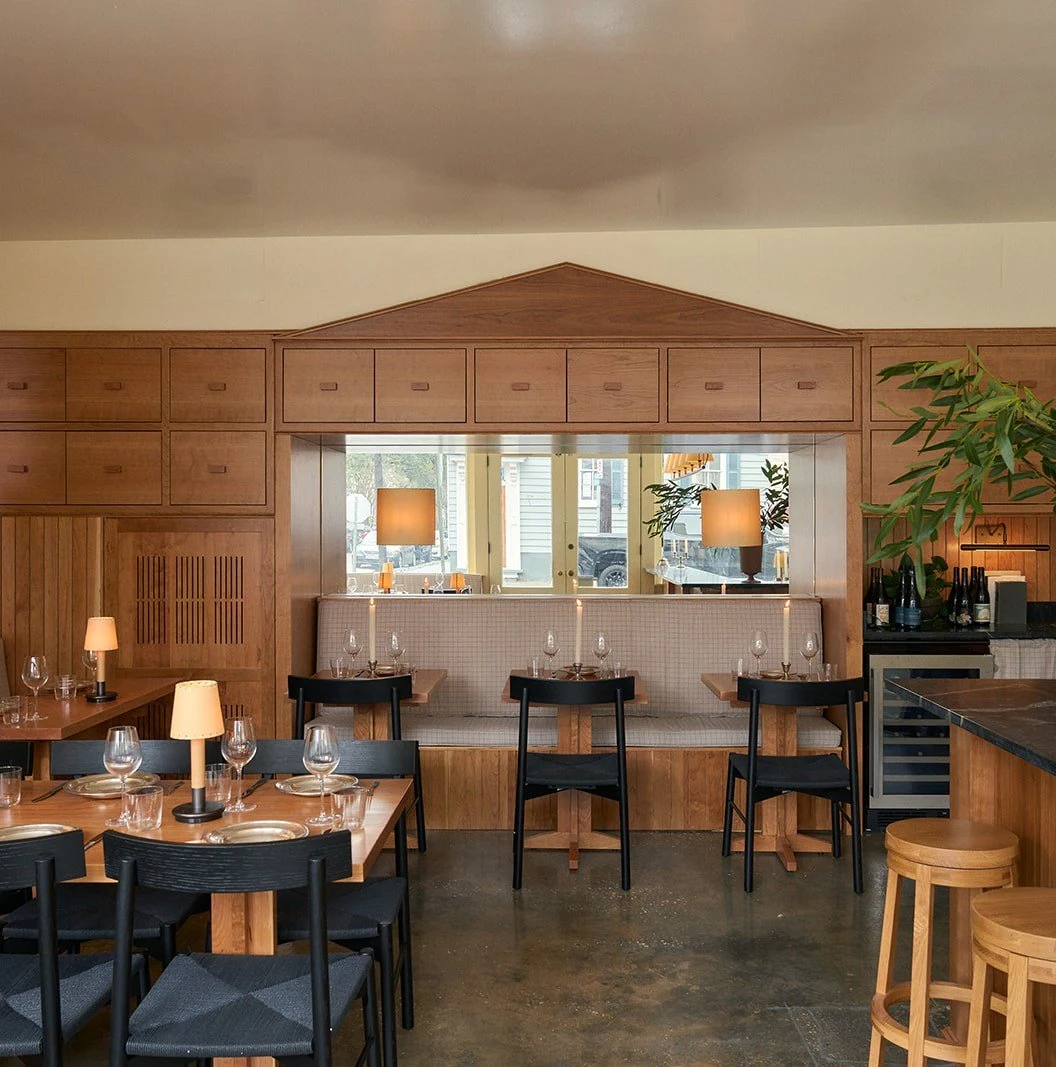
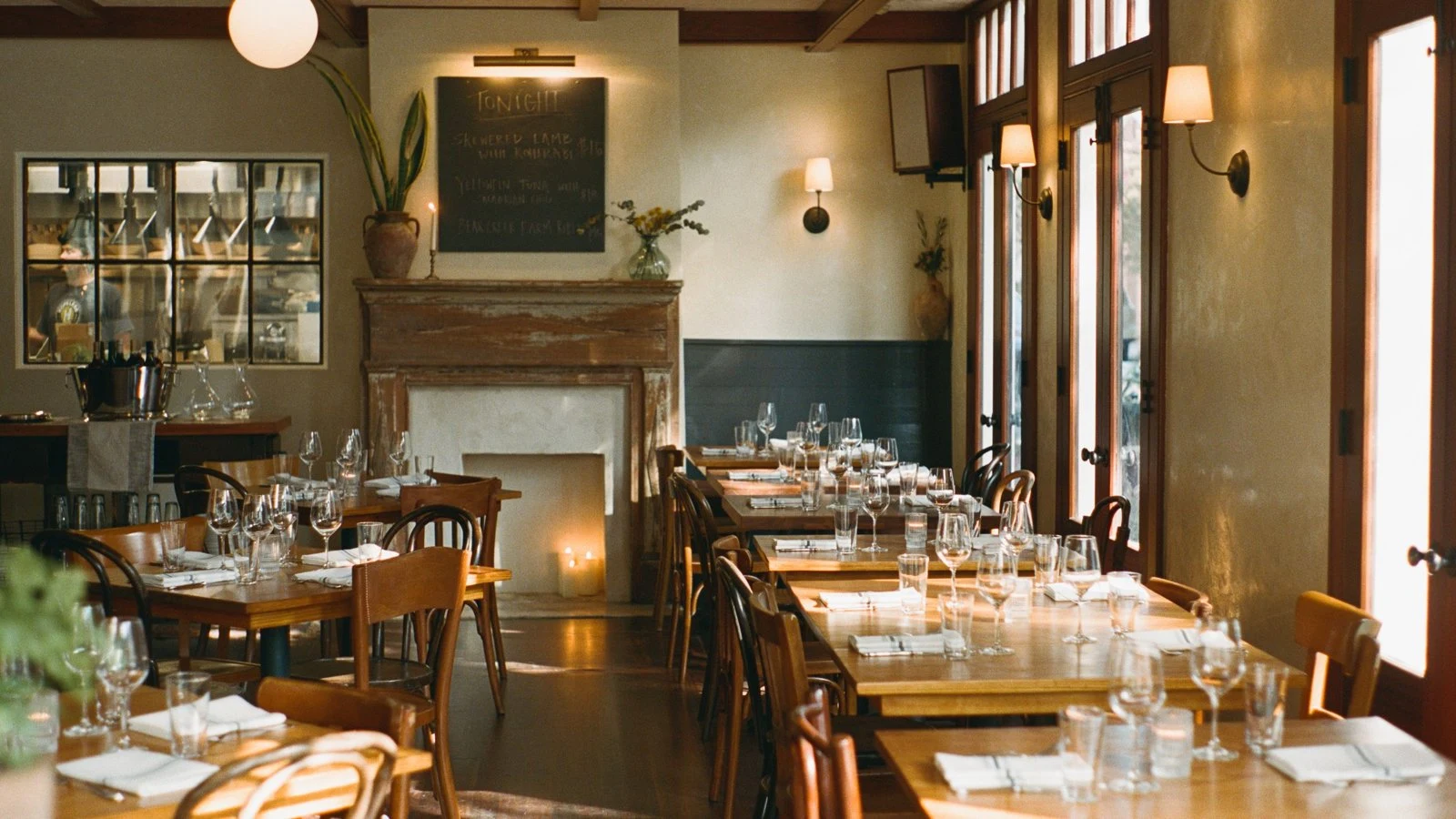
Line Street sits at the edge of Charleston's Cannonborough-Elliotborough neighborhood, a block type that has quietly absorbed some of the city's more considered new restaurants over the past decade. The address at 8 Line St is modest from the outside, suite D, the kind of entrance that rewards people who actually look for it. Inside, the format is intimate, with a room small enough that the kitchen's decisions feel personal and the sourcing conversation is impossible to ignore.
That sourcing conversation is the editorial center of what Bintü Atelier does. West African cooking, broadly construed across the Sahel, the Gulf of Guinea coast, and the Senegambian region, has one of the world's most ingredient-focused culinary identities. Fermented locust beans, dried fish, palm oil at varying stages of processing, and grains like fonio and sorghum are not garnishes or flourishes; they are the structural language of the food. Chef Bintou N'Daw Young works within that language, and placing it in Charleston is less a cultural transplant than a return to a conversation the city's food history has been having for three centuries.
The Sunday email
Read about the people behind restaurants like Bintü Atelier in the Sunday email.
Every Sunday we send a lead story and up to four more about the chefs, winemakers, sommeliers and hoteliers behind the restaurants, bars, wineries and hotels we cover.
Recent stories
Free. One email a week, and you can unsubscribe from any issue.
The Lowcountry-West Africa Thread, Followed Seriously
The Lowcountry's debt to West African agricultural and culinary knowledge is longstanding history. Enslaved people from rice-cultivating regions of Senegambia and Sierra Leone were specifically sought by South Carolina planters because of their expertise, a brutal transaction that nonetheless transferred a food culture into the Carolina coastal plain and shaped everything from cooking technique to ingredient preference. Lowcountry staples like rice pilaf, okra soup, peanut stew, and the use of smoked and fermented proteins all trace directly to that transfer.
What Bintü Atelier does is follow that thread back to its source rather than stopping at the Gullah-Geechee midpoint, which is where most Charleston restaurants, even the thoughtful ones, tend to rest. FIG and Husk, the two restaurants that defined Charleston's serious New American and Southern movements respectively, both operate within the Lowcountry frame without pushing further west across the Atlantic. Rodney Scott's BBQ works deep inside the African-American pit tradition. 167 Raw anchors the oyster bar side of the local seafood identity. Bintü Atelier does something different: it positions the origin point, not the American evolution, as the primary reference.
That is a meaningful distinction and one that aligns Bintü Atelier with a small but growing cohort of African-cuisine restaurants earning serious critical attention in the United States. Dōgon in Washington, D.C. draws on West African tradition with a fine dining structure. In London, Chishuru has made the case for West African cooking as a credentialed, technique-driven cuisine without apology. Bintü Atelier operates in that company, even if Charleston is a smaller and less internationally watched stage than D.C. or London.
The 2024 Esquire Recognition and What It Signals
Esquire's Leading New Restaurants list for 2024 placed Bintü Atelier at number 30. The list, which covers the full United States and tends to weight ambition and originality alongside execution, is a reasonable proxy for restaurants that are doing something structurally different rather than simply doing a familiar thing well. A ranking at 30 on a national list means the restaurant is drawing attention well beyond South Carolina's dining press.
That recognition matters contextually because Charleston's restaurant scene, for all its genuine strength, is not typically where African cuisine earns national visibility. The city's food identity is built around seafood, Southern tradition, and an increasingly sophisticated New American layer represented by places like Vern's, Lowland, and Malagón Mercado y Taperia. Bintü Atelier lands in a different register from all of them, which is partly what makes the Esquire placement notable: it signals that the restaurant is being evaluated on its own terms, not as a local curiosity.
For comparison, the restaurants that routinely appear on national and international recognition lists for technical ambition, Alinea in Chicago, The French Laundry in Napa, Le Bernardin in New York City, Lazy Bear in San Francisco, Single Thread Farm in Healdsburg, operate with large teams and years of press attention behind them. Bintü Atelier is early in that trajectory, and the Google review score of 4.8 across 289 reviews suggests the guest experience is holding up under the scrutiny that national recognition brings.
Ingredients as Argument
The editorial angle of ingredient sourcing matters most here because West African cooking makes it impossible to separate what is on the plate from where it came from. Dishes in the Senegambian tradition, thiéboudienne, mafé, yassa, domoda, are not just flavor combinations; they are the result of specific agricultural systems, preservation techniques, and protein hierarchies that developed over centuries in specific geographies. When a chef works within that tradition outside its origin geography, the ingredient sourcing question becomes structural: which elements can be sourced locally or regionally, which need to be imported, and how do those substitutions or faithful reproductions change what the dish argues?
Charleston is better positioned than most American cities for this negotiation. The Lowcountry produces rice, seafood, okra, peanuts, and leafy greens that map directly onto West African culinary use. The region's smoked fish and cured protein traditions have functional parallels to West African pantry staples. A chef working with that awareness can source close to home for the structural ingredients while making deliberate decisions about which imported elements, fonio, moringa, specific fermented condiments, carry the tradition's irreducible identity. That approach, ingredient by ingredient, is more interesting than either full localization or full importation, and it is the kind of sourcing intelligence that the Esquire recognition implicitly validates.
Questions
Frequently asked
What recognition does Bintü Atelier hold?
Bintü Atelier holds a James Beard award.
Who works at Bintü Atelier?
Made By profiles Bintou N'Daw (Chef-Owner) and Bintou N'Daw Young (Chef) at Bintü Atelier.
How expensive is Bintü Atelier?
Bintü Atelier is listed at a price level of $$$.
Where is Bintü Atelier and what does it serve?
Bintü Atelier is in Eastside, Charleston, serving West African Senegalese.
The field
How it compares
| Place | Awards | Cuisine | Notes |
|---|---|---|---|
| Bintü Atelier | James Beard | West African Senegalese | Eastside, $$$ |
| Chubby Fish | 50 Best | Modern Seafood Raw Bar | Charleston |
| FIG | · | Southern Farm-to-Table Bistro | Charleston |
| Husk | · | Elevated Southern Farm-to-Table | Charleston |
| Merci | · | French-Italian Bistro | Charleston |
| Rodney Scott's BBQ | · | Whole-Hog South Carolina BBQ | Charleston |
| Vern's | Michelin 1 Star | New American Seasonal Bistro | Charleston |
Similar places
Modern Seafood Raw Bar
Chubby Fish
Charleston, United States
50 Best
Southern Farm-to-Table Bistro
FIG
Charleston, United States
Elevated Southern Farm-to-Table
Husk
Charleston, United States
French-Italian Bistro
Merci
Charleston, United States
Whole-Hog South Carolina BBQ
Rodney Scott's BBQ
Charleston, United States
New American Seasonal Bistro
Vern's
Charleston, United States
★
The Sunday email
Read about the people behind restaurants like Bintü Atelier in the Sunday email.
Every Sunday we send a lead story and up to four more about the chefs, winemakers, sommeliers and hoteliers behind the restaurants, bars, wineries and hotels we cover.
Recent stories
Free. One email a week, and you can unsubscribe from any issue.