Nishijin Fujiyoshi
In Residence
Yoshikatsu Imai
Chef
- 01CuisineKaiseki
- 02CityKyoto, Japan
- 03RecognitionOne Michelin Star
- 1 Michelin Star · Michelin Guide
- Michelin 1 Star · 2024
The Nishijin Setting: A District Built on Patience
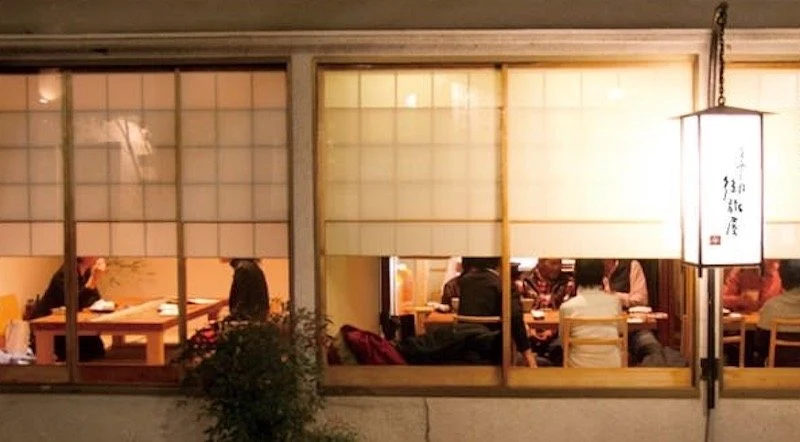
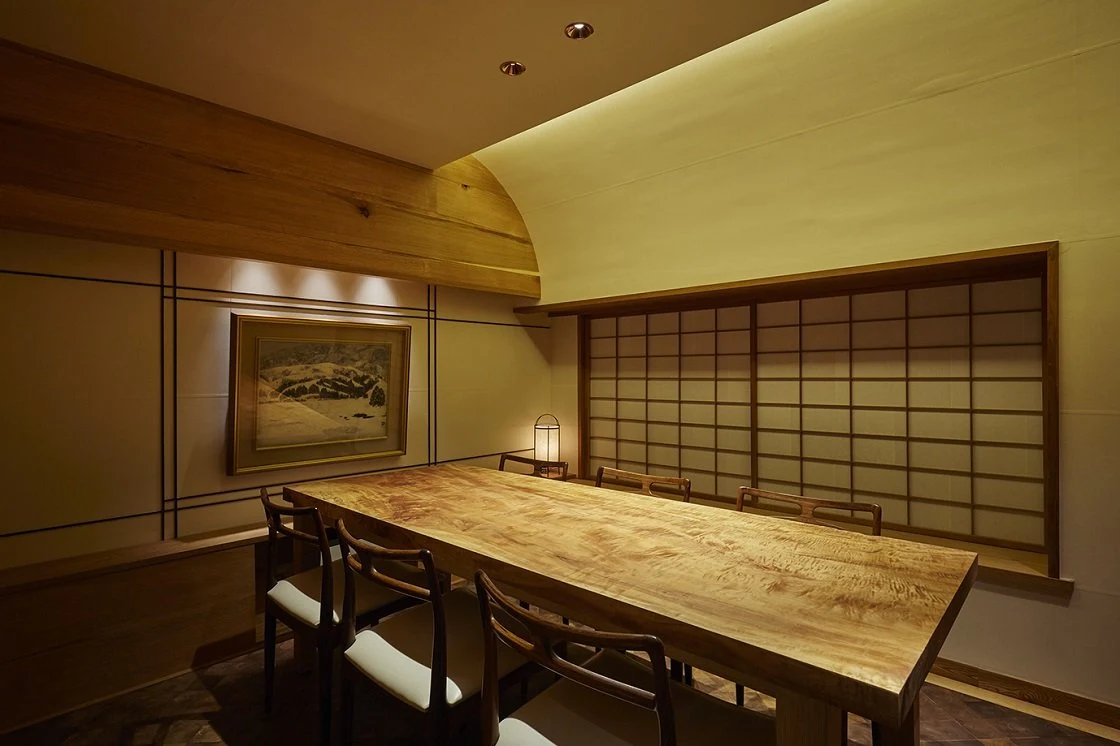
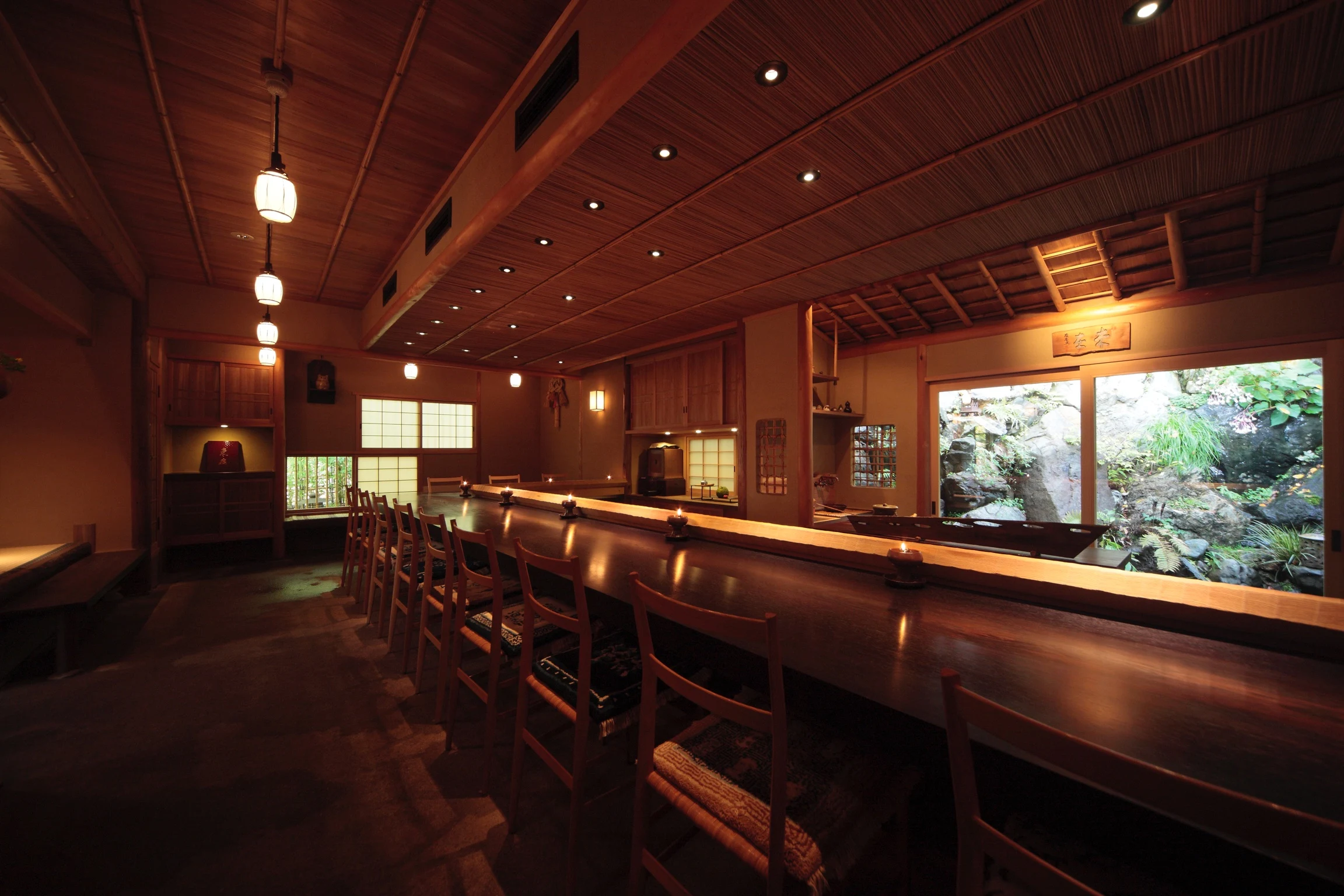
Kamigyo Ward sits north of Kyoto's tourist core, in the old Nishijin textile district where workshops still produce the brocade woven into formal kimono. The neighbourhood has never courted visibility the way Gion does, and the restaurants that occupy its quiet residential streets tend to reflect that character: small, deliberate, and not especially concerned with being found. Nishijin Fujiyoshi is a Michelin-starred kaiseki restaurant in Kyoto's Kamigyo Ward, with one Michelin star and an estimated price of about $90 per person. It fits that pattern precisely. The address on Horikawa-dori, above Teranouchiagaru, places it away from the kaiseki corridors that draw the international reservation queues, and that distance is part of what defines it.
In a city where the restaurant category has split between highly capitalised multi-seat venues with international PR and small owner-operated counters sustained by local regulars and serious visitors, Nishijin Fujiyoshi belongs firmly to the second group. The comparison matters because the two cohorts operate on different logic: scale and prestige signals versus depth of craft and sourcing obsession.
Dashi as a Discipline, Not a Starting Point
Japanese cuisine at its technical core is an argument about dashi. The stock underpins everything from a simple clear soup to the most complex kaiseki progression, and the gap between a dashi drawn quickly under pressure and one built slowly with patience and attention is not subtle. It registers in the texture of the liquid, the way umami lengthens on the palate, and in how the dashi behaves when it meets protein or vegetable. At Nishijin Fujiyoshi, the ma-kombu is drawn over a period of days. That is not a detail for the menu copy. It is a structural decision that determines the flavour architecture of every dish the stock touches.
This approach connects to a broader tendency among Japan's most precise small kitchens: the rejection of shortcuts at the foundational level, even where those shortcuts are invisible to most diners. The same logic governs a counter like Isshisoden Nakamura, where classical preparation depth is the point of distinction rather than creative novelty. At the ¥¥¥¥ tier in Kyoto, venues like Gion Matayoshi and Kikunoi Roan carry this same ethic at higher price and capacity. Nishijin Fujiyoshi occupies the ¥¥¥ band, which makes it a relatively rare thing in Kyoto: a kitchen where the foundational technique is operating at serious depth without the price ceiling that usually comes with it.
Indigenous Ingredients, Applied Precisely
The editorial angle around sourcing at this counter is not the familiar farm-to-table framing common to Western dining narratives. It is something more specific. Chef Yoshikatsu Imai personally collects the water used for cooking. In a discipline where dashi is built from kombu and bonito and the mineral character of the water shapes the extraction, controlling the water source is not a story detail. It is a technical decision about what the dashi will taste like. The wider point here is that Japanese cuisine at this level does not separate ingredient sourcing from technique. They are the same thing.
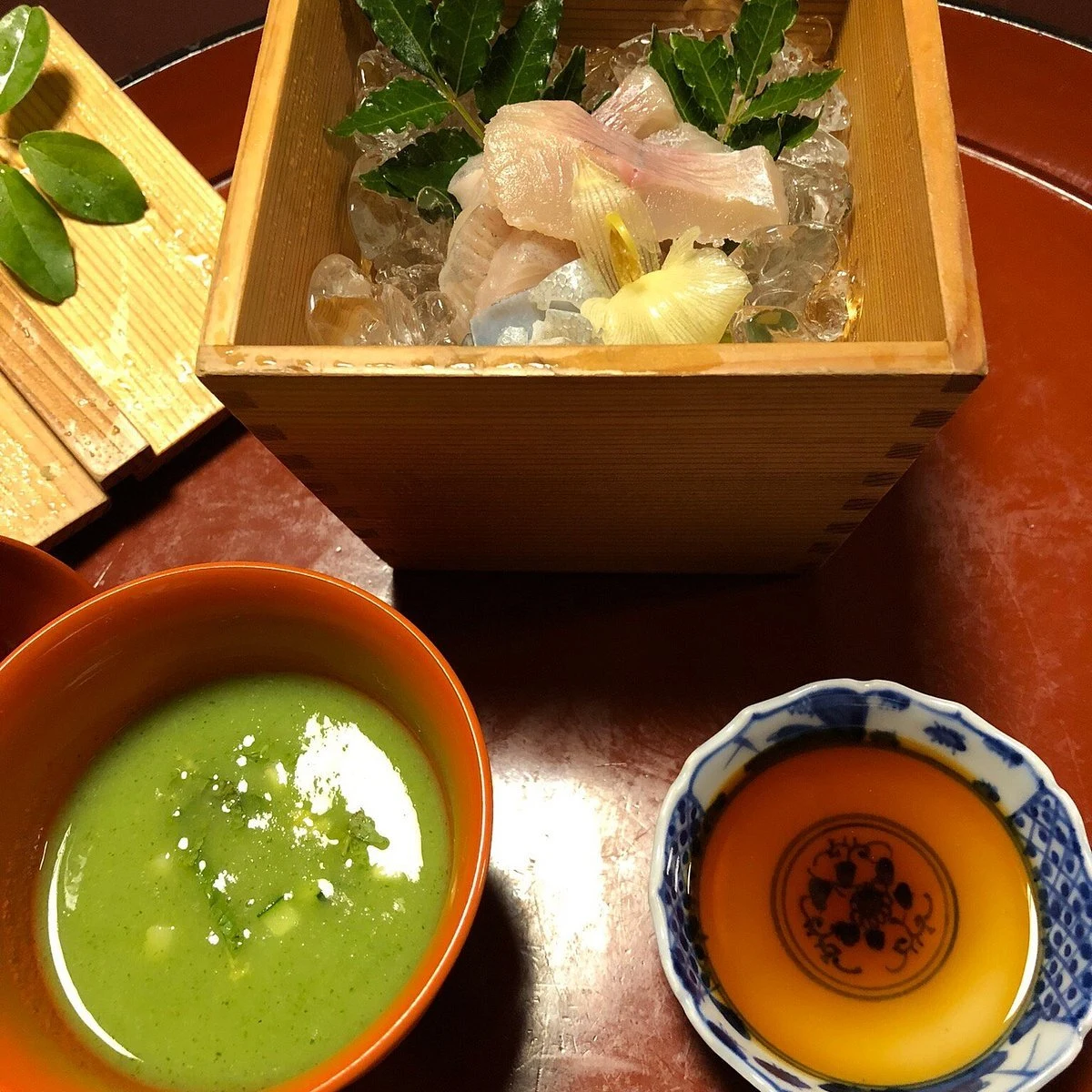
The fish and vegetable dishes served in small vessels are composed to work with the dashi rather than alongside it. The natural flavours of the ingredients are not amplified by seasoning but framed by the stock, which acts as the connective tissue of the meal. This is an approach with deep roots in Kyoto's traditional cooking culture, where restraint is the technique and the quality of the raw material does all the work that butter or reduction would do elsewhere. The comparison with imported European methods is instructive: where a French kitchen might reduce a fond to concentrate flavour, a kitchen like this one extracts slowly and stops, trusting the ingredient rather than transforming it.
For context on how this sourcing-driven approach plays out in other Japanese cities, Harutaka in Tokyo applies similar ingredient-first logic in a sushi format, while HAJIME in Osaka operates at the opposite end of the intervention spectrum, synthesising global technique with Japanese product. Both represent coherent positions. Nishijin Fujiyoshi sits closer to the Harutaka end: the cuisine is built around what the ingredients do, not what the chef does to them.
Where It Sits in the Kyoto Japanese Dining Field
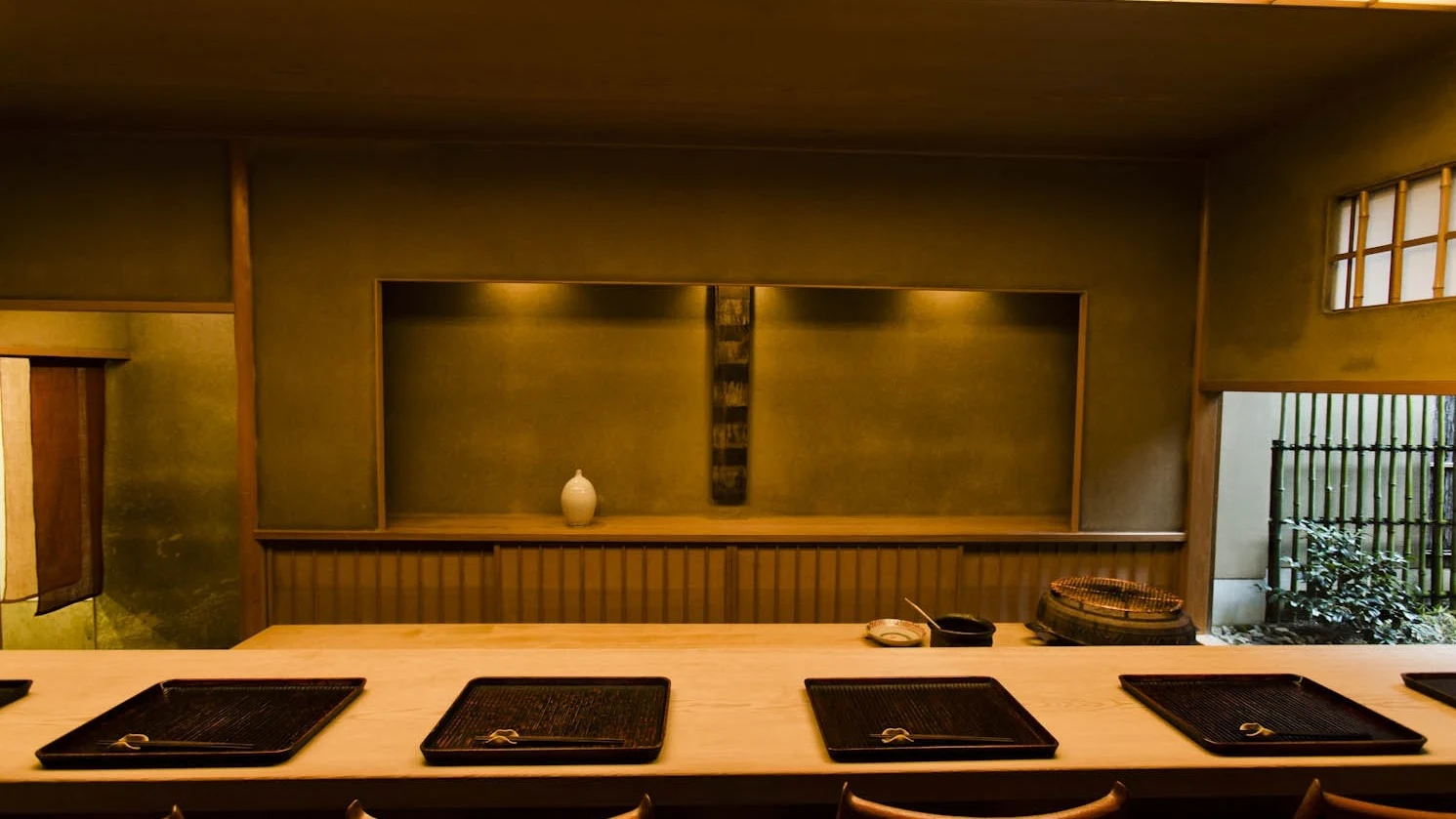
Kyoto's serious Japanese dining is not a single category. It runs from high-ceremony kaiseki at ¥¥¥¥ venues through more accessible but still technically committed counters at ¥¥¥, and down to workday lunch formats that draw on the same tradition with less ceremony. Kenninji Gion Maruyama and Kodaiji Jugyuan represent the more ceremony-forward end of the Gion corridor. Nishijin Fujiyoshi occupies a different register: the cooking is serious, the setting is residential rather than theatrical, and the owner-chef format means the attention to the guest is direct rather than mediated through a large service team.
The Google rating of 4.8 across 57 reviews is a strong signal of consistency. At this number of reviews, a 4.8 average is almost impossible to maintain without a very high floor on execution. It signals a counter where the miss rate is low, which at a small owner-operated table usually reflects the fact that the chef is present for every service.
For those building a broader picture of Japanese cooking across the country, Myojaku in Tokyo and Azabu Kadowaki in Tokyo offer reference points for how the same tradition plays out in a different city's competitive environment. Further afield, akordu in Nara takes a different approach entirely, and Goh in Fukuoka applies creative pressure to local ingredient culture in ways that contrast interestingly with Kyoto's more conservationist tradition.
Planning Your Visit
Nishijin Fujiyoshi is located in Kamigyo Ward at 上天神町626, on Horikawa-dori above Teranouchiagaru. The ¥¥¥ price range places it in a tier accessible to most travellers budgeting for a serious dinner in Kyoto. Given the owner-chef format and small-counter structure, early reservation planning is advisable.
| Venue | Cuisine | Price Tier | Format |
|---|---|---|---|
| Nishijin Fujiyoshi | Japanese | ¥¥¥ | Owner-chef counter |
| Gion Sasaki | Kaiseki | ¥¥¥¥ | Multi-seat kaiseki |
| Ifuki | Kaiseki | ¥¥¥¥ | Kaiseki counter |
| Kyokaiseki Kichisen | Japanese | ¥¥¥¥ | Full kaiseki service |
| cenci | Italian | ¥¥¥ | Modern Italian |
Additional reference counters outside Kyoto include 1000 in Yokohama and 6 in Okinawa.
The Sunday letter
Get new places like Nishijin Fujiyoshi every Sunday.
One email a week with the restaurants, bars and hotels we have just written up, and the people who run them.
One email a week. Unsubscribe from any issue.
Questions
Frequently asked
What recognition does Nishijin Fujiyoshi hold?
Nishijin Fujiyoshi holds 1 Michelin star.
Who works at Nishijin Fujiyoshi?
Made By profiles Yoshikatsu Imai (Chef) at Nishijin Fujiyoshi.
How expensive is Nishijin Fujiyoshi?
Nishijin Fujiyoshi is listed at a price level of $$$.
Where is Nishijin Fujiyoshi and what does it serve?
Nishijin Fujiyoshi is in Kamigyō, Kyoto, serving Kaiseki.
The field
How it compares
| Place | Awards | Cuisine | Notes |
|---|---|---|---|
| Nishijin Fujiyoshi | Michelin 1 Star | Kaiseki | Kamigyō, $$$ |
| Gion Sasaki | Michelin 3 Stars | Modern Kaiseki | Kyoto |
| Hyotei | Michelin 3 Stars | Traditional Kaiseki | Kyoto |
| Kikunoi Honten | Michelin 3 Stars | Kyoto Kaiseki Ryotei | Kyoto |
| Miyama Sou | Michelin 3 Stars | Tsumikusa Kaiseki | Kyoto |
| Mizai | Michelin 3 Stars | Traditional Kaiseki | Kyoto |
| Ogata | Michelin 2 Stars | Kaiseki Omakase | Kyoto |
In residence
Similar places
The Sunday letter
Get the next Made By story in your inbox.
We send one email every Sunday morning with the places and people we covered that week.
One email a week. Unsubscribe from any issue.